"course_name": "Integrated Science",
From the Integrated Science curriculum
TL;DR
Photosynthesis is how plants, algae, and some bacteria use sunlight to make their own food (glucose) from carbon dioxide and water. It's a vital process that produces the oxygen we breathe and forms the base of most food chains. This complex chemical reaction happens mainly in chloroplasts, specifically within a pigment called chlorophyll.
1. The Mental Model
Imagine a plant as a tiny chef. It doesn't go to the grocery store; instead, it uses sunlight as energy to cook up sugar (its food) from simple ingredients: water it sips from the ground and carbon dioxide it breathes from the air.
2. The Core Material
Photosynthesis is a crucial biological process. It's the primary way energy from the sun enters living systems. Without it, most life on Earth, including us, couldn't exist.
The overall chemical equation for photosynthesis is:
6CO₂ (Carbon Dioxide) + 6H₂O (Water) + Light Energy → C₆H₁₂O₆ (Glucose) + 6O₂ (Oxygen)
Let's break this down:
-
Reactants (Ingredients):
- Carbon Dioxide (CO₂): Absorbed from the atmosphere through small pores on leaves called stomata.
- Water (H₂O): Absorbed from the soil by roots and transported to the leaves.
- Light Energy: Captured by pigments, mainly chlorophyll, found in chloroplasts within plant cells.
-
Products (What's Made):
- Glucose (C₆H₁₂O₆): A simple sugar that the plant uses for energy (respiration) or stores as starch/cellulose. This is the plant's food.
- Oxygen (O₂): Released into the atmosphere as a byproduct through stomata. This is the oxygen we breathe!
Stages of Photosynthesis
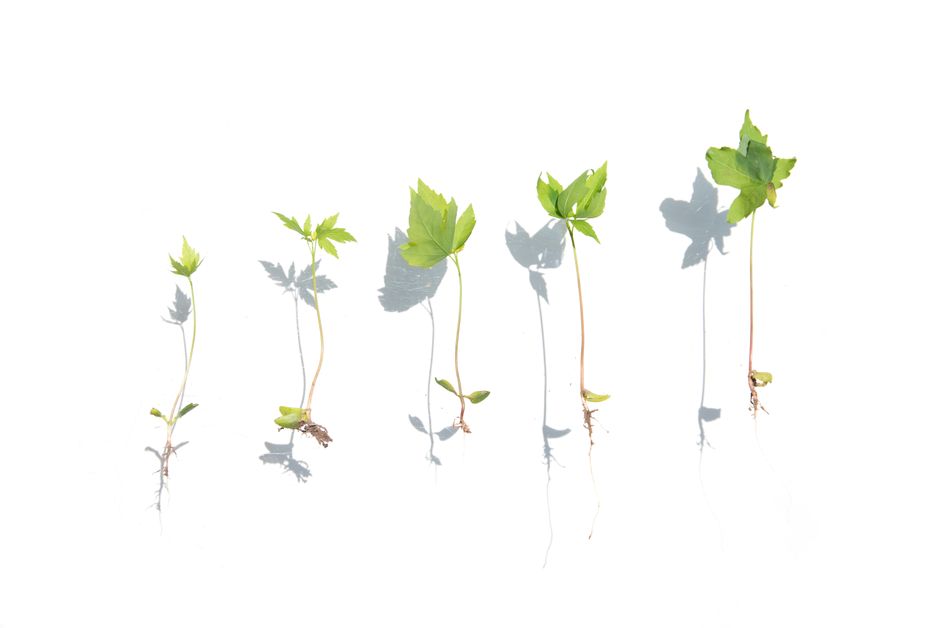
Photo by Evie Shaffer on Pexels
Photosynthesis isn't one big step; it's divided into two main stages that occur in different parts of the chloroplast:
-
Light-Dependent Reactions:
- Where: Thylakoid membranes within the chloroplasts.
- What happens: Chlorophyll captures light energy. This energy splits water molecules (photolysis) into oxygen, protons, and electrons. The energy is used to convert ADP and NADP+ into energy-carrying molecules: ATP (adenosine triphosphate) and NADPH (nicotinamide adenine dinucleotide phosphate).
- Output: ATP, NADPH, and O₂ (released).
-
Light-Independent Reactions (Calvin Cycle):
- Where: Stroma (the fluid-filled space) of the chloroplasts.
- What happens: The ATP and NADPH produced in the light-dependent reactions provide the energy to convert carbon dioxide into glucose. This cycle doesn't directly need light but relies on the products of the light reactions.
- Output: Glucose (sugar).
Here's a simple flow of the process:
graph TD
    A["Sunlight"] --> B["Light-Dependent Reactions (in Thylakoids)"]
    C["Water (H₂O)"] --> B
    B --> D["ATP & NADPH"]
    B --> E["Oxygen (O₂)"]
    F["Carbon Dioxide (CO₂)"] --> G["Light-Independent Reactions (Calvin Cycle in Stroma)"]
    D --> G
    G --> H["Glucose (C₆H₁₂O₆)"]
Factors Affecting Photosynthesis
Photo by Ilo Frey on Pexels
Several factors can influence the rate at which photosynthesis occurs:
- Light Intensity: More light generally means a faster rate, up to a certain point where other factors become limiting.
- Carbon Dioxide Concentration: Higher CO₂ levels increase the rate, as CO₂ is a key ingredient.
- Temperature: Photosynthesis has an optimal temperature range. Too cold or too hot can slow down or stop enzyme activity.
- Water Availability: A lack of water can cause stomata to close, reducing CO₂ intake and thus the rate of photosynthesis.
- Chlorophyll Concentration: More chlorophyll means more light can be absorbed.
3. Worked Example
Let's imagine a single plant cell with chloroplasts, receiving sunlight.
- Sunlight hits: Light energy reaches the chlorophyll in the thylakoid membranes inside the chloroplast.
- Water is split: Water molecules, which the plant roots absorbed, are split by this light energy. This releases oxygen (which diffuses out of the leaf and into the air) and creates ATP and NADPH.
- CO₂ enters: Carbon dioxide from the atmosphere enters the leaf through the stomata and diffuses into the chloroplast's stroma.
- Glucose is made: Using the energy from ATP and NADPH, the carbon dioxide molecules are rearranged and combined to form glucose. This happens in the Calvin Cycle.
- Plant uses glucose: The plant can now use this glucose immediately for energy through cellular respiration, convert it to starch for storage, or use it to build cellulose for its cell walls.
So, from basic ingredients (sunlight, water, CO₂), the plant performs a complex chemical reaction to create its own food and release life-giving oxygen.
4. Key Takeaways
- Photosynthesis is the process plants use to convert light energy into chemical energy (glucose).
- The overall equation is: 6CO₂ + 6H₂O + Light Energy → C₆H₁₂O₆ + 6O₂.
- It occurs in two main stages: light-dependent reactions (making ATP/NADPH/O₂) and light-independent reactions (using ATP/NADPH/CO₂ to make glucose).
- Chlorophyll, located in chloroplasts, is the primary pigment that captures light energy.
- Oxygen, vital for most life, is a byproduct of the light-dependent reactions.
- Factors like light intensity, CO₂ concentration, temperature, and water availability all affect the rate of photosynthesis.
Common mistakes you should avoid:
- Confusing the reactants (ingredients) with the products (what's made).
- Thinking that the Calvin Cycle (light-independent reactions) happens in the dark; it just doesn't directly need light, but relies on products made in the light.
- Forgetting that oxygen is a byproduct, not an ingredient, of photosynthesis.
- Believing that plants only perform photosynthesis; they also perform cellular respiration to use the glucose they make.
5. Now Try It
For the next 15 minutes, try to explain photosynthesis to an imaginary younger sibling or friend. Draw a simple diagram showing where the ingredients come from, where the reactions happen within a plant cell (mentioning chloroplasts), and what the final products are. Focus on using your own words to describe the two main stages and what each stage produces. Success looks like you being able to clearly articulate the full process without needing to look at your notes.
Frequently asked about "course_name": "Integrated Science",
More from Integrated Science
Get the full Integrated Science curriculum
Clone the complete plan to your dashboard for unlimited AI-generated notes, practice quizzes, and a personalised revision schedule.
Save this course free