Sexual Reproduction in Human Beings: Female Reproductive System
From the how do organisms reproduce, 10th cbse curriculum
TL;DR
The female reproductive system is designed to produce eggs, receive sperm, and nurture a developing baby. It primarily includes the ovaries, fallopian tubes, uterus, and vagina, all working together for reproduction. Hormones like estrogen and progesterone play crucial roles in controlling this complex system and its cyclical changes.
1. The Mental Model
Think of the female reproductive system as a specialized factory. The ovaries are like production units making eggs. The fallopian tubes are transport conveyors, the uterus is the incubation chamber, and the vagina is the entry point.
2. The Core Material
The female reproductive system is a marvel of biological engineering, designed for several key functions: producing female gametes (eggs or ova), receiving male gametes (sperm), providing a suitable environment for fertilization, and nurturing the developing embryo and fetus.
Let's break down its main parts:
Ovaries
You have two ovaries, one on each side of your lower abdomen. These are the primary female reproductive organs.
* Function:
* Produce eggs (ova): Each ovary contains thousands of immature eggs called ovarian follicles. From puberty onwards, typically one egg matures and is released about once a month (this process is called ovulation).
* Produce female hormones: Ovaries produce important hormones like estrogen and progesterone, which regulate the menstrual cycle, prepare the uterus for pregnancy, and develop female secondary sexual characteristics.
Fallopian Tubes (Oviducts)

Photo by Alena Shekhovtcova on Pexels
These are two narrow tubes that extend from the uterus towards each ovary, but they don't actually touch the ovaries.
* Function:
* Egg transport: After ovulation, the fimbriae (finger-like projections at the end of the fallopian tube) sweep the egg into the tube. Cilia (tiny hair-like structures) inside the tube help move the egg towards the uterus.
* Site of fertilization: Fertilization, the fusion of sperm and egg, usually happens in the fallopian tube.
Uterus (Womb)
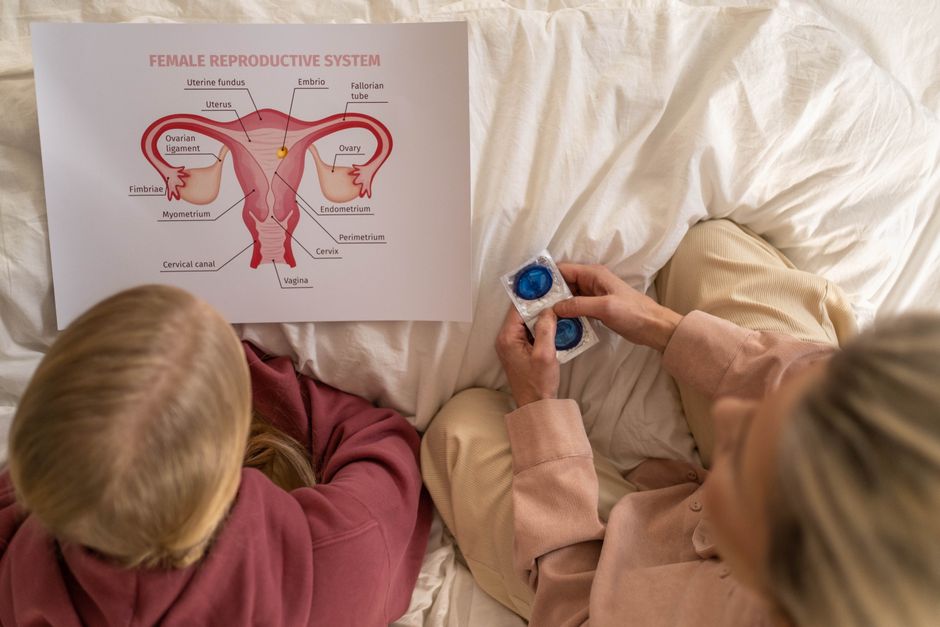
Photo by cottonbro studio on Pexels
The uterus is a hollow, pear-shaped muscular organ located in the pelvic cavity, between the bladder and the rectum.
* Function:
* Implantation and development: If an egg is fertilized, it travels to the uterus and implants in its thick, blood-rich inner lining called the endometrium. The uterus then provides protection and nourishment for the developing embryo and fetus throughout pregnancy.
* Menstruation: If fertilization doesn't occur, the endometrial lining breaks down and is shed from the body, resulting in menstruation (your period).
* Childbirth: During labor, the muscular walls of the uterus contract strongly to push the baby out.
Cervix
The cervix is the lower, narrow part of the uterus that opens into the vagina.
* Function:
* Connects uterus and vagina: It acts as a gateway, allowing menstrual blood to exit and sperm to enter the uterus.
* Protective barrier: During pregnancy, the cervix forms a protective plug of mucus to prevent infections from reaching the uterus. It dilates significantly during childbirth to allow the baby to pass through.
Vagina
The vagina is a muscular, elastic tube extending from the cervix to the outside of the body.
* Function:
* Receives sperm: It's the organ that receives sperm during sexual intercourse.
* Birth canal: It serves as the birth canal through which the baby passes during childbirth.
* Exit for menstrual blood: Menstrual blood flows out of the body through the vagina.
Here’s a diagram to help you visualize the process:
graph TD
    Ovaries["Ovaries (produce eggs & hormones)"] --> Fallopian_Tubes["Fallopian Tubes (oviducts)"]
    Fallopian_Tubes --> Fertilization_Site["Fertilization (usually here)"]
    Fertilization_Site --> Uterus["Uterus (womb)"]
    Uterus --> Implantation["Implantation (in endometrium)"]
    Implantation --> Development["Fetal Development"]
    Uterus --> Cervix["Cervix (lower part of uterus)"]
    Cervix --> Vagina["Vagina (birth canal, receives sperm)"]
    Ovaries --& Hormones --> Uterus
Hormonal Control
Photo by https://kaboompics.com/ on Pexels
The entire female reproductive system is tightly regulated by hormones, primarily estrogen and progesterone, which are produced by the ovaries. These hormones interact with other hormones from the brain (like FSH and LH) to control the menstrual cycle, ovulation, and prepare the uterus for pregnancy.
3. Worked Example
Imagine an egg is just released from the right ovary during ovulation.
1. Ovulation: The egg is released from the right ovary.
2. Capture: The fimbriae of the right fallopian tube sweep the egg into the tube.
3. Journey & Fertilization: The egg starts traveling down the fallopian tube. If sperm are present (from sexual intercourse and traveling up through the vagina and uterus), fertilization typically occurs here. Let's say fertilization happens.
4. Uterine preparation: Meanwhile, hormones from the ovary (estrogen and progesterone) have been thickening the lining of the uterus (the endometrium), making it soft and rich in blood vessels, ready to receive a fertilized egg.
5. Implantation: The fertilized egg (now called a zygote, then a blastocyst) continues its journey and reaches the uterus. It then implants itself in the prepared endometrial lining.
6. Pregnancy: Once implanted, the uterus nurtures the developing embryo. If fertilization hadn't occurred, the uterine lining would shed, leading to menstruation.
4. Key Takeaways
- Ovaries are crucial for producing eggs and female hormones (estrogen, progesterone).
- Fallopian tubes transport eggs and are the usual site of fertilization.
- The uterus is where a fertilized egg implants and develops into a fetus.
- The cervix connects the uterus to the vagina and protects the developing baby.
- The vagina receives sperm during intercourse and serves as the birth canal.
- The entire system is regulated by a complex interplay of hormones.
Common Mistakes to Avoid:
- Confusing the functions of ovaries (egg production) with the uterus (fetal development).
- Forgetting that fertilization usually happens in the fallopian tubes, not the uterus or ovary.
- Thinking that the fallopian tubes are directly attached to the ovaries; they are close but separate.
- Underestimating the role of hormones in controlling the entire reproductive cycle.
5. Now Try It
Draw a simple diagram of the female reproductive system yourself. Label the ovaries, fallopian tubes, uterus, cervix, and vagina. Next to each label, write one key function. When you're done, check if your labels and functions match the core material. This will help solidify your understanding of each part's role.
Frequently asked about Sexual Reproduction in Human Beings: Female Reproductive System
Study this next
Get the full how do organisms reproduce, 10th cbse curriculum
Clone the complete plan to your dashboard for unlimited AI-generated notes, practice quizzes, and a personalised revision schedule.
Save this course free