Basic Ecology: Ecosystems and Interdependence
From the Science, types of mixture, types of pure substance, types or compound, types of element, any topic in science grade seven term one for a pre-test curriculum
TL;DR
An ecosystem is where living things (biotic) and non-living things (abiotic) interact. All parts of an ecosystem are connected, meaning they depend on each other for survival. If one part changes, it affects everything else in that ecosystem.
1. The Mental Model
Think of an ecosystem like a really busy neighborhood. Everyone lives there (plants, animals, people) and uses things like houses, roads, and water. What one person does, or what happens to one part of the neighborhood, can affect everyone else.
2. The Core Material
In science, when we talk about ecology, we're studying how living things interact with each other and their environment. The main unit we look at is an ecosystem.
What's an Ecosystem?

Photo by Maël BALLAND on Pexels
An ecosystem is simply a community of living organisms (like plants, animals, and bacteria) interacting with their non-living environment (like sunlight, water, soil, and air). It can be as big as an ocean or as small as a puddle.
Let's break down the parts:
- Biotic Factors: These are all the living or once-living parts of an ecosystem.
- Producers: Make their own food, usually using sunlight (like plants, algae). They're the base of the food chain.
- Consumers: Eat other organisms for food.
- Herbivores: Eat plants (e.g., rabbits, deer).
- Carnivores: Eat other animals (e.g., lions, sharks).
- Omnivores: Eat both plants and animals (e.g., humans, bears).
- Decomposers: Break down dead organisms and waste, returning nutrients to the soil (e.g., bacteria, fungi, worms).
- Abiotic Factors: These are all the non-living physical and chemical parts of an ecosystem.
- Sunlight (energy)
- Water
- Soil
- Temperature
- Air (oxygen, carbon dioxide)
- Rocks and minerals
Interdependence: Everything is Connected

Photo by Thirdman on Pexels
Interdependence means that all the biotic and abiotic factors in an ecosystem rely on each other. No part can survive completely on its own.
Think about a forest ecosystem:
* Trees (biotic, producers) need sunlight, water, and nutrients from the soil (abiotic).
* Deer (biotic, consumers/herbivores) eat the leaves from the trees.
* Wolves (biotic, consumers/carnivores) hunt the deer.
* When trees, deer, or wolves die, decomposers (biotic) break them down, returning nutrients to the soil for new trees.
* The temperature (abiotic) affects which plants can grow and which animals can live there.
* Water (abiotic) is essential for all living things.
If one part of this system changes, it has a ripple effect:
* Less rain (abiotic) means fewer plants.
* Fewer plants mean less food for deer.
* Less food for deer means fewer deer, which then means less food for wolves.
* This shows how deeply interconnected everything is.
graph TD
    A["Sunlight (Abiotic)"] --> B["Plants (Producers)"]
    W["Water (Abiotic)"] --> B
    S["Soil Nutrients (Abiotic)"] --> B
    T["Temperature (Abiotic)"] --> B
    B --> C["Herbivores (e.g., Deer)"]
    C --> D["Carnivores (e.g., Wolves)"]
    B --> E["Decomposers (e.g., Fungi, Bacteria)"]
    C --> E
    D --> E
    E --> S
Food Chains and Food Webs
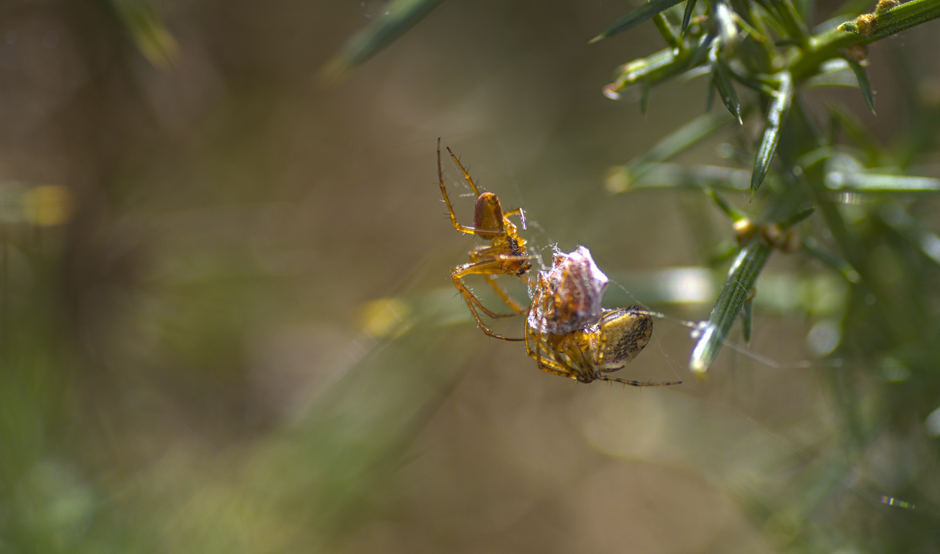
Photo by Delyth Williams on Pexels
These illustrate interdependence directly.
* A food chain shows a single path of energy flow: Sun → Grass → Rabbit → Fox.
* A food web shows multiple interconnected food chains, giving a more realistic picture of who eats whom in an ecosystem.
3. Worked Example
Imagine a small pond ecosystem.
- Abiotic Factors: Water, sunlight hitting the surface, dissolved oxygen, mud at the bottom, temperature.
- Biotic Factors:
- Producers: Algae, pondweed.
- Consumers: Tadpoles (eat algae), small fish (eat tadpoles, insects), frogs (eat insects), kingfishers (eat small fish).
- Decomposers: Bacteria and fungi in the mud breaking down dead leaves and organisms.
Let's see the interdependence:
If there's a drought (less water, an abiotic change), the pond might shrink. This means less space for algae and pondweed (producers). With less food, tadpoles and small fish might struggle to find enough to eat. If tadpoles and small fish decrease, frogs and kingfishers might also have less food, impacting their populations. The lack of water also directly affects all living things in the pond. Every change ripples through the entire system.
4. Key Takeaways
- An ecosystem includes all living (biotic) and non-living (abiotic) parts interacting in an area.
- Biotic factors are living things like producers (plants), consumers (animals), and decomposers (bacteria, fungi).
- Abiotic factors are non-living things like sunlight, water, soil, and temperature.
- Interdependence means that every part of an ecosystem relies on other parts for survival.
- A food web shows how energy flows through an ecosystem by illustrating who eats whom.
- Changes to one part of an ecosystem, whether biotic or abiotic, can affect many other parts.
Common Mistakes to Avoid:
- Don't confuse biotic with abiotic; remember "bio" means life.
- Don't think of ecosystems as isolated; they're often connected to larger systems.
- Don't forget the role of decomposers; they're crucial for recycling nutrients.
- Don't assume all consumers eat the same thing; remember herbivores, carnivores, and omnivores.
5. Now Try It
Think about your backyard, a local park, or even a potted plant.
1. List at least 3 biotic factors you'd find there.
2. List at least 3 abiotic factors.
3. Describe one way a biotic factor depends on an abiotic factor.
4. Describe one way two biotic factors depend on each other.
Success looks like clearly identifying the different types of factors and explaining a relationship of dependence between them.
Frequently asked about Basic Ecology: Ecosystems and Interdependence
More from Science, types of mixture, types of pure substance, types or compound, types of element, any topic in science grade seven term one for a pre-test
Get the full Science, types of mixture, types of pure substance, types or compound, types of element, any topic in science grade seven term one for a pre-test curriculum
Clone the complete plan to your dashboard for unlimited AI-generated notes, practice quizzes, and a personalised revision schedule.
Save this course free