States of Matter and Physical Properties
From the Science, types of mixture, types of pure substance, types or compound, types of element, any topic in science grade seven term one for a pre-test curriculum
TL;DR
Matter exists in different states like solids, liquids, and gases, each with unique particle arrangements and behaviors. These states can change through processes like melting or freezing when energy is added or removed. Physical properties are features you can observe or measure without changing what the substance fundamentally is.
1. The Mental Model
Imagine all matter as tiny, tiny particles always moving. How much they move and how close they are together determines if something is a solid, liquid, or gas. Changing energy (like heating or cooling) changes how these particles behave, which changes the state.
2. The Core Material
What is Matter?

Photo by Ann H on Pexels
Everything around you that has mass and takes up space is matter. You are matter, your phone is matter, and the air you breathe is matter.
States of Matter
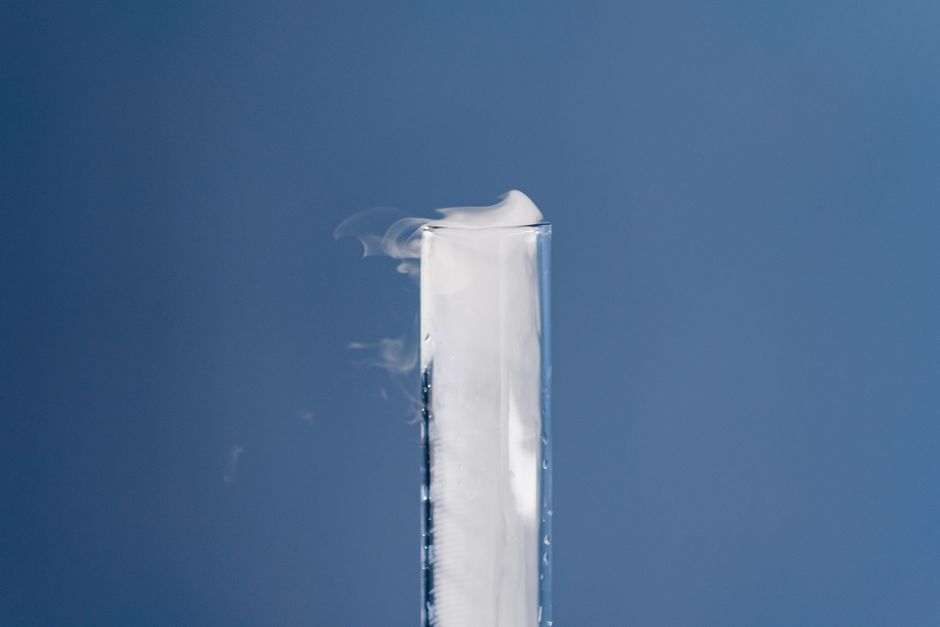
Photo by Ron Lach on Pexels
There are three main states of matter you'll learn about: solids, liquids, and gases.
- Solids:
- Particles are packed very closely together in a fixed pattern.
- They vibrate in place but don't move past each other.
- Have a definite shape and a definite volume. Think of an ice cube or a rock.
- Liquids:
- Particles are close together but not in a fixed pattern.
- They can slide past each other, which is why liquids flow.
- Have a definite volume but take the shape of their container. Think of water in a glass.
- Gases:
- Particles are very far apart and move randomly and quickly.
- They spread out to fill any container they are in.
- Have no definite shape and no definite volume. Think of the air in a balloon.
graph TD
    Solid --> Heat["Add Heat (Melting)"]
    Heat --> Liquid
    Liquid --> Heat_Again["Add Heat (Boiling/Evaporation)"]
    Heat_Again --> Gas

    Gas --> Cool_Again["Remove Heat (Condensation)"]
    Cool_Again --> Liquid
    Liquid --> Cool["Remove Heat (Freezing)"]
    Cool --> Solid
Changes in State

Photo by Jeff Wiles on Pexels
When matter changes from one state to another, it's called a phase change. These changes happen when energy (usually heat) is added or removed.
- Melting: Solid to liquid (e.g., ice to water). This happens when you add heat.
- Freezing: Liquid to solid (e.g., water to ice). This happens when you remove heat.
- Boiling/Evaporation: Liquid to gas (e.g., water to steam). This happens when you add heat. Evaporation can happen at any temperature, while boiling is at a specific temperature.
- Condensation: Gas to liquid (e.g., steam to water droplets). This happens when you remove heat.
Physical Properties

Photo by Steve A Johnson on Pexels
Physical properties are characteristics of a substance that you can observe or measure without changing the substance's chemical identity. You're not turning it into something new.
Here are some common physical properties:
- Color: What color is it? (e.g., gold is yellow)
- Odor: What does it smell like? (e.g., sulfur smells like rotten eggs)
- Density: How much mass is in a given volume? (e.g., wood floats on water because it's less dense)
- Melting Point: The temperature at which a solid turns into a liquid.
- Boiling Point: The temperature at which a liquid turns into a gas.
- Hardness: How resistant is it to scratching? (e.g., diamonds are very hard)
- Solubility: Can it dissolve in another substance? (e.g., sugar is soluble in water)
- Malleability: Can it be hammered into thin sheets? (e.g., aluminum foil)
- Ductility: Can it be drawn into a thin wire? (e.g., copper wire)
- Conductivity: Can it conduct heat or electricity? (e.g., metals are good conductors)
3. Worked Example
Imagine you have a block of ice.
- State of Matter: It's a solid. Its particles are tightly packed, vibrating in place, giving it a definite shape and volume.
- Add Heat: You leave the ice block out on the counter. The air adds heat to the ice.
- Phase Change: The ice melts, turning into liquid water. The particles gain enough energy to slide past each other. It now has a definite volume but takes the shape of the container (e.g., a puddle on the counter).
- Add More Heat: You then put the liquid water into a pot and heat it on the stove.
- Another Phase Change: The water heats up and eventually boils, turning into steam (a gas). The particles gain a lot of energy, spread far apart, and move rapidly. The steam fills the entire kitchen, having no definite shape or volume.
Throughout this entire process, you still have water (H2O). You haven't changed it into a different substance, just its state. Its physical properties like boiling point (100°C) and melting point (0°C) remain characteristic of water, regardless of its state.
4. Key Takeaways
- Solids have a definite shape and volume because their particles are tightly packed and vibrate.
- Liquids have a definite volume but take the shape of their container because particles can slide past each other.
- Gases have no definite shape or volume, as their particles are far apart and move freely.
- Phase changes (like melting or boiling) occur when energy is added or removed, changing how particles behave.
- Physical properties describe characteristics of a substance (like color or density) without changing its chemical identity.
- Melting is solid to liquid; freezing is liquid to solid.
- Boiling/Evaporation is liquid to gas; condensation is gas to liquid.
Common mistakes to avoid:
- Confusing a physical change with a chemical change (where a new substance is formed).
- Thinking that a gas has "no particles" – it does, they're just far apart.
- Forgetting that temperature changes drive phase changes.
5. Now Try It
Take three common household items: an ice cube, a cup of water, and an inflated balloon. For each item, identify its state of matter and describe one physical property you can observe or measure. Then, describe a way you could cause one of these items to undergo a phase change and what the resulting state of matter would be. Success looks like correctly identifying the state for all three, providing a relevant physical property for each, and accurately describing a phase change for at least one item.
Frequently asked about States of Matter and Physical Properties
More from Science, types of mixture, types of pure substance, types or compound, types of element, any topic in science grade seven term one for a pre-test
Get the full Science, types of mixture, types of pure substance, types or compound, types of element, any topic in science grade seven term one for a pre-test curriculum
Clone the complete plan to your dashboard for unlimited AI-generated notes, practice quizzes, and a personalised revision schedule.
Save this course free