Introduction to Science and Scientific Method
From the Science, types of mixture, types of pure substance, types or compound, types of element, any topic in science grade seven term one for a pre-test curriculum
TL;DR
Science is a way of understanding the natural world through observation and experimentation, while the scientific method is a systematic process we use to investigate questions. You'll learn how to ask questions, make educated guesses, and test them out. This process helps us find answers and build knowledge.
1. The Mental Model
Think of science as a detective story where you're trying to solve mysteries about how things work in the world. The scientific method is your trusty guidebook, telling you exactly how to investigate each clue to find the truth.
2. The Core Material
Science isn't just a bunch of facts; it's a way of thinking and exploring. It's about being curious, asking "why?" and "how?", and then trying to figure out the answers.
The scientific method is a step-by-step approach scientists use to answer questions and solve problems. It helps make sure their investigations are logical and reliable.
Steps of the Scientific Method
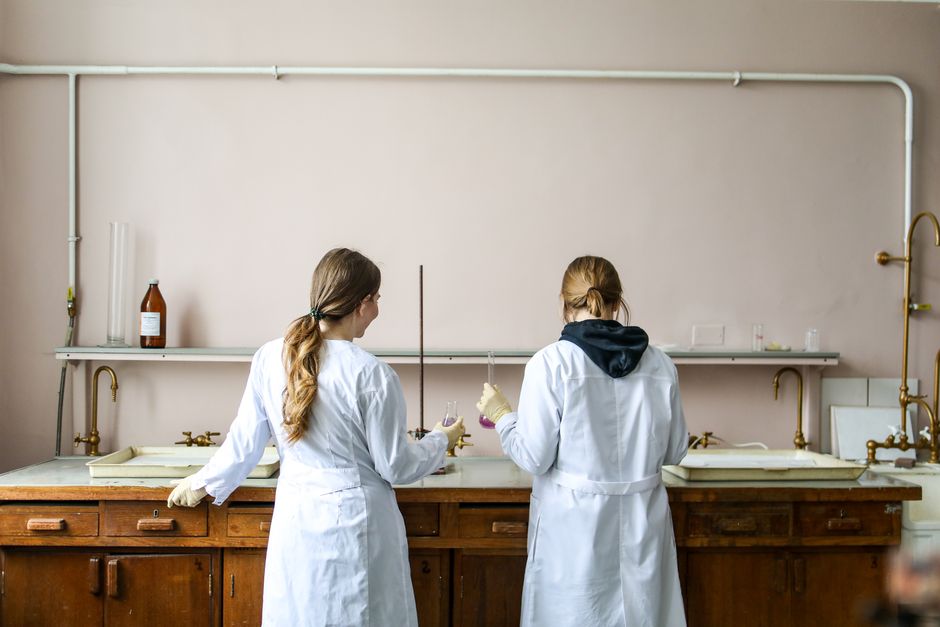
Photo by Polina Tankilevitch on Pexels
- Ask a Question: This is where it all starts! You observe something and wonder about it. For instance, "Why do some plants grow taller than others?"
- Do Background Research: Before you experiment, see what others have already learned about your question. This helps you avoid repeating mistakes and gives you ideas.
- Formulate a Hypothesis: This is your educated guess or a testable prediction about the answer to your question. It's usually stated as an "If... then..." statement. For example, "If I give a plant more sunlight, then it will grow taller."
- Design and Conduct an Experiment: This is where you test your hypothesis. You need to change only one thing (the independent variable) and keep everything else the same (the controlled variables). The thing you measure is the dependent variable.
- Analyze Data: After your experiment, you look at the results. What did you observe? Did numbers change? You record and organize your findings.
- Draw a Conclusion: Based on your data, you decide if your hypothesis was supported or not. It's okay if your hypothesis was wrong – you still learned something! You might then form a new question or hypothesis.
Here's how those steps flow:
graph TD
    A["Observe & Ask a Question"] --> B["Do Background Research"]
    B --> C["Formulate a Hypothesis"]
    C --> D["Design & Conduct Experiment"]
    D --> E["Analyze Data"]
    E --> F["Draw a Conclusion"]
    F --> G{"Hypothesis Supported?"}
    G -- "Yes" --> H["Share Results / Further Research"]
    G -- "No" --> I["Refine Hypothesis / New Question"]
    I --> B
Key Terms You'll Encounter:

Photo by RDNE Stock project on Pexels
- Observation: Using your five senses (sight, smell, touch, taste, hearing) to gather information.
- Inference: An explanation or interpretation of your observations based on prior knowledge, not just what you directly see.
- Variable: Anything that can change in an experiment.
- Independent Variable: The one thing you change on purpose in an experiment.
- Dependent Variable: The thing you measure; it depends on the independent variable.
- Controlled Variables: Everything you keep the same to make sure your experiment is fair.
3. Worked Example
Let's say you notice that some of your neighbor's rose bushes have more flowers than yours, even though they look like the same type of rose.
- Ask a Question: "Does giving rose bushes more fertilizer make them produce more flowers?"
- Background Research: You look up how fertilizer affects roses and find that nitrogen-rich fertilizers can encourage bloom production.
- Formulate a Hypothesis: "If I add nitrogen-rich fertilizer to my rose bush, then it will produce more flowers than a rose bush without fertilizer."
- Design and Conduct an Experiment:
- You get two identical rose bushes (same age, size, type).
- You place them in the same spot, so they get the same amount of sunlight and water (controlled variables).
- To one bush, you add the recommended amount of nitrogen-rich fertilizer (independent variable).
- To the other bush, you add no fertilizer (this is your control group – a group used for comparison that doesn't get the independent variable).
- You count the number of flowers on each bush for three weeks (dependent variable).
- Analyze Data: After three weeks, the fertilized bush produced 15 flowers, while the unfertilized bush produced 7 flowers.
- Draw a Conclusion: Your hypothesis was supported by the data. Adding nitrogen-rich fertilizer did lead to more flowers on your rose bush in this experiment.
4. Key Takeaways
- Science is a process of asking questions and seeking answers about the natural world.
- The scientific method provides a structured way to investigate these questions.
- A hypothesis is an educated, testable guess about your question's answer.
- Variables are crucial: you change the independent variable and measure the dependent variable.
- Keeping controlled variables constant ensures your experiment is fair.
- The scientific method isn't always a straight line; you might go back a step if needed.
- No experiment is a failure if you learn something, even if your hypothesis wasn't supported.
Common mistakes you should avoid:
- Changing more than one thing in your experiment; this makes it hard to know what caused your results.
- Not having a control group to compare your results against.
- Jumping to conclusions without analyzing all your data carefully.
- Thinking a "wrong" hypothesis means you failed; it just means you learned something new!
5. Now Try It
Think of something you've observed in your everyday life that makes you curious. Maybe it's about why a certain food spoils faster than another, or why your pet behaves a certain way. For 15 minutes, write down:
1. Your observation.
2. A question you have about that observation.
3. A hypothesis that could answer your question (remember, "If... then..." statements are helpful!).
4. List at least two controlled variables you'd need to keep the same if you were to test your hypothesis, and what your independent and dependent variables would be.
Success looks like you having a clear question, a testable hypothesis, and correctly identifying the different types of variables involved in your mini-experiment idea.
Frequently asked about Introduction to Science and Scientific Method
Study this next
Get the full Science, types of mixture, types of pure substance, types or compound, types of element, any topic in science grade seven term one for a pre-test curriculum
Clone the complete plan to your dashboard for unlimited AI-generated notes, practice quizzes, and a personalised revision schedule.
Create Free Account