Mixtures: Types and Separation
From the Science, types of mixture, types of pure substance, types or compound, types of element, any topic in science grade seven term one for a pre-test curriculum
TL;DR
Mixtures combine two or more substances that keep their original properties and can be separated physically. They come in two main types: heterogeneous, where you can see the different parts, and homogeneous, where everything looks uniform. You can separate mixtures using various physical methods like filtration, evaporation, or magnetism.
1. The Mental Model
Imagine you're making a salad or stirring sugar into your tea. You're creating a mixture! It's just different stuff combined without changing what each thing fundamentally is.
2. The Core Material
When we talk about mixtures, we're combining two or more substances in a way that doesn't chemically change them. Each substance keeps its original properties, and you can usually separate them back out using physical means.
There are two main types of mixtures:
Homogeneous Mixtures
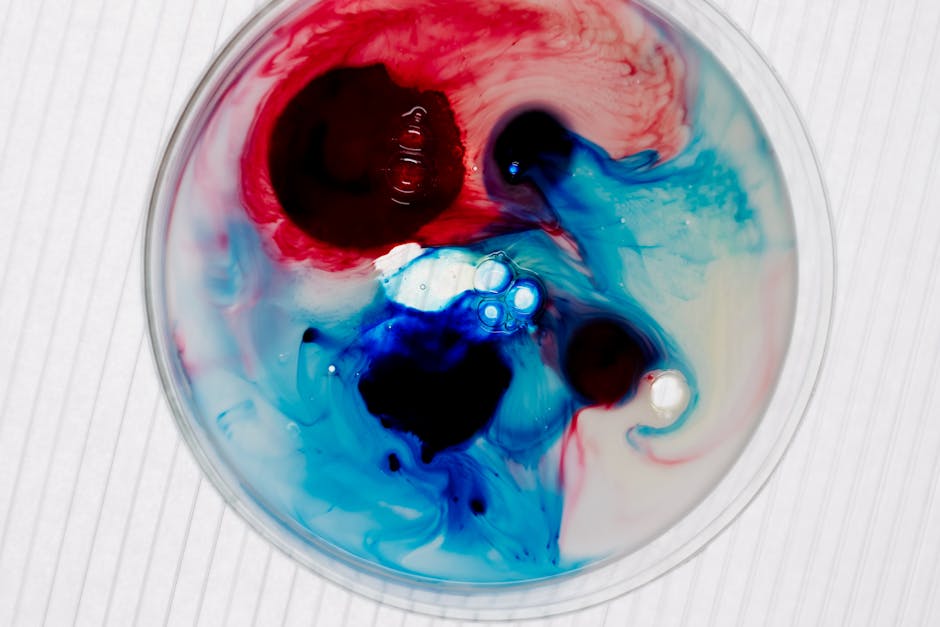
Photo by Ron Lach on Pexels
In a homogeneous mixture, everything looks the same throughout. You can't see the individual components because they're uniformly distributed. Think of it like this: if you take a spoonful from one part of the mixture, it's exactly the same as a spoonful from another part.
- Examples: Saltwater (salt dissolved in water), air (nitrogen, oxygen, etc., all mixed together), brass (a mixture of copper and zinc).
- Key characteristic: Uniform composition; looks like one substance.
- Special type: Solutions are a specific kind of homogeneous mixture where one substance (the solute) is dissolved in another (the solvent).
Heterogeneous Mixtures
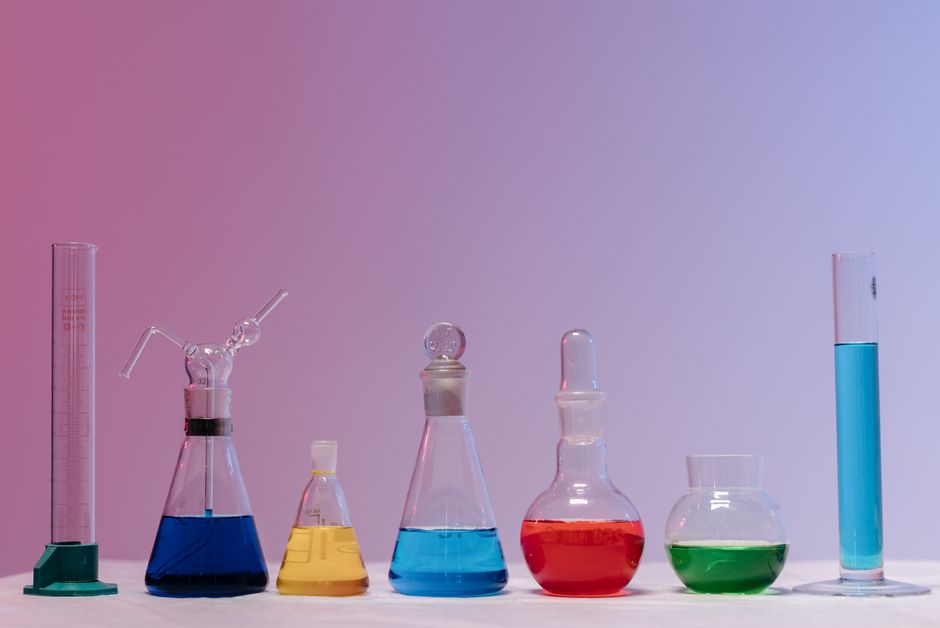
Photo by Pavel Danilyuk on Pexels
A heterogeneous mixture is the opposite. You can clearly see the different parts, or at least tell that it's not uniform. The composition varies from one part of the mixture to another.
- Examples: A salad (you can see lettuce, tomatoes, cucumbers), sand and water, oil and vinegar dressing, trail mix.
- Key characteristic: Non-uniform composition; you can often see distinct phases or particles.
- Special types:
- Suspensions: Heterogeneous mixtures where solid particles are dispersed in a liquid or gas but will eventually settle out (e.g., muddy water).
- Colloids: Heterogeneous mixtures where particles are larger than those in a solution but too small to settle out quickly, often appearing cloudy (e.g., milk, fog).
Separating Mixtures

Photo by Mikhail Nilov on Pexels
Since substances in a mixture aren't chemically bonded, we can separate them using physical methods. The method you choose depends on the properties of the substances in the mixture.
Here are some common separation techniques:
- Filtration: Used to separate an insoluble solid from a liquid. You pour the mixture through a filter, which allows the liquid to pass through but traps the solid.
- Example: Separating sand from water using filter paper.
- Evaporation: Used to separate a soluble solid from a liquid solvent, especially if the solid is what you want to recover. The liquid is heated and turns into a gas, leaving the solid behind.
- Example: Getting salt from saltwater by boiling off the water.
- Decantation: Carefully pouring off a liquid from a solid that has settled at the bottom, or from a less dense liquid.
- Example: Carefully pouring water off sand after the sand has settled.
- Magnetism: Used to separate magnetic materials from non-magnetic ones.
- Example: Separating iron filings from sand using a magnet.
- Distillation: Used to separate two or more liquids with different boiling points, or a soluble solid from a liquid when you want to collect the liquid. The mixture is heated, and the substance with the lower boiling point vaporizes, then cools and condenses back into a liquid.
- Example: Separating water from alcohol, or pure water from saltwater.
- Chromatography: A technique used to separate components of a mixture based on their differing affinities for a stationary phase and a mobile phase.
- Example: Separating different colored dyes in ink.
Here's a flowchart to help you think about choosing a separation method:
graph TD
    A["Start: You have a mixture"] --> B{Is one component magnetic?};
    B -- Yes --> C[Use Magnetism];
    B -- No --> D{Is there an insoluble solid and a liquid?};
    D -- Yes --> E[Use Filtration];
    D -- No --> F{Is there a soluble solid dissolved in a liquid?};
    F -- Yes --> G{Do you want the solid or the liquid?};
    G -- Solid --> H[Use Evaporation];
    G -- Liquid --> I[Use Distillation];
    F -- No --> J{Are there two liquids with different boiling points?};
    J -- Yes --> K[Use Distillation];
    J -- No --> L{Are there substances with different solubilities/affinities?};
    L -- Yes --> M[Use Chromatography];
    M -- No --> N[Consider other physical properties (density, particle size, etc.)];
3. Worked Example
Let's say you have a mixture of iron filings, sand, and salt. You want to separate all three components.
- Separate the iron filings: First, use a magnet to attract the iron filings. Stir the magnet through the mixture, and the iron will stick to it. Remove the magnet, and you've separated the iron.
- Separate the salt from the sand: Now you have sand and salt. Add water to this mixture and stir well. The salt will dissolve in the water, creating a saltwater solution, while the sand won't dissolve.
- Separate the sand from the saltwater: Use filtration. Pour the sandy saltwater through filter paper in a funnel. The sand will be caught by the filter paper (this is your separated sand), and the saltwater solution will pass through into a beaker below.
- Separate the salt from the water: You now have saltwater in the beaker. Gently heat the saltwater using a Bunsen burner. The water will evaporate (turn into steam), leaving the solid salt crystals behind in the beaker. You've now separated all three components!
4. Key Takeaways
- Mixtures are physical combinations of substances that retain their individual properties.
- Homogeneous mixtures look uniform throughout, like saltwater.
- Heterogeneous mixtures have visible different parts, like a salad.
- Solutions are a type of homogeneous mixture, while suspensions and colloids are types of heterogeneous mixtures.
- Physical separation methods exploit differences in properties like magnetism, solubility, boiling point, or particle size.
- Choosing the right separation method depends on the specific properties of the substances in the mixture.
- You can often use multiple separation techniques in sequence to separate complex mixtures.
Common mistakes to avoid:
* Confusing mixtures with pure substances (like compounds), where substances are chemically bonded.
* Trying to use a chemical reaction to separate a mixture – separation should be physical.
* Not considering all the properties of the components when choosing a separation method (e.g., trying to filter a dissolved substance).
5. Now Try It
Imagine you have a mixture of sugar, small pebbles, and water. Design a step-by-step plan to separate all three components, listing the separation technique you'd use at each stage. What should you have left in your final step to confirm you've successfully separated everything? You should end up with three distinct piles/containers: one with sugar, one with pebbles, and one with water.
Frequently asked about Mixtures: Types and Separation
More from Science, types of mixture, types of pure substance, types or compound, types of element, any topic in science grade seven term one for a pre-test
Get the full Science, types of mixture, types of pure substance, types or compound, types of element, any topic in science grade seven term one for a pre-test curriculum
Clone the complete plan to your dashboard for unlimited AI-generated notes, practice quizzes, and a personalised revision schedule.
Save this course free