ICSE/ISC: Physics — Electricity and Magnetism
From the ICSE & ISC Prep curriculum
TL;DR
Electricity and magnetism are two sides of the same coin, described by a set of fundamental principles that govern how charges interact and how fields are generated. You'll learn about electric current, voltage, resistance, and the basic laws like Ohm's Law and Joule's Law of heating. We'll also cover how magnetic fields arise from currents and how they exert forces.
1. The Mental Model
Think of electricity as the flow of tiny charged particles (electrons) and magnetism as a force that surrounds moving charges or certain materials. These two phenomena are deeply interconnected; a change in one often creates the other.
2. The Core Material
Electric Charge and Current

Photo by Ahmet Kerem Derin on Pexels
Electric charge is a fundamental property of matter, either positive or negative. The SI unit of charge is the coulomb (C).
Electric current (I) is the rate of flow of electric charge. Imagine water flowing through a pipe; current is how much water passes a point per second.
$I = \frac{Q}{t}$
where $Q$ is charge and $t$ is time. The SI unit of current is the ampere (A).
Electric Potential and Potential Difference
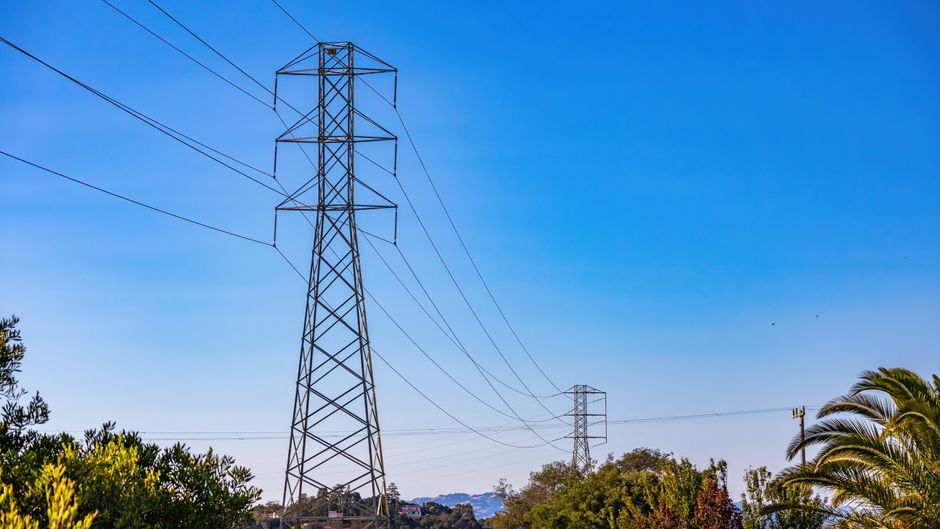
Photo by Robert So on Pexels
Electric potential is the work done per unit charge to move a charge from infinity to a point in an electric field. Think of it as electrical "pressure."
Potential difference (V), also called voltage, is the work done per unit charge to move a charge between two points. It's the "push" that makes current flow.
$V = \frac{W}{Q}$
where $W$ is work done. The SI unit of potential difference is the volt (V).
Ohm's Law and Resistance
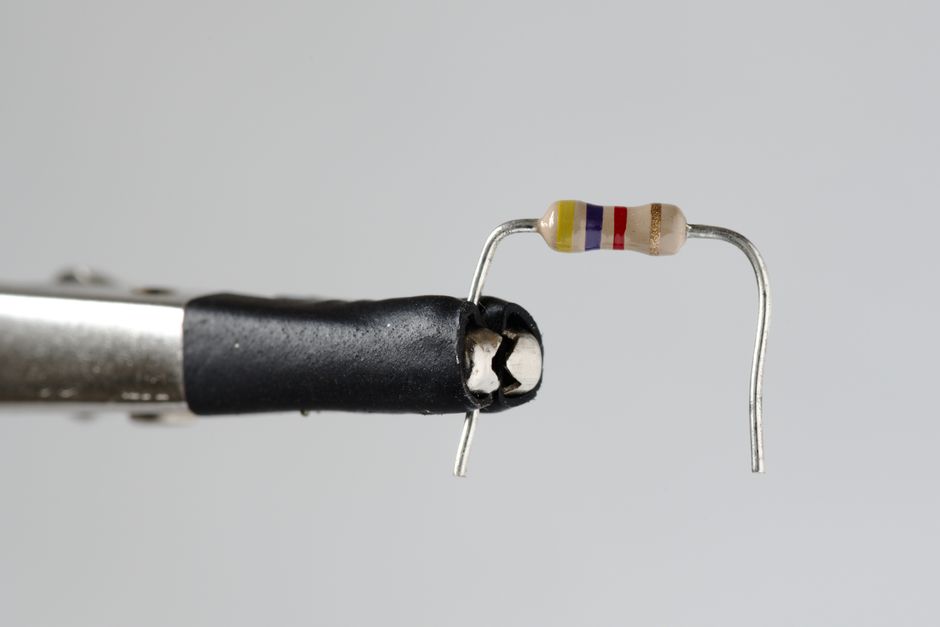
Photo by Zacharias Korsalka on Pexels
Resistance (R) is the opposition to the flow of electric current. It's like friction in a pipe slowing down water. The SI unit of resistance is the ohm ($\Omega$).
Ohm's Law states that the current flowing through a conductor between two points is directly proportional to the voltage across the two points, provided the temperature and other physical conditions remain constant.
$V = IR$
Factors Affecting Resistance

Photo by Markus Winkler on Pexels
Resistance of a conductor depends on:
1. Length (L): Longer wires have more resistance ($R \propto L$).
2. Area of cross-section (A): Thicker wires have less resistance ($R \propto \frac{1}{A}$).
3. Material (resistivity, $\rho$): Different materials have different inherent resistance.
4. Temperature: Resistance generally increases with temperature for conductors.
So, $R = \rho \frac{L}{A}$, where $\rho$ is resistivity (SI unit: ohm-meter, $\Omega \cdot m$).
Series and Parallel Combinations of Resistors
- Series: Resistors connected end-to-end. Total resistance is the sum of individual resistances: $R_{eq} = R_1 + R_2 + R_3 + ...$
- Parallel: Resistors connected across the same two points. Total resistance is given by: $\frac{1}{R_{eq}} = \frac{1}{R_1} + \frac{1}{R_2} + \frac{1}{R_3} + ...$
Electric Power and Heating Effect of Current
Electric power (P) is the rate at which electrical energy is consumed or produced.
$P = VI = I^2 R = \frac{V^2}{R}$
The SI unit of power is the watt (W).
Joule's Law of Heating states that when current flows through a resistor, electrical energy is converted into heat. The heat produced ($H$) is:
$H = I^2 Rt$
where $t$ is time. The SI unit of heat (energy) is the joule (J).
Magnetic Effects of Electric Current
A current-carrying conductor produces a magnetic field around it.
* Straight conductor: Concentric circles of magnetic field lines around the wire. Direction given by Right-Hand Thumb Rule (thumb in current direction, fingers show field direction).
* Circular loop: Magnetic field lines pass through the loop, resembling a bar magnet's field.
* Solenoid: A coil of many turns of insulated wire. When current flows, it acts like a strong bar magnet.
Force on a Current-Carrying Conductor in a Magnetic Field
A current-carrying conductor placed in a magnetic field experiences a force. This is the principle behind electric motors. The direction of the force is given by Fleming's Left-Hand Rule:
* Thumb: Direction of Force/Motion
* Forefinger: Direction of Magnetic Field
* Middle Finger: Direction of Current
graph TD
    A["Electric Current (I)"] --> B["Produces Magnetic Field"]
    B --> C["Magnetic Field Exerts Force"]
    C --> D["On Moving Charges / Current-carrying Conductors"]
    D --> E["Leads to Electric Motors & Generators"]
    A --> F["Also Causes Heating (Joule's Law)"]
    F --> G["Used in Heaters, Fuses"]
    H["Voltage (V)"] --> A
    I["Resistance (R)"] --> A
    H --> J["Relates to Power (P=VI)"]
    A -- "Ohm's Law" --> K["V = IR"]
3. Worked Example
Let's say you have a circuit with a 12V battery connected to a 4$\Omega$ resistor.
1. Calculate the current (I) flowing through the resistor.
Using Ohm's Law: $V = IR$
$12V = I \times 4\Omega$
$I = \frac{12V}{4\Omega} = 3A$
-
Calculate the power (P) dissipated by the resistor.
Using $P = I^2 R$:
$P = (3A)^2 \times 4\Omega = 9A^2 \times 4\Omega = 36W$
Alternatively, using $P = VI$:
$P = 12V \times 3A = 36W$ -
If the current flows for 10 minutes, calculate the heat generated (H).
First, convert time to seconds: $10 \text{ minutes} = 10 \times 60 = 600 \text{ seconds}$.
Using Joule's Law: $H = I^2 Rt$
$H = (3A)^2 \times 4\Omega \times 600s = 9A^2 \times 4\Omega \times 600s = 36 \times 600 J = 21600 J$
4. Key Takeaways
- Current is the flow of charge, voltage is the 'push', and resistance opposes the flow.
- Ohm's Law ($V=IR$) is fundamental to understanding basic circuits.
- Resistance depends on the material, length, and cross-sectional area of a conductor.
- Electrical energy is converted to heat in resistors, following Joule's Law ($H = I^2 Rt$).
- Moving charges create magnetic fields, and magnetic fields exert forces on moving charges.
- The Right-Hand Thumb Rule helps find the magnetic field direction around a current, and Fleming's Left-Hand Rule gives the force on a conductor in a field.
- Power ($P=VI$) is the rate of energy transfer, showing how quickly work is done or heat is generated.
Common Mistakes to Avoid:
* Forgetting to convert time to seconds when calculating energy/heat.
* Mixing up series and parallel resistance formulas; always use the correct one for the combination.
* Confusing the applications of Fleming's Left-Hand Rule (force) with the Right-Hand Rule (field direction).
* Ignoring units – always write units with your numerical answers.
* Assuming voltage is the same across all components in a series circuit (it's current that's the same).
5. Now Try It
Design a simple circuit diagram using standard symbols where a 24V source powers two resistors: one 6$\Omega$ and another 3$\Omega$.
1. Draw the circuit with the two resistors connected in series.
2. Calculate the equivalent resistance of the series circuit.
3. Calculate the total current flowing from the source.
4. Now, draw the circuit with the same two resistors connected in parallel to the 24V source.
5. Calculate the equivalent resistance of the parallel circuit.
6. Calculate the total current flowing from the source in this parallel setup.
Success looks like: You'll have two clear circuit diagrams and correct calculations showing the differences in equivalent resistance and total current between series and parallel connections for the same components.
Frequently asked about ICSE/ISC: Physics — Electricity and Magnetism
Study this next
Get the full ICSE & ISC Prep curriculum
Clone the complete plan to your dashboard for unlimited AI-generated notes, practice quizzes, and a personalised revision schedule.
Save this course free