Understanding Scarcity and Finite Resources
From the The economic problems curriculum
TL;DR
Scarcity means we have unlimited wants but limited resources to satisfy them, forcing us to make choices. Resources are finite, meaning there's a fixed or depletable amount available, which directly creates the problem of scarcity. This fundamental economic problem impacts every decision made by individuals, businesses, and governments.
1. The Mental Model
Imagine you have a small cake (resources) but a huge party where everyone wants a big slice (unlimited wants). You can't give everyone what they want, so you have to make tough choices about who gets a slice and how big it is. That's scarcity in a nutshell.
2. The Core Material
At the heart of economics is the concept of scarcity. It's not about things being rare; it's about our inability to have everything we want because there simply aren't enough resources to satisfy all desires.
What are "Resources"?

Photo by Ann H on Pexels
In economics, resources are often categorized into four types, sometimes called the factors of production:
* Land: Natural resources like actual land, water, minerals, forests, and air. These are largely finite – there's only so much of them.
* Labor: The physical and mental effort people contribute to production. While the global population can grow, the amount of available labor at any given time for specific tasks is finite.
* Capital: Manufactured aids to production like tools, machinery, buildings, and infrastructure. These are created by labor and land, and their availability is limited by the ability to produce them.
* Entrepreneurship: The special human resource that takes risks, innovates, and organizes the other resources to produce goods and services. The number of people with this specific drive and skill is also finite.
Finite vs. Renewable Resources
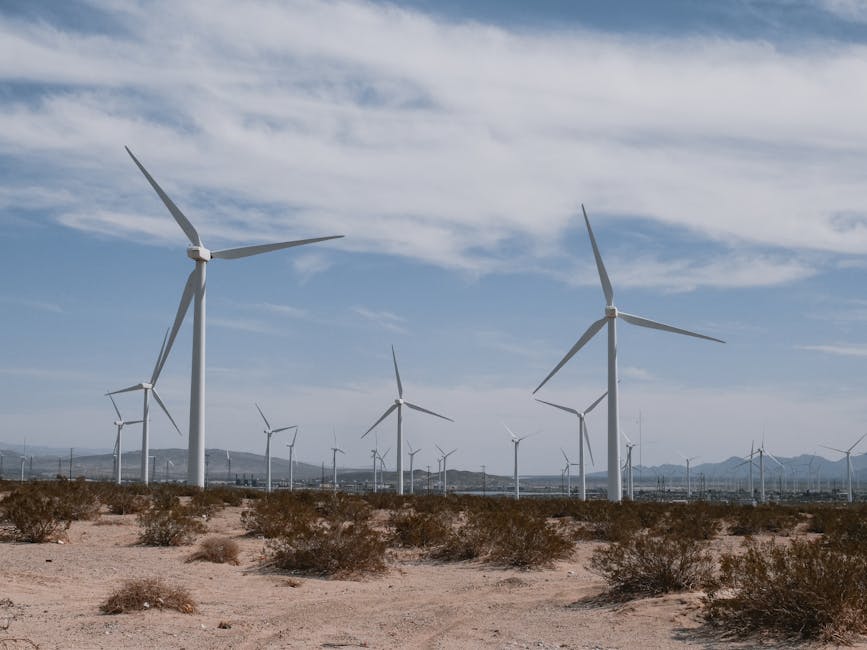
Photo by Kindel Media on Pexels
It's crucial to distinguish between finite (non-renewable) and renewable resources, though even renewable ones can be subject to scarcity if overused.
* Finite (Non-Renewable) Resources: These are resources that exist in a fixed amount or are used up faster than nature can replenish them. Examples include oil, natural gas, coal, and most minerals. Once they're gone, they're gone (or take millions of years to form).
* Renewable Resources: These can replenish themselves naturally over time, such as timber, fish stocks, solar energy, and wind energy. However, if we exploit them too quickly (e.g., overfishing or deforestation), they can become scarce or even depleted.
The diagram below shows how the interplay of unlimited wants and finite resources leads to scarcity and the need for choices.
graph TD
    A["Human Wants (Unlimited)"] --> B["Resources (Finite)"]
    B --> C["Scarcity"]
    C --> D["Need for Choices/Trade-offs"]
    D --> E["Economic Decisions (What, How, For Whom)"]
    E --> A;
The Economic Problem

Photo by cottonbro studio on Pexels
Because of scarcity, every society faces the "economic problem":
1. What to produce? (Do we make more cars or more hospitals?)
2. How to produce? (Do we use more machines or more manual labor?)
3. For whom to produce? (Who gets the goods and services?)
These questions highlight that every decision involves an opportunity cost – the value of the next best alternative you give up when you make a choice.
3. Worked Example
Imagine a small island nation with limited arable land (a finite resource). Its population has growing desires for both growing food and building homes.
If the islanders decide to use more of their limited land for housing development:
* Choice: Build more homes.
* Consequence: Less land is available for farming.
* Opportunity Cost: The amount of food they could have grown on that land, and the potential food security that comes with it.
Conversely, if they prioritize food production:
* Choice: Dedicate more land to farming.
* Consequence: Fewer homes can be built, leading to potential housing shortages or higher housing prices.
* Opportunity Cost: The number of homes they could have built, and the improved living conditions that might have come with them.
This example clearly shows how the finite nature of land forces a choice, creating scarcity in one area (housing or food) and incurring an opportunity cost whichever path is chosen.
4. Key Takeaways
- Scarcity is the fundamental economic problem arising from unlimited human wants and limited resources.
- Resources, also called factors of production, include land, labor, capital, and entrepreneurship.
- Many key resources, especially natural ones like oil and minerals, are finite and non-renewable.
- Even renewable resources can become scarce if consumed faster than they can replenish.
- Scarcity forces individuals, businesses, and governments to make choices, leading to opportunity costs.
- Opportunity cost is the value of the next best alternative forgone when a choice is made.
- The economic problem (what, how, and for whom to produce) is a direct result of scarcity.
Common mistakes to avoid:
- Don't confuse scarcity with rarity; something rare isn't necessarily scarce if there's no demand for it.
- Don't assume finite resources only apply to raw materials; labor and capital are also limited at any given time.
- Don't think scarcity only affects poor countries; even wealthy nations face it because wants are always unlimited.
- Don't forget that even "free" goods like air can become scarce (e.g., clean air in polluted cities).
5. Now Try It
Think about your own daily life. Identify two decisions you made today (e.g., what to eat, how to spend your time, what to buy). For each decision, identify the finite resource involved (e.g., money, time, ingredients) and the opportunity cost you incurred. What did you give up by making that choice? Write down your answers, focusing on how the limited resource forced your decision. Success means clearly linking your chosen action to a finite resource and explicitly stating what you gave up as a result.
Frequently asked about Understanding Scarcity and Finite Resources
Study this next
Get the full The economic problems curriculum
Clone the complete plan to your dashboard for unlimited AI-generated notes, practice quizzes, and a personalised revision schedule.
Save this course free