Transportation Engineering and Water Resources
From the Fundamentals of Civil Engineering curriculum
TL;DR
Transportation engineering focuses on the safe and efficient movement of people and goods, designing infrastructure like roads, railways, and airports. Water resources engineering deals with managing water, including supply, flood control, and quality, using structures like dams and treatment plants. Both fields are crucial for sustainable development and public well-being, requiring an understanding of civil infrastructure design and environmental impact.
1. The Mental Model
Think of transportation engineering as planning the veins and arteries of a city or country, ensuring everything flows smoothly. Water resources engineering is like managing the lifeblood itself, making sure there's enough clean water and preventing it from causing harm. Both are about optimizing essential systems that keep society running.
2. The Core Material
Transportation engineering is all about designing, building, and maintaining systems for moving people and goods. This includes roads, bridges, tunnels, railways, airports, and even ports. It's a vast field that considers traffic flow, safety, environmental impact, and economic efficiency.
Key Aspects of Transportation Engineering:
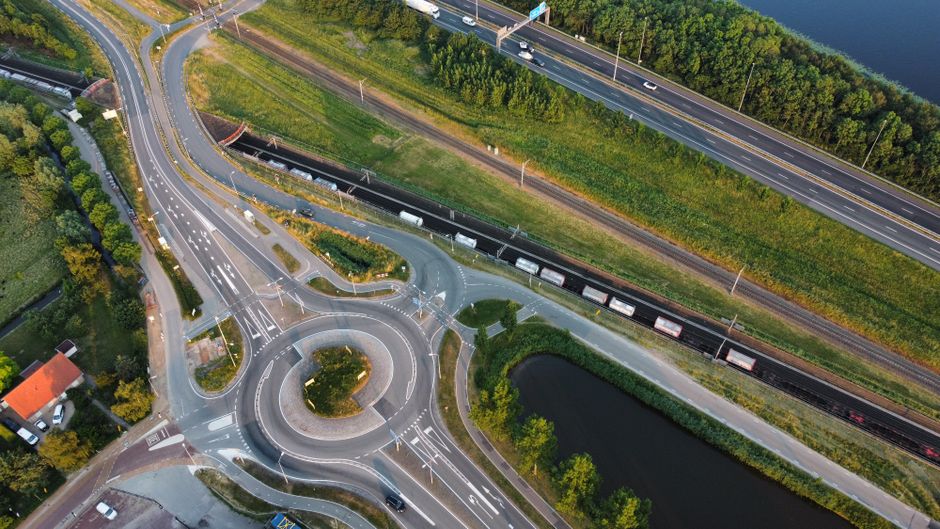
Photo by Stan Versluis on Pexels
- Planning: This involves forecasting travel demand, selecting optimal routes, and assessing the environmental and social impacts of new projects.
- Design: You'll learn about geometric design (curves, grades, sight distances), pavement design (materials, layers), and structural design (bridges, tunnels).
- Operations & Management: This includes traffic signal timing, incident management, and intelligent transportation systems (ITS) to improve efficiency and safety.
- Safety: A primary concern is reducing accidents through better design, signage, and traffic control devices.
Water resources engineering, on the other hand, deals with how we manage water for human use and environmental health. This includes securing water supplies, protecting against floods, and ensuring water quality.
Key Aspects of Water Resources Engineering:

Photo by Atharva Sune on Pexels
- Hydrology: Understanding the movement, distribution, and quality of water on Earth. This involves rainfall, runoff, evaporation, and groundwater.
- Hydraulics: The study of water in motion, essential for designing channels, pipes, and control structures.
- Water Supply & Treatment: Designing systems to collect, treat, and distribute drinking water to communities.
- Wastewater Treatment: Developing processes to treat used water before it's returned to the environment.
- Flood Control: Designing levees, dams, and stormwater management systems to protect areas from flooding.
- Irrigation: Creating systems to deliver water for agricultural purposes.
These two fields often overlap, especially in urban planning, where transportation infrastructure might interact with water bodies, or where stormwater runoff management is critical for road design.
graph TD
    A["Civil Engineering"] --> B["Transportation Engineering"]
    A --> C["Water Resources Engineering"]

    B --> B1["Planning & Design"]
    B --> B2["Traffic & Safety"]
    B --> B3["Pavement & Structure"]

    C --> C1["Hydrology & Hydraulics"]
    C --> C2["Water Supply & Treatment"]
    C --> C3["Flood Control & Irrigation"]

    B1 --> B1a["Forecasting Demand"]
    B1 --> B1b["Route Selection"]
    B2 --> B2a["Traffic Signals"]
    B2 --> B2b["Accident Reduction"]
    B3 --> B3a["Geometric Design"]
    B3 --> B3b["Pavement Layers"]

    C1 --> C1a["Rainfall-Runoff"]
    C1 --> C1b["Pipe Flow"]
    C2 --> C2a["Drinking Water Plants"]
    C2 --> C2b["Wastewater Plants"]
    C3 --> C3a["Dams & Levees"]
    C3 --> C3b["Stormwater Mgmt"]
3. Worked Example
Let's consider a scenario where you're asked to design a new urban road that crosses a small river.
For the Transportation Engineering aspect, you'd first conduct a traffic study to estimate the number of vehicles that will use the road (e.g., 10,000 vehicles per day). Based on this, you'd determine the number of lanes needed and the required pavement thickness (e.g., 150mm asphalt over 200mm crushed aggregate base). You'd then design the geometric alignment of the road, including curve radii and sight distances, to ensure safe speeds (e.g., 60 km/h). The crucial part would be designing a bridge to span the river, which would involve structural calculations and selecting appropriate materials.
For the Water Resources Engineering aspect, you'd need to perform a hydrological analysis of the river. This involves determining the river's design flood discharge (e.g., the 100-year flood event, calculated as 50 cubic meters per second) to ensure the bridge foundation and opening are adequate. You'd also consider the scour potential around bridge piers to prevent erosion and structural failure. Additionally, you'd plan for stormwater management along the road, ensuring that runoff doesn't negatively impact the river's water quality or contribute to localized flooding. This might involve designing swales or detention ponds.
Both aspects are integrated: the bridge's design depends on the road's traffic loads and the river's flood characteristics, while the road's drainage impacts the river.
4. Key Takeaways
- Transportation engineering ensures efficient and safe movement through infrastructure like roads, railways, and airports.
- Water resources engineering focuses on managing water for supply, flood control, and environmental protection.
- Both fields are fundamental to urban planning, economic development, and public health.
- Geometric design, traffic analysis, and pavement design are core to transportation engineering.
- Hydrology, hydraulics, water treatment, and flood control are central to water resources engineering.
- Many projects require an integrated approach, considering both transport and water impacts.
Common Mistakes to Avoid:
- Ignoring interdependencies: Don't design a road without considering its impact on nearby water bodies or vice-versa.
- Underestimating demand: Failing to accurately forecast traffic or water needs can lead to undersized infrastructure.
- Neglecting safety: Always prioritize safety in transportation designs; it's not an afterthought.
- Ignoring environmental impacts: Both fields have significant environmental implications; consider them early in the design process.
5. Now Try It
Imagine a small town is planning to build a new road that will pass through a rural area and cross a small stream. Briefly outline the key considerations you'd have from both a Transportation Engineering and a Water Resources Engineering perspective for this project.
What success looks like: You should be able to list at least three specific considerations for each field, demonstrating an understanding of how each discipline would approach the project. For example, for transportation, you might mention road alignment or traffic volume. For water resources, you might mention stream crossing design or stormwater drainage.
Frequently asked about Transportation Engineering and Water Resources
Study this next
Get the full Fundamentals of Civil Engineering curriculum
Clone the complete plan to your dashboard for unlimited AI-generated notes, practice quizzes, and a personalised revision schedule.
Create Free Account