Introduction to Waves and Superposition
From the Wave optics curriculum
TL;DR
Waves are disturbances that transfer energy without transferring matter, characterized by properties like amplitude and wavelength. When multiple waves meet, they combine their effects at each point through a process called superposition. This combination can lead to constructive (stronger) or destructive (weaker) interference patterns.
1. The Mental Model
Imagine ripples spreading out in a pond after you drop two pebbles. Where these ripples meet, they don't just pass through each other; they temporarily add up their "hill" and "valley" effects before continuing on their way. This adding up is what superposition is all about.
2. The Core Material
What is a Wave?
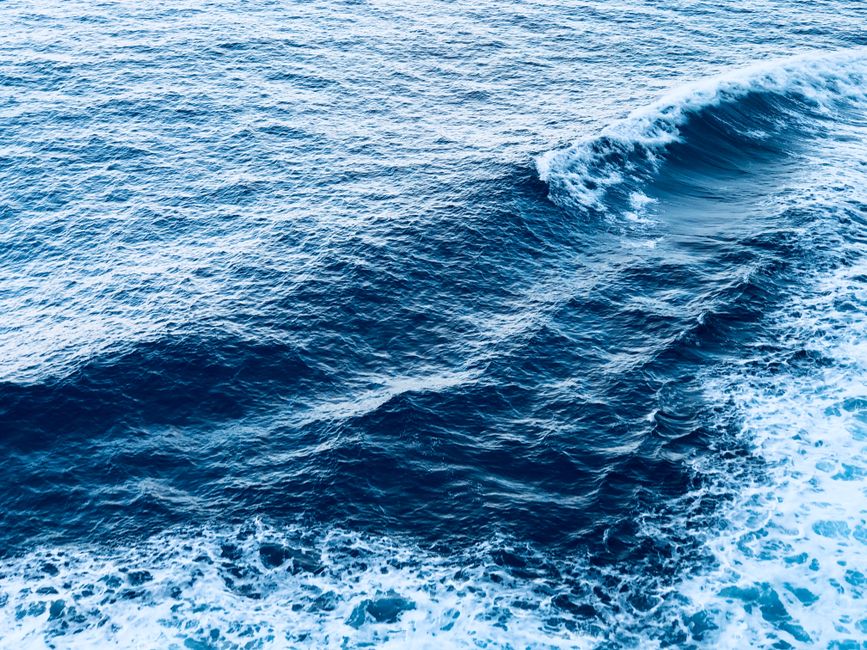
Photo by Kathleen Lamb on Pexels
A wave is a disturbance that travels through a medium (like water, air, or even empty space for light) and transfers energy. Importantly, the medium itself doesn't travel with the wave; its particles just oscillate around their equilibrium positions. Think of a stadium crowd doing "the wave" – people stand up and sit down, but they don't move around the stadium.
Key properties of a wave include:
* Amplitude (A): The maximum displacement of a particle from its equilibrium position. It relates to the wave's energy.
* Wavelength ($\lambda$): The distance between two consecutive corresponding points on a wave (e.g., crest to crest or trough to trough).
* Frequency (f): The number of complete wave cycles passing a point per second. Measured in Hertz (Hz).
* Period (T): The time it takes for one complete wave cycle to pass a point. T = 1/f.
* Wave Speed (v): How fast the wave travels. v = f $\lambda$.
Types of Waves
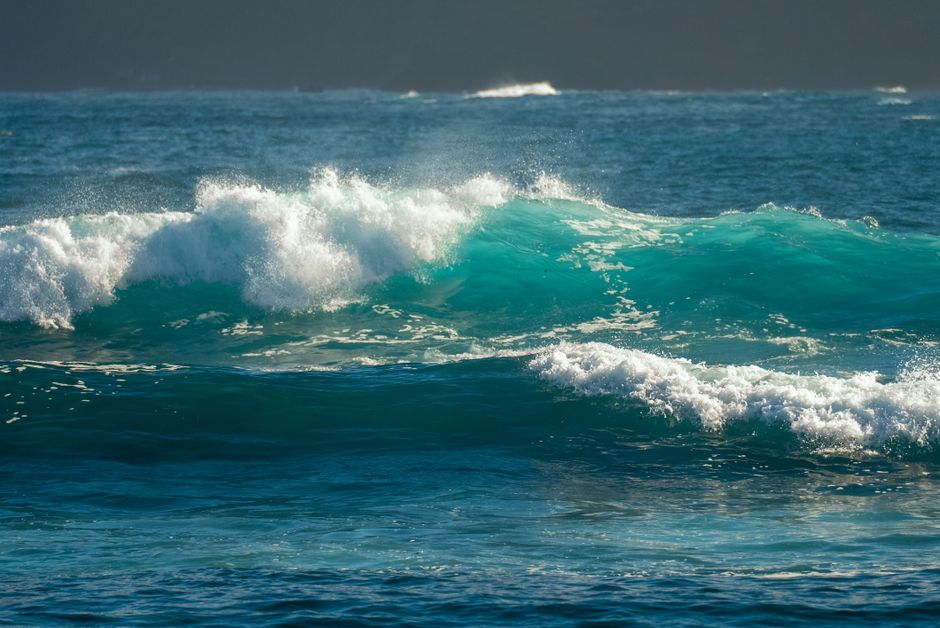
Photo by Atlantic Ambience on Pexels
- Transverse Waves: The particles of the medium oscillate perpendicular to the direction the wave travels. Examples: light waves, waves on a string.
- Longitudinal Waves: The particles of the medium oscillate parallel to the direction the wave travels. Examples: sound waves.
The Principle of Superposition

Photo by Mikhail Nilov on Pexels
The Principle of Superposition states that when two or more waves overlap in space, the resultant displacement at any point and at any instant is the vector sum of the displacements due to the individual waves at that point and instant. In simpler terms: if two waves meet, you just add their individual "heights" (displacements) at every point to find the new combined height.
graph TD
    A["Wave 1 (e.g., peak)"] --> B{"Overlap Region"}
    C["Wave 2 (e.g., peak)"] --> B
    B --> D["Combined Wave (Sum of Displacements)"]

    style A fill:#cef,stroke:#333,stroke-width:2px
    style C fill:#fce,stroke:#333,stroke-width:2px
    style D fill:#def,stroke:#333,stroke-width:2px

    subgraph Wave Interaction Outcomes
        D --> E["Constructive Interference (Peaks align, amplitudes add)"]
        D --> F["Destructive Interference (Peak aligns with trough, amplitudes subtract)"]
        E --> G["Result: Stronger Wave (Larger amplitude)"]
        F --> H["Result: Weaker/No Wave (Smaller/zero amplitude)"]
    end
Interference
Interference is the phenomenon that occurs when two or more waves superpose to form a resultant wave of greater, lower, or the same amplitude.
- Constructive Interference: Occurs when waves meet in phase, meaning their crests align with crests, and troughs align with troughs. Their amplitudes add up, resulting in a larger amplitude wave.
- Example: A + A = 2A (if both amplitudes are A).
- Destructive Interference: Occurs when waves meet out of phase, meaning a crest aligns with a trough. Their amplitudes partially or completely cancel out.
- Example: A + (-A) = 0 (if amplitudes are equal and opposite).
The key condition for stable interference patterns is that the waves must be coherent – meaning they have the same frequency and a constant phase relationship.
3. Worked Example
Let's say you have two transverse waves on a string.
* Wave 1 creates a displacement y1 at a certain point.
* Wave 2 creates a displacement y2 at the exact same point.
Scenario A: Constructive Interference
At a specific moment, Wave 1 has a crest with an amplitude of +3 cm at point P. Wave 2 also has a crest with an amplitude of +2 cm at point P at the exact same moment.
According to superposition, the total displacement y_total at point P is:
y_total = y1 + y2
y_total = 3 cm + 2 cm
y_total = 5 cm
The result is a combined crest of 5 cm, larger than either individual wave.
Scenario B: Destructive Interference
At another moment, Wave 1 has a crest of +3 cm at point Q. Wave 2 has a trough with an amplitude of -2 cm at point Q at the exact same moment.
The total displacement y_total at point Q is:
y_total = y1 + y2
y_total = 3 cm + (-2 cm)
y_total = 1 cm
The result is a smaller crest of 1 cm, as the waves partially cancelled each other out.
4. Key Takeaways
- Waves are energy transporters, not matter transporters, causing particles in a medium to oscillate.
- Key wave properties include amplitude (energy), wavelength (distance), frequency (cycles per second), period (time per cycle), and wave speed.
- Transverse waves oscillate perpendicular to travel direction; longitudinal waves oscillate parallel.
- Superposition dictates that overlapping waves simply add their displacements at each point in space and time.
- Constructive interference results from waves adding in phase, creating a larger amplitude.
- Destructive interference results from waves adding out of phase, creating a smaller or zero amplitude.
- For stable interference patterns, waves must be coherent (same frequency, constant phase relationship).
Common Mistakes to Avoid:
- Don't confuse the movement of the wave with the movement of the medium's particles; they are distinct.
- Don't assume waves destroy each other during interference; they pass through each other after superposing.
- Forgetting that superposition applies to all waves, not just light or sound.
- Misinterpreting destructive interference as "no wave"; it just means the amplitudes cancel at that point.
5. Now Try It
Draw two sine waves, one with an amplitude of 4 units and the other with an amplitude of 2 units, on the same set of axes. Then, graphically apply the principle of superposition to draw the resultant wave for both a scenario where they constructively interfere (crests align) and a scenario where they destructively interfere (crest of one aligns with trough of the other). Label the amplitudes of your resultant waves for both cases. What success looks like: You'll have four clear waves drawn: two individual waves, one combined wave showing a larger amplitude, and one combined wave showing a smaller amplitude.
Frequently asked about Introduction to Waves and Superposition
Study this next
Get the full Wave optics curriculum
Clone the complete plan to your dashboard for unlimited AI-generated notes, practice quizzes, and a personalised revision schedule.
Save this course free