Introduction to Wave Optics and Superposition
From the engineering physics curriculum
TL;DR
Light behaves like a wave, meaning it can bend and interfere with itself and other waves. Wave optics explains phenomena like diffraction and interference by treating light as a wave. The principle of superposition is key: when waves meet, their effects simply add up.
1. The Mental Model
Imagine ripples spreading out on a pond. When two sets of ripples cross, they don't just bounce off each other; they pass through each other, creating a new, combined pattern temporarily. Light waves do the same thing.
2. The Core Material
When we talk about wave optics, we're looking at light as a wave. This is different from ray optics, where we treat light as straight lines (rays) to understand things like reflection and refraction. Wave optics helps us understand phenomena that ray optics can't, such as why light spreads out after passing through a tiny opening (diffraction) or how colors appear in soap bubbles (interference).
What is a Wave?
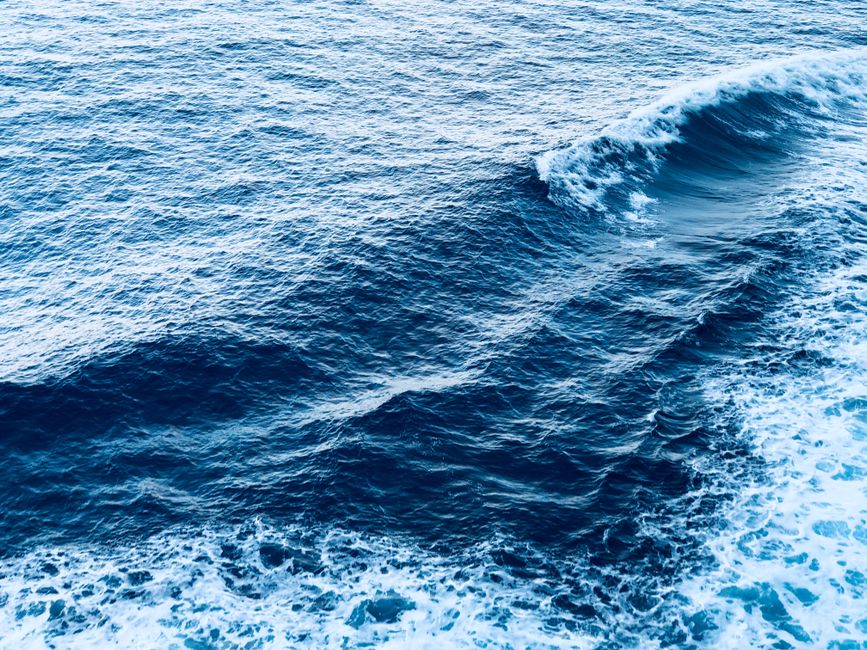
Photo by Kathleen Lamb on Pexels
A wave is a disturbance that travels through a medium (or even empty space, in the case of light), transferring energy without necessarily transferring matter. Think about an ocean wave: the water moves up and down, but the water itself doesn't travel across the ocean with the wave.
For light waves, we're talking about oscillating electric and magnetic fields. Key characteristics of waves include:
* Wavelength ($\lambda$): The distance between two consecutive crests or troughs.
* Frequency ($f$): How many wave cycles pass a point per second.
* Amplitude: The maximum displacement from the equilibrium position. For light, this relates to its brightness.
* Speed ($v$): How fast the wave travels. For light in a vacuum, this is 'c' (the speed of light). These are related by $v = f\lambda$.
The Principle of Superposition

Photo by Mikhail Nilov on Pexels
This is a fundamental concept in wave optics. It states that when two or more waves meet at a point, the net displacement at that point is the algebraic sum of the displacements of the individual waves. It's like adding vectors.
Imagine two waves, Wave 1 and Wave 2, arriving at the same spot.
* If both waves have a crest at that spot, they add up to create an even bigger crest (constructive interference).
* If one wave has a crest and the other has a trough, they can cancel each other out, resulting in no displacement (destructive interference).
* If they're not perfectly aligned, they'll add up somewhere in between.
The waves don't permanently alter each other; they just combine temporarily at that point. After they pass through each other, they continue on their original paths as if nothing happened.
Here's how light waves interact based on superposition:
graph TD
    A["Light Wave 1"] --> B{{"Meets at a point (P)"}};
    C["Light Wave 2"] --> B;
    B --> D{"Are crests aligned?"};
    D -- "Yes (in phase)" --> E["Constructive Interference (Brighter Light)"];
    D -- "No (180° out of phase)" --> F["Destructive Interference (Darker/No Light)"];
    D -- "Partially" --> G["Intermediate Intensity"];
Interference
Interference is the result of applying the superposition principle. When two coherent light waves (waves with a constant phase difference, often from the same source split into two) meet, they produce a stable pattern of alternating bright (constructive interference) and dark (destructive interference) regions.
Diffraction
Diffraction is the bending of waves as they pass around obstacles or through openings. It's why you can hear someone around a corner even if you can't see them – sound waves diffract. Light waves also diffract, but because their wavelengths are very small, we usually only notice it when light passes through very small openings or around very sharp edges. This spreading out can then lead to interference patterns.
3. Worked Example
Let's say you have two light waves arriving at the same point.
Wave 1 has an electric field component $E_1(t) = A \sin(\omega t)$.
Wave 2 has an electric field component $E_2(t) = A \sin(\omega t + \pi)$.
Here, $A$ is the amplitude, $\omega$ is the angular frequency, and $\pi$ represents a 180-degree phase difference.
According to the principle of superposition, the resultant electric field $E_{total}(t)$ at that point is $E_1(t) + E_2(t)$.
$E_{total}(t) = A \sin(\omega t) + A \sin(\omega t + \pi)$
We know that $\sin(x + \pi) = -\sin(x)$.
So, $E_{total}(t) = A \sin(\omega t) + A (-\sin(\omega t))$
$E_{total}(t) = A \sin(\omega t) - A \sin(\omega t)$
$E_{total}(t) = 0$
This means that at this point, the two waves perfectly cancel each other out. If these were light waves, you would observe darkness at this specific location because the amplitude of the resulting wave is zero. This is a clear example of destructive interference.
4. Key Takeaways
- Wave optics treats light as a wave to explain phenomena like diffraction and interference.
- The principle of superposition states that when waves meet, their individual displacements add up to form a resultant wave.
- Constructive interference occurs when waves add up to create a larger amplitude (brighter light).
- Destructive interference occurs when waves cancel each other out, resulting in a smaller or zero amplitude (darker or no light).
- Diffraction is the bending of waves around obstacles or through openings.
- Interference patterns are stable regions of bright and dark areas caused by the superposition of coherent waves.
Common Mistakes to Avoid:
- Don't confuse superposition with waves reflecting off each other; they pass through each other.
- Remember that interference requires coherent light sources to see a stable pattern.
- Don't assume all wave interactions result in complete cancellation or doubling; most are somewhere in between.
- Don't forget that diffraction is always happening, but it's only noticeable for light when the obstacle/opening size is comparable to the wavelength.
5. Now Try It
Imagine you're looking at a thin film of oil on water. Describe in your own words why you might see different colors. Think about how light waves interact when they reflect off the top and bottom surfaces of the oil film and how the thickness of the oil might affect what colors you see. What would happen if the film was extremely thin, much smaller than the wavelength of visible light, for a particular color? (Hint: consider phase changes upon reflection).
Frequently asked about Introduction to Wave Optics and Superposition
Study this next
Get the full engineering physics curriculum
Clone the complete plan to your dashboard for unlimited AI-generated notes, practice quizzes, and a personalised revision schedule.
Save this course free