Introduction to Muscle Tissue and Overview
From the Bio lab 5 curriculum
TL;DR
Muscle tissue is specialized for contraction, allowing for movement and force generation. There are three main types: skeletal (voluntary), cardiac (involuntary, heart), and smooth (involuntary, organs). Understanding their structure helps explain how they function differently in your body.
1. The Mental Model
Think of muscle tissue as your body's "engine." Each type is built slightly differently to perform specific jobs, like moving your limbs, pumping blood, or pushing food through your gut. Their ability to shorten is their fundamental superpower.
2. The Core Material
You've got three main types of muscle tissue, and each has unique characteristics tailored to its function.
Skeletal Muscle
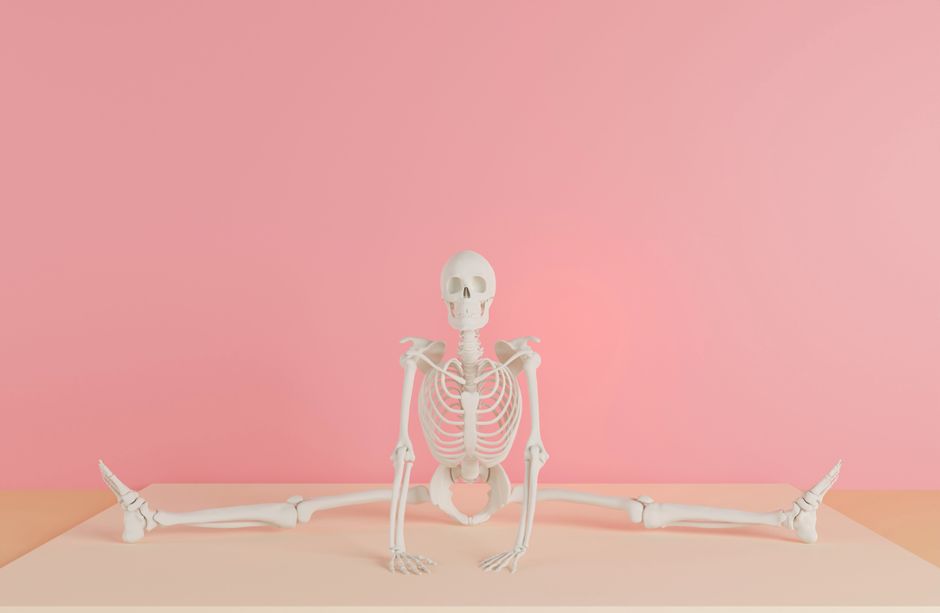
Photo by dada _design on Pexels
This is the muscle you typically think of when you hear "muscle." It's attached to your bones and allows for voluntary movement. You control it! Under a microscope, it looks striated (striped) due to the organized arrangement of contractile proteins. These cells are very long and multinucleated (have many nuclei).
Cardiac Muscle

Photo by Marta Branco on Pexels
Found only in your heart, this muscle is responsible for pumping blood. It's involuntary, meaning you don't consciously control its contractions. Like skeletal muscle, it's also striated, but its cells are shorter, branched, and usually have one nucleus. They're connected by special junctions called intercalated discs, which help them contract in a coordinated rhythm.
Smooth Muscle

Photo by Daria Liudnaya on Pexels
This muscle is found in the walls of your internal organs like your digestive tract, bladder, and blood vessels. It's involuntary and doesn't look striated; its cells are spindle-shaped with a single nucleus. Smooth muscle contractions are slower and sustained, perfect for tasks like moving food or regulating blood pressure.
Here's a simple way to visualize the differences:
graph TD
    A["Muscle Tissue"] --> B["Skeletal Muscle"]
    A --> C["Cardiac Muscle"]
    A --> D["Smooth Muscle"]

    B --> B1["Attached to bones"]
    B --> B2["Voluntary control"]
    B --> B3["Striated, multinucleated"]

    C --> C1["Found in heart"]
    C --> C2["Involuntary control"]
    C --> C3["Striated, branched, single nucleus"]
    C --> C4["Intercalated discs"]

    D --> D1["Walls of internal organs"]
    D --> D2["Involuntary control"]
    D --> D3["Non-striated, spindle-shaped, single nucleus"]
Contraction Basics (Across all types)

Photo by https://kaboompics.com/ on Pexels
At the heart of all muscle function is the ability of specialized proteins (actin and myosin) to slide past each other, shortening the muscle fiber. This process is triggered by signals, often from the nervous system, and requires energy (ATP). While the details vary, the fundamental "sliding filament" mechanism is shared.
3. Worked Example
Imagine you're lifting a dumbbell. Your skeletal muscles in your arm (like the biceps) receive a voluntary signal from your brain to contract. The muscle fibers shorten, pulling on the bone, and the weight lifts. Meanwhile, your cardiac muscle is involuntarily contracting to pump blood to your working muscles, and smooth muscle in your digestive system is involuntarily moving food along, oblivious to your workout. Each muscle type is doing its specific job, all at the same time.
4. Key Takeaways
- Skeletal muscle is voluntary, striated, multinucleated, and moves your bones.
- Cardiac muscle is involuntary, striated, branched, has intercalated discs, and pumps your heart.
- Smooth muscle is involuntary, non-striated, spindle-shaped, and controls internal organ functions.
- All muscle types contract through a similar sliding filament mechanism, though the regulation differs.
- Muscle tissue is highly vascularized, meaning it has a rich blood supply to deliver oxygen and nutrients for energy.
Common Mistakes to Avoid:
- Don't confuse striations with voluntary control; cardiac muscle is striated but involuntary.
- Don't assume all involuntary muscles are smooth; cardiac muscle is also involuntary.
- Forgetting that all muscle contraction fundamentally relies on the same protein interactions.
- Mixing up the locations; skeletal is on bones, cardiac is heart, smooth is organ walls.
5. Now Try It
Spend 15 minutes drawing a simple diagram for each muscle type (skeletal, cardiac, smooth). For each drawing, label its key characteristics: striations (or lack thereof), number of nuclei, cell shape, and whether it's voluntary or involuntary.
Success looks like: Three distinct drawings, each clearly showing and labeling the defining features of one muscle type.
Frequently asked about Introduction to Muscle Tissue and Overview
Study this next
Get the full Bio lab 5 curriculum
Clone the complete plan to your dashboard for unlimited AI-generated notes, practice quizzes, and a personalised revision schedule.
Save this course free