Review and Advanced Concepts
From the biolgyu curriculum
TL;DR
This review covers key biological concepts, reinforcing fundamental understanding before diving into more complex, interconnected topics. You'll explore how different biological levels interact and how evolutionary principles unify all life sciences. We'll also touch on practical applications and future directions in biology.
1. The Mental Model
Think of biology as a set of nested Russian dolls, where each doll represents a level of organization, from molecules to ecosystems. Understanding one doll helps you understand the next, and evolution is the thread connecting them all.
2. The Core Material
2.1 Molecular and Cellular Foundations

Photo by Marek Piwnicki on Pexels
At the heart of biology are molecules (DNA, RNA, proteins, lipids, carbohydrates) and cells. Remember that DNA carries genetic information, RNA translates it, and proteins perform most cellular functions. Cells are the fundamental units of life, whether they are prokaryotic (no nucleus) or eukaryotic (with a nucleus and organelles). Energy flow, primarily through ATP, powers all cellular activities.
2.2 Genetics and Heredity
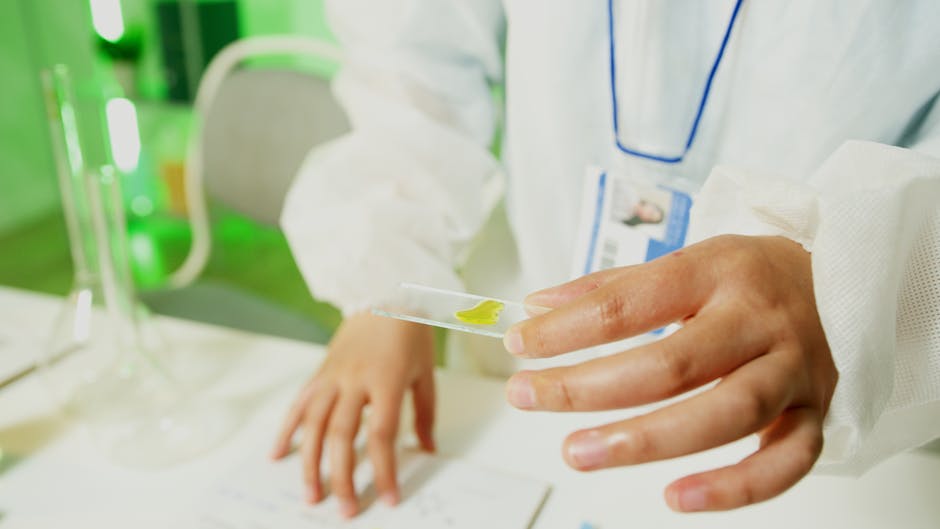
Photo by Artem Podrez on Pexels
Genetics explains how traits are passed from one generation to the next.
- Mendelian genetics describes dominant/recessive patterns.
- Non-Mendelian inheritance includes co-dominance, incomplete dominance, and polygenic traits.
- Molecular genetics delves into DNA replication, transcription, and translation, showing how genotype translates to phenotype. Mutations are changes in DNA that can alter traits and drive evolution.
2.3 Evolution and Natural Selection

Photo by Just Amazing on Pexels
Evolution is the unifying theory of biology, stating that all life shares a common ancestor and has diversified over time.
- Natural selection is the primary mechanism: individuals with advantageous traits in a given environment are more likely to survive and reproduce, passing those traits on.
- Other evolutionary mechanisms include genetic drift, gene flow, and mutation.
- Speciation is the process by which new species arise.
graph LR
    A["Genetic Variation (Mutations, Recombination)"] --> B["Environmental Pressures (Limited Resources, Predation)"]
    B --> C{"Differential Survival & Reproduction"}
    C -- "Advantageous Traits" --> D["Increased Frequency of Traits in Population"]
    C -- "Disadvantageous Traits" --> E["Decreased Frequency of Traits in Population"]
    D --> F["Adaptation & Evolution Over Generations"]
    F --> G["Speciation (New Species)"]
This diagram illustrates the core process of natural selection leading to adaptation and speciation.
2.4 Organismal Biology
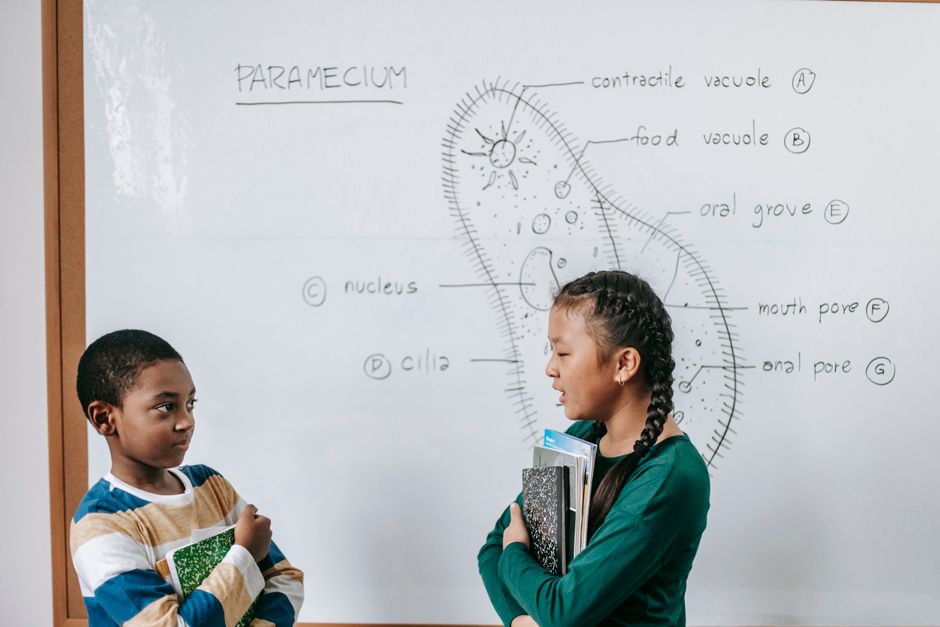
Photo by Katerina Holmes on Pexels
This level focuses on the structure and function of entire organisms.
- Physiology explores how organ systems work together (e.g., circulatory, nervous, digestive).
- Anatomy studies the physical structures.
- Developmental biology examines how organisms grow and develop from a single cell.
2.5 Ecology and Ecosystems
Ecology studies how organisms interact with each other and their environment.
- Populations (groups of the same species) interact within communities (different species).
- Ecosystems include both biotic (living) and abiotic (non-living) components.
- Key concepts include energy flow through food webs, nutrient cycling (carbon, nitrogen, water), and ecological succession.
3. Worked Example
Let's trace the flow of information and energy in a simple biological scenario.
Imagine a deer eating grass.
1. Molecular/Cellular: The grass plant uses chloroplasts to perform photosynthesis, converting light energy into chemical energy (sugars like glucose). These sugars are stored in grass cells.
2. Organismal: The deer, a herbivore, ingests the grass. Its digestive system breaks down the complex carbohydrates in the grass cells into simpler sugars. These sugars are then absorbed into the bloodstream and transported to the deer's cells.
3. Cellular Respiration: Inside the deer's cells, mitochondria perform cellular respiration, breaking down the sugars to release ATP, which powers the deer's movement, growth, and other life processes.
4. Genetics: The deer inherited genes from its parents that allow it to digest cellulose in grass and develop strong muscles for running. These genes are expressed through proteins that facilitate these processes.
5. Ecology: This interaction is a producer-consumer relationship within a food chain. If wolves prey on deer, this becomes a predator-prey interaction, affecting both the deer population and the wolf population within the ecosystem. Over generations, deer with better camouflage or faster running speeds might be naturally selected, leading to evolutionary changes in the deer population.
4. Key Takeaways
- Biological processes are interconnected across all levels, from molecules to ecosystems.
- Evolution by natural selection is the core principle explaining the diversity and adaptation of life.
- Energy flow and information transfer (DNA to protein) are fundamental to all living systems.
- Cells are the basic units, and their functions determine organismal traits.
- Ecology studies interactions between organisms and their environment, revealing complex relationships.
Common Mistakes to Avoid:
- Treating biological levels as isolated: Remember they're always interacting.
- Confusing correlation with causation: Just because two things happen together doesn't mean one causes the other.
- Misunderstanding "theory" in science: A scientific theory (like evolution) is a well-substantiated explanation, not just a guess.
- Forgetting the role of energy: All life processes require energy, often in the form of ATP.
5. Now Try It
Choose a specific biological process (e.g., how a plant responds to light, or how your immune system fights a cold). Spend 15 minutes outlining how this process involves at least three different levels of biological organization (molecular, cellular, organismal, ecological) and how evolutionary principles might have shaped it. What specific molecules, cells, or interactions are involved? How does it benefit the organism's survival or reproduction?
Frequently asked about Review and Advanced Concepts
Study this next
Get the full biolgyu curriculum
Clone the complete plan to your dashboard for unlimited AI-generated notes, practice quizzes, and a personalised revision schedule.
Save this course free