Reproduction and Inheritance
From the IGCSE Biology curriculum
TL;DR
Reproduction is how living things make more of themselves, either sexually (two parents) or asexually (one parent). Inheritance is about how characteristics are passed down from parents to offspring through genes. Understanding these processes helps explain why organisms look and behave the way they do.
1. The Mental Model
Think of reproduction as making copies, and inheritance as getting a mix-and-match set of instructions from your parents. Some instructions (genes) are dominant, meaning they show up if present, while others are recessive and only show up if no dominant gene is there.
2. The Core Material
2.1 Asexual vs. Sexual Reproduction

Photo by cottonbro studio on Pexels
Organisms can reproduce in two main ways:
- Asexual Reproduction: This involves only one parent. The offspring are genetically identical to the parent, like perfect clones. This is common in simple organisms like bacteria, but also some plants and fungi.
- Advantages: Fast, efficient, only one parent needed.
- Disadvantages: No genetic variation, so if the environment changes, the whole population might be wiped out.
- Sexual Reproduction: This involves two parents, usually a male and a female. Each parent contributes half of the genetic information to the offspring. The offspring are genetically different from both parents and from each other. This is common in animals and many plants.
- Advantages: Creates genetic variation, which increases a species' chance of survival if the environment changes.
- Disadvantages: Slower, requires two parents, and often needs to find a mate.
Here's a simple flow of sexual reproduction:
graph LR
    A["Male Parent"] --> B("Gamete (Sperm/Pollen)")
    C["Female Parent"] --> D("Gamete (Egg/Ovum)")
    B -- "Fertilisation" --> E("Zygote")
    D -- "Fertilisation" --> E
    E --> F("Embryo")
    F --> G("Offspring")
2.2 Inheritance: Passing On Traits
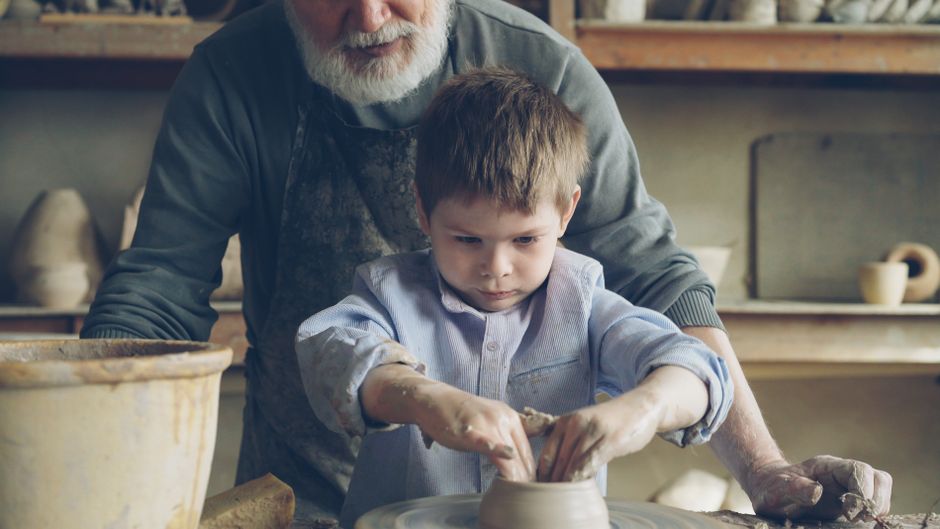
Photo by Vitaly Gariev on Pexels
Genes are segments of DNA that carry the instructions for specific characteristics (traits), like eye colour or blood type. You inherit one copy of each gene from your mother and one from your father.
- Chromosomes: Genes are located on structures called chromosomes, found in the nucleus of cells. Humans have 23 pairs of chromosomes (46 in total).
- Alleles: Different forms of the same gene are called alleles. For example, the gene for eye colour might have an allele for blue eyes and an allele for brown eyes.
- Dominant and Recessive Alleles:
- A dominant allele (represented by a capital letter, e.g., 'B' for brown eyes) will always show its trait if present.
- A recessive allele (represented by a lowercase letter, e.g., 'b' for blue eyes) will only show its trait if two copies of it are present (no dominant allele is there).
- Genotype and Phenotype:
- Your genotype is the specific combination of alleles you have for a particular trait (e.g., BB, Bb, or bb).
- Your phenotype is the observable characteristic that results from your genotype (e.g., brown eyes, blue eyes).
- Punnett Squares: These are simple diagrams used to predict the possible genotypes and phenotypes of offspring from a genetic cross.
2.3 Sex Determination
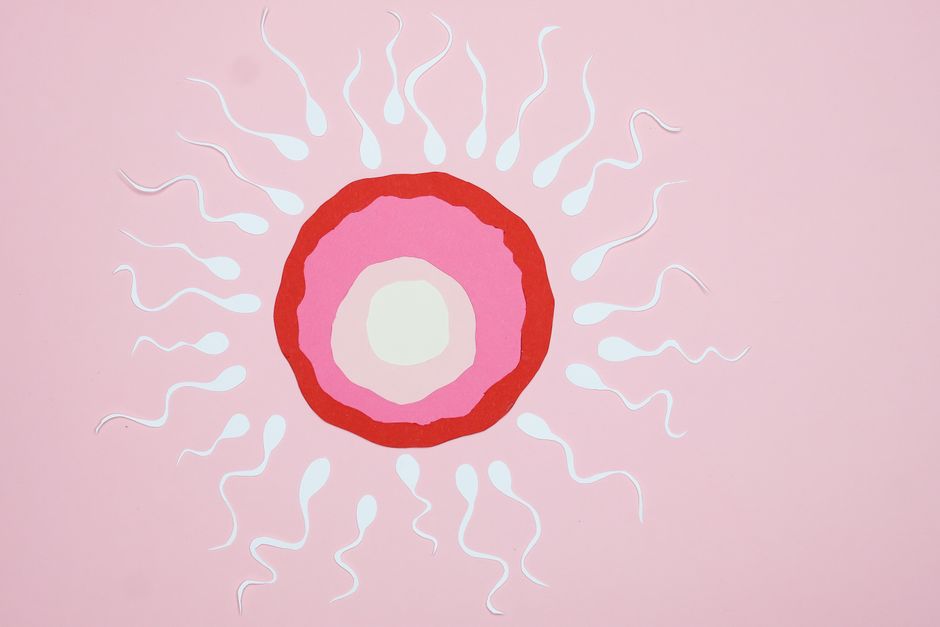
Photo by Nadezhda Moryak on Pexels
In humans, sex is determined by a pair of sex chromosomes:
* Females have two X chromosomes (XX).
* Males have one X and one Y chromosome (XY).
The mother can only pass on an X chromosome. The father can pass on either an X or a Y chromosome. If the sperm carries an X, the child will be female (XX). If it carries a Y, the child will be male (XY).
3. Worked Example
Let's use a Punnett square to predict offspring traits. Suppose a parent is heterozygous for brown eyes (Bb, meaning they have one dominant brown allele and one recessive blue allele) and another parent is also heterozygous for brown eyes (Bb). What are the chances their child has blue eyes?
- Identify parent genotypes: Parent 1 = Bb, Parent 2 = Bb
- Identify possible gametes from each parent: Each parent can pass on B or b.
- Draw the Punnett Square:
| B | b | |
|---|---|---|
| B | BB | Bb |
| b | Bb | bb |
- Analyze the results:
- Genotypes: 1 BB : 2 Bb : 1 bb (or 25% BB, 50% Bb, 25% bb)
- Phenotypes:
- BB = Brown eyes
- Bb = Brown eyes (since B is dominant)
- bb = Blue eyes
So, there's a 3 out of 4 chance (75%) of the child having brown eyes, and a 1 out of 4 chance (25%) of the child having blue eyes.
4. Key Takeaways
- Asexual reproduction creates identical offspring from one parent, offering speed and efficiency but no genetic variation.
- Sexual reproduction involves two parents, creating genetically diverse offspring that are better able to adapt to changing environments.
- Genes are segments of DNA that carry instructions for traits, found on chromosomes.
- Alleles are different versions of a gene; dominant alleles express their trait even if only one copy is present, while recessive alleles need two copies.
- Your genotype is your genetic makeup, while your phenotype is the observable trait.
- Punnett squares help predict the likelihood of specific traits in offspring.
Common mistakes to avoid:
- Confusing dominant traits with common traits; dominant just means it'll show up if present.
- Thinking asexual reproduction is "better" or "worse" than sexual; they each have pros and cons depending on the environment.
- Mixing up genotype (the letters, e.g., Bb) with phenotype (the actual characteristic, e.g., brown eyes).
- Assuming all genetic traits are simple dominant/recessive; many are more complex (e.g., codominance, polygenic inheritance).
5. Now Try It
Imagine you're breeding pet rabbits. One parent rabbit has straight ears (dominant, E) and the other has floppy ears (recessive, e). The straight-eared parent is heterozygous (Ee). The floppy-eared parent must be homozygous recessive (ee). Draw a Punnett square to predict the likelihood of their offspring having floppy ears. What percentage of the offspring would you expect to have floppy ears? Success means correctly drawing the Punnett square and stating the correct percentage.
Frequently asked about Reproduction and Inheritance
More from IGCSE Biology
Get the full IGCSE Biology curriculum
Clone the complete plan to your dashboard for unlimited AI-generated notes, practice quizzes, and a personalised revision schedule.
Save this course free