Characteristics and Classification of Living Organisms
From the IGCSE Biology curriculum
TL;DR
Living organisms share seven essential characteristics that distinguish them from non-living things. Scientists classify organisms into groups based on their shared features to understand biodiversity. This system helps us organise and study the vast array of life on Earth.
1. The Mental Model
Imagine life like a club. To be a member, you need to meet certain criteria (characteristics). Once you're in, the club organises its members into different sections (classification) based on who's similar to whom.
2. The Core Material
All living organisms, from the smallest bacteria to the largest whales, share fundamental characteristics. These are often remembered by the acronym MRS GREN:
MRS GREN: The Seven Characteristics of Life
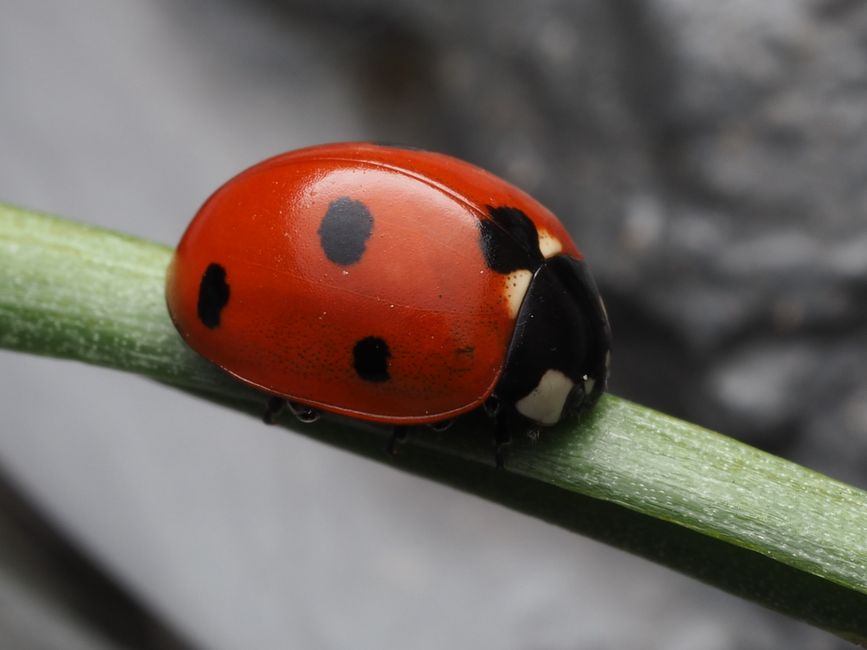
Photo by Ali Goode on Pexels
- Movement: All living things can move, though it might be subtle (like a plant growing towards light) or obvious (like an animal running).
- Respiration: This is the process of releasing energy from food. It can be aerobic (using oxygen) or anaerobic (without oxygen).
- Sensitivity: Organisms can detect and respond to changes in their surroundings (stimuli), like light, temperature, or touch.
- Growth: Living things increase in size and complexity over time.
- Reproduction: Organisms produce offspring, ensuring the continuation of their species.
- Excretion: This is the removal of waste products of metabolism from the body.
- Nutrition: Organisms take in and use food for energy, growth, and repair. This can be eating (heterotrophic) or making their own food (autotrophic).
Classification: Organising Life

Photo by RDNE Stock project on Pexels
Classification is the arrangement of organisms into groups based on similarities and differences. This helps scientists:
1. Identify organisms.
2. Study their relationships.
3. Understand evolution.
The main system used is called the Linnaean system, which arranges organisms into a hierarchy of groups (taxa). The main levels, from broadest to most specific, are:
Kingdom $\rightarrow$ Phylum $\rightarrow$ Class $\rightarrow$ Order $\rightarrow$ Family $\rightarrow$ Genus $\rightarrow$ Species
You can remember this with a mnemonic like "King Philip Came Over For Good Spaghetti."
At the species level, organisms can interbreed to produce fertile offspring. For example, Homo sapiens refers to humans.
graph TD
    A["Kingdom (Broadest)"] --> B["Phylum"]
    B --> C["Class"]
    C --> D["Order"]
    D --> E["Family"]
    E --> F["Genus"]
    F --> G["Species (Most Specific)"]
The Five Kingdoms

Photo by Kashvi Shah on Pexels
Traditionally, living organisms are classified into five major kingdoms:
1. Prokaryotes (Monera): Simple, single-celled organisms without a true nucleus (e.g., bacteria).
2. Protoctista: Mostly single-celled organisms, but some are multicellular; they don't fit into other kingdoms (e.g., amoeba, algae).
3. Fungi: Organisms that absorb nutrients from their environment; they have cell walls but don't photosynthesise (e.g., mushrooms, yeast).
4. Plants: Multicellular organisms that photosynthesise to make their own food; they have cell walls made of cellulose (e.g., trees, flowers).
5. Animals: Multicellular organisms that obtain nutrients by consuming other organisms; they lack cell walls (e.g., insects, mammals).
3. Worked Example
Let's apply the classification system to a common organism: a domestic cat.
- Kingdom: Animalia (it's an animal)
- Phylum: Chordata (it has a backbone)
- Class: Mammalia (it's a mammal – has fur, produces milk)
- Order: Carnivora (it's a carnivore – eats meat)
- Family: Felidae (it's a cat-like animal)
- Genus: Felis (a small cat)
- Species: catus (the domestic cat)
So, the scientific name for a domestic cat is Felis catus. Notice the genus is capitalised and the species is lowercase, both are italicised.
4. Key Takeaways
- All living things exhibit Movement, Respiration, Sensitivity, Growth, Reproduction, Excretion, and Nutrition (MRS GREN).
- Classification arranges organisms into a hierarchy from broad Kingdoms to specific Species.
- The main hierarchical levels are Kingdom, Phylum, Class, Order, Family, Genus, Species.
- A species is a group of organisms that can interbreed to produce fertile offspring.
- The five kingdoms are Prokaryotes, Protoctista, Fungi, Plants, and Animals.
-
Scientific names use binomial nomenclature (Genus species), written in italics.
-
Common Mistakes to Avoid:
- Confusing respiration (energy release) with breathing (gas exchange).
- Forgetting that movement can be internal or growth, not just locomotion.
- Mixing up the order of the classification hierarchy.
- Not italicising scientific names or capitalising the genus correctly.
5. Now Try It
Think about a human. Using the MRS GREN characteristics, for each letter, describe how a human demonstrates that characteristic. Then, try to classify a human down to its species using the hierarchical levels. What does success look like? You'll have a clear description for each characteristic for a human, and you'll correctly identify the Kingdom, Phylum, Class, Order, Family, Genus, and Species for humans.
Frequently asked about Characteristics and Classification of Living Organisms
Study this next
Get the full IGCSE Biology curriculum
Clone the complete plan to your dashboard for unlimited AI-generated notes, practice quizzes, and a personalised revision schedule.
Save this course free