Team Structure and Player Positions
From the PATHFIT curriculum
TL;DR
Understanding team structure and player positions is crucial for effective teamwork and strategy in sports. Each position has specific roles and responsibilities that contribute to the overall success of the team. Knowing these helps you anticipate plays and work together more efficiently.
1. The Mental Model
Think of a sports team like a well-oiled machine, where every gear (player) has a specific job. If one gear isn't doing its part, the whole machine runs less effectively. Knowing everyone's role makes the machine run smoothly.
2. The Core Material
In team sports, positions define a player's primary duties on the field or court. While specific names and numbers vary by sport, the general idea is to cover all necessary areas (offense, defense, midfield/mid-court) and specialize tasks.
Understanding General Roles
Photo by Markus Winkler on Pexels
Most team sports have players who specialize in:
* Offense: Primarily focused on scoring points or advancing the play towards the opponent's goal.
* Defense: Primarily focused on preventing the opponent from scoring and regaining possession.
* Midfield/All-around: Players who contribute to both offense and defense, often linking the two.
Common Player Positions (Examples from various sports)
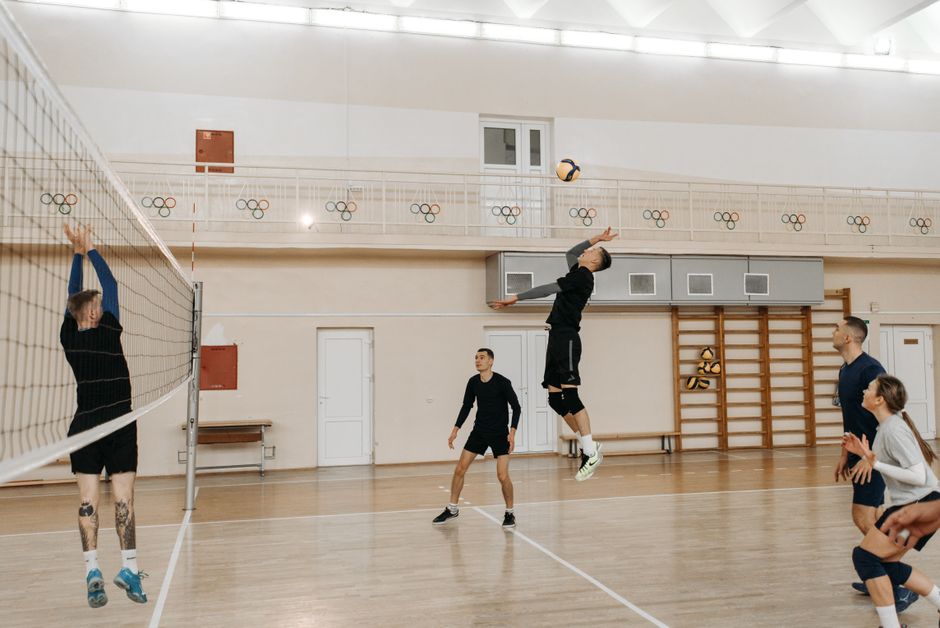
Photo by Pavel Danilyuk on Pexels
Let's look at some common examples:
- Basketball:
- Point Guard (PG): Ball-handler, orchestrates offense, good passer.
- Shooting Guard (SG): Primary scorer, good at shooting.
- Small Forward (SF): Versatile, can score, rebound, and defend.
- Power Forward (PF): Strong rebounder, scores closer to the basket, physical defender.
- Center (C): Tallest player, protects the rim, rebounds, scores close.
- Soccer (Football):
- Goalkeeper (GK): Only player who can use hands (in own penalty area), prevents goals.
- Defenders (DF): Stop opposing attackers, protect the goal.
- Midfielders (MF): Connect defense and offense, control the middle of the field.
- Forwards (FW): Primary goal scorers.
- Volleyball:
- Setter: Directs the offense, sets the ball for attackers.
- Outside Hitter (OH): Primary attacker, also passes and blocks.
- Opposite Hitter (OPP): Secondary attacker, often blocks opposing outside hitter.
- Middle Blocker (MB): Primary blocker, also attacks.
- Libero: Defensive specialist, excellent at digging and passing, wears a different colored jersey.
Understanding the relationships between these positions is key to a cohesive team.
graph TD
    A["Team Success"] --> B["Coordinated Play"]
    B --> C["Clear Player Roles"]
    C --> D["Offensive Positions"]
    C --> E["Defensive Positions"]
    C --> F["All-Around Positions"]
    D --> D1["Scoring focus"]
    E --> E1["Preventing scoring focus"]
    F --> F1["Link offense & defense"]
    D1 & E1 & F1 --> B
The Importance of Communication and Adaptation
Photo by Centre for Ageing Better on Pexels
No matter the sport, communication between players in different positions is vital. A defender needs to know if a midfielder is covering, or a point guard needs to know where their shooters are. Sometimes players might need to temporarily switch roles or cover for a teammate, which requires adaptability and a deep understanding of the team's overall strategy.
3. Worked Example
Imagine you're playing basketball. Your coach calls a play where the Point Guard (PG) dribbles down the court. The Shooting Guard (SG) moves to the corner for a possible three-point shot, while the Small Forward (SF) cuts to the basket. The Power Forward (PF) sets a screen for the PG, and the Center (C) positions himself for an offensive rebound or a post-up.
In this scenario:
* The PG's role is to initiate the offense and make the primary pass.
* The SG's role is to be ready to shoot if open.
* The SF's role is to create a scoring opportunity with a cut.
* The PF's role is to block a defender to free up a teammate.
* The C's role is to be ready for a follow-up shot or to score close to the basket.
If the PG successfully passes to the SG who makes the shot, that's successful execution. If the pass isn't there, the PG might pass to the SF cutting to the basket, showing how roles interact and adapt within a play.
4. Key Takeaways
- Every player position has a unique set of responsibilities that contribute to team goals.
- Positions are generally categorized into offensive, defensive, and all-around roles.
- Understanding your teammates' roles helps you anticipate their movements and needs.
- Effective communication between different positions is critical for successful play execution.
- Players often need to adapt or temporarily cover other positions during dynamic play.
- Knowing the strengths and weaknesses of each position helps in strategizing against opponents.
- The specific names and exact duties of positions vary significantly between different sports.
5. Now Try It
Choose a team sport you enjoy (e.g., basketball, volleyball, soccer). Draw a basic diagram of the playing area and place the typical starting players in their positions. For each position, write down 2-3 key responsibilities. What success looks like: You'll have a clear visual representation of how players are generally distributed and what their primary tasks are in your chosen sport.
Frequently asked about Team Structure and Player Positions
More from PATHFIT
Get the full PATHFIT curriculum
Clone the complete plan to your dashboard for unlimited AI-generated notes, practice quizzes, and a personalised revision schedule.
Save this course free