Volleying in Net Sports: Rules and Basic Techniques
From the volley rule and how to play curriculum
TL;DR
Volleying in sports generally means hitting the ball before it bounces. It requires quick reflexes and good positioning to execute effectively. Mastering the basic rules and techniques is crucial for successful play.
1. The Mental Model
Think of volleying as catching and throwing a ball in one swift, continuous motion without letting it touch the ground first. It's about intercepting the ball directly from your opponent and sending it back, often to gain an advantage.
2. The Core Material
Volleying is a fundamental skill in many net sports like tennis, volleyball, and badminton. While the specific techniques vary, the core concept remains the same: strike the ball before it hits the playing surface on your side. This often leads to faster rallies and puts pressure on your opponent.
Why Volley?

Photo by RDNE Stock project on Pexels
Volleying allows you to take time away from your opponent, force them into awkward positions, and hit the ball with more aggressive angles. It's especially effective when you're close to the net.
Basic Rules for Volleying (General)
Photo by RDNE Stock project on Pexels
The main rule for volleying across most sports is that you must not let the ball bounce on your side of the court before you hit it. If it bounces, it's no longer a volley, and you're typically playing a groundstroke or some other shot.
Here's a simple breakdown of the volleying process:
graph TD
    A["Opponent Hits Ball"] --> B["Ball Travels Over Net"]
    B --> C{"Is the Ball Volleyable?"}
    C -- "Yes (before bounce)" --> D["Player Positions Self"]
    D --> E["Player Strikes Ball (Volley)"]
    C -- "No (after bounce)" --> F["Player Hits Groundstroke/Other Shot"]
Key Techniques (General)

Photo by Jsme MILA on Pexels
- Ready Position: Be on the balls of your feet, racket/paddle up, eyes on the ball.
- Short Backswing: Unlike groundstrokes, volleys use a very compact backswing. It's more of a punch or block.
- Meet the Ball Out Front: Contact the ball well in front of your body to use your momentum and control.
- Follow Through: A short, controlled follow-through in the direction you want the ball to go.
Fouls/Violations Related to Volleying
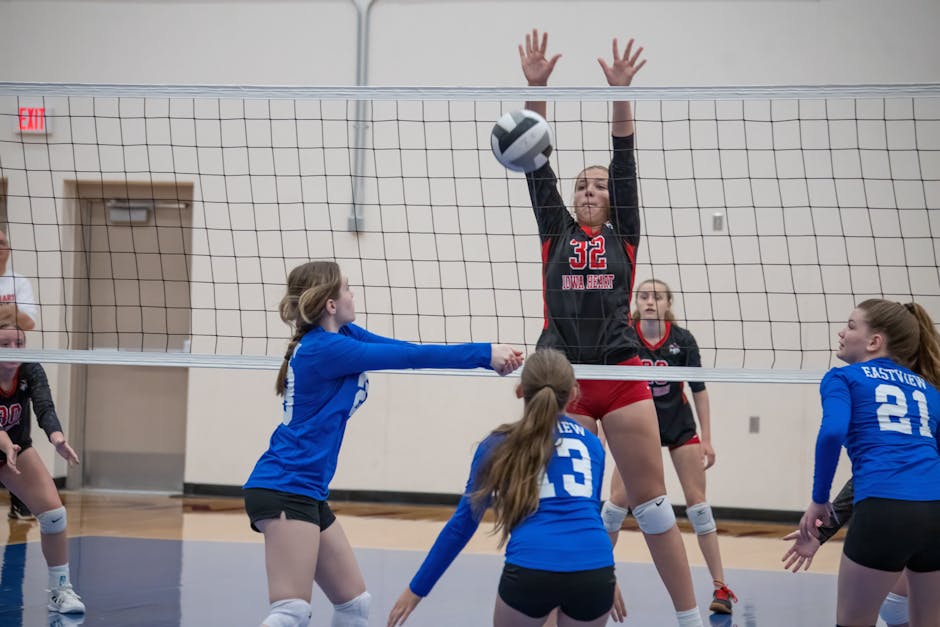
Photo by Tom Fisk on Pexels
- Touching the Net: In many sports, if your body or racket touches the net while the ball is in play, it's a foul.
- Reaching Over the Net: Generally, you can't hit the ball when it's on your opponent's side of the net. You must wait for it to cross to your side. There are specific exceptions in some sports (like in volleyball for blocking).
- Double Hit: Hitting the ball twice in one stroke is usually not allowed.
3. Worked Example
Imagine you're playing tennis. Your opponent hits a fast shot that's heading deep into your court. Instead of letting it bounce and hitting a groundstroke from the baseline, you quickly move forward towards the net. As the ball crosses the net and is still in the air, you extend your racket, meet the ball crisply out in front of you with a short, firm punch, sending it angled away from your opponent into an open court space. This is a successful volley. If you had waited for the ball to bounce, you would be further back on the court and likely hitting a defensive shot, giving your opponent more time.
4. Key Takeaways
- Volleying is hitting the ball before it bounces on your side of the playing area.
- It's used to take time away from your opponent and create offensive opportunities.
- Good ready position, a short backswing, and meeting the ball out front are key techniques.
- Don't touch the net or reach over to your opponent's side while volleying.
- Volleying puts pressure on your opponent by reducing their reaction time.
- It's a faster-paced shot compared to groundstrokes.
Common Mistakes to Avoid:
* Letting the ball bounce: This is the most basic error; it's not a volley if it bounces.
* Too long of a backswing: This makes you late and reduces control.
* Hitting the ball behind your body: This leads to weak, uncontrolled shots.
* Not watching the ball: You need to track the ball intently to time your volley.
5. Now Try It
Find a wall or a partner and practice some volleys. Start by standing about 5-7 feet from the wall/partner. Focus on a very short backswing, meeting the ball out in front, and a controlled follow-through. Try to keep the ball going for 30 seconds without letting it bounce more than once (on the wall/partner's side, not yours). What success looks like is being able to consistently hit the ball back without it bouncing on your side, maintaining a steady rhythm.
Frequently asked about Volleying in Net Sports: Rules and Basic Techniques
Study this next
Get the full volley rule and how to play curriculum
Clone the complete plan to your dashboard for unlimited AI-generated notes, practice quizzes, and a personalised revision schedule.
Save this course free