Review and Practical Application
From the science curriculum
TL;DR
This note helps you revisit key science concepts and shows you how to use them in real-world situations. We'll focus on connecting what you've learned to how things actually work around you. You'll get to practice applying these ideas, solidifying your understanding.
1. The Mental Model
Think of science as a toolkit. Each concept or theory is a tool, and practical application is about knowing which tool to use and how to use it to understand or solve a problem. It's about moving beyond just knowing facts to actually doing science.
2. The Core Material
Review and practical application means you're taking your scientific knowledge and putting it into action. It's not enough to memorize definitions; you need to understand why things happen and how to predict outcomes. This often involves observing, asking questions, forming hypotheses, and interpreting results.
Observing and Questioning
Photo by Pixabay on Pexels
Science starts with noticing things and wondering "why?" or "how?" This step is crucial for identifying problems or phenomena that need explaining. For instance, you might observe that plants grow towards a window.
Forming Hypotheses
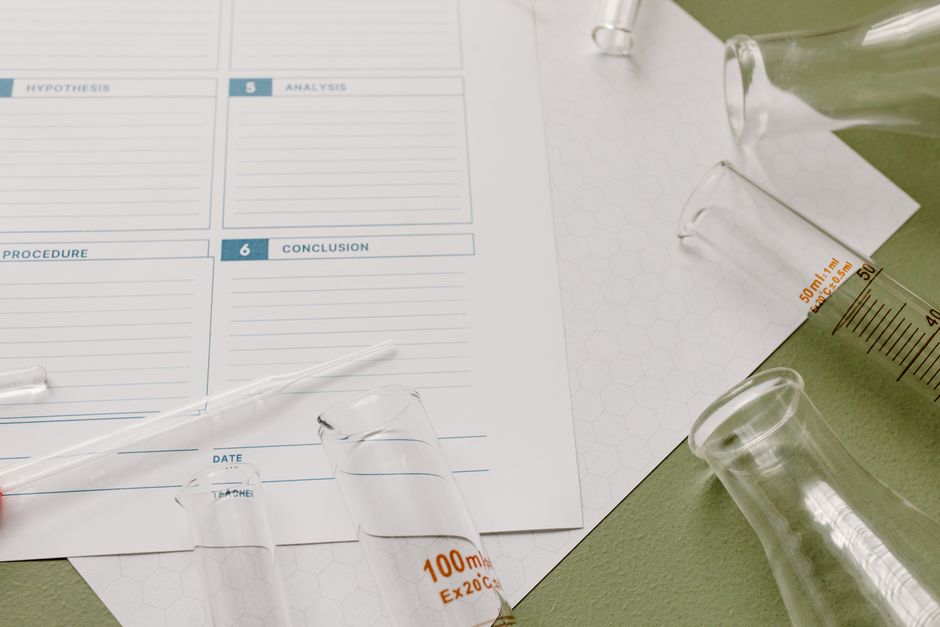
Photo by Tara Winstead on Pexels
Once you have a question, you can propose a possible answer, called a hypothesis. A good hypothesis is testable. For example, "Plants grow towards a window because they need light."
Designing Experiments
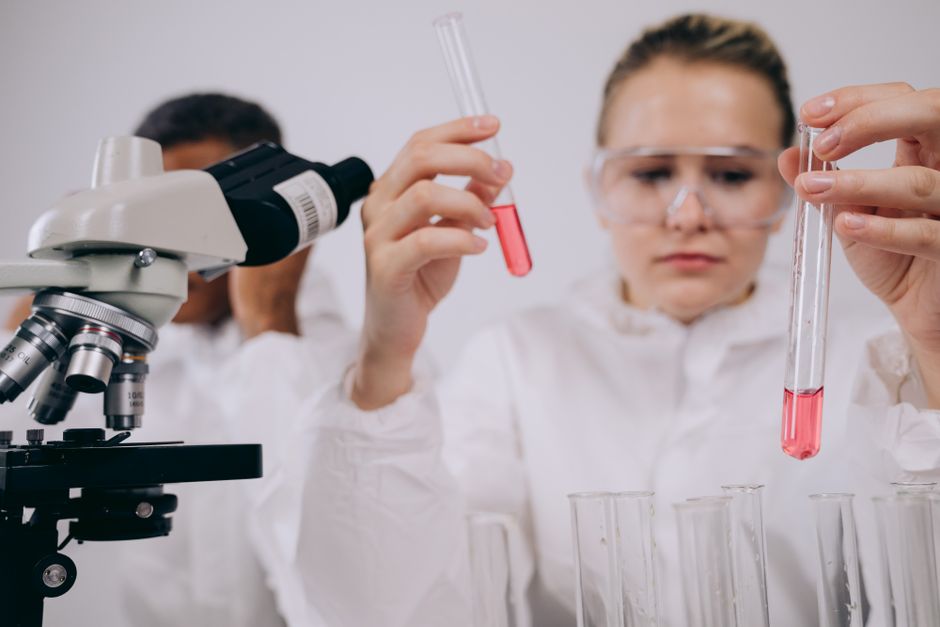
Photo by Mikhail Nilov on Pexels
To test your hypothesis, you design an experiment. This involves identifying variables: the independent variable (what you change), the dependent variable (what you measure), and control variables (what you keep the same).
graph TD
    A["Observe a phenomenon (e.g., Plant growth towards window)"] --> B["Ask a question (e.g., Why does it grow that way?)"]
    B --> C["Formulate a testable hypothesis (e.g., Light causes plants to grow towards it)"]
    C --> D["Design an experiment (e.g., Vary light direction, measure growth)"]
    D --> E["Collect and analyze data (e.g., Measure stem length/direction)"]
    E --> F["Draw conclusions (e.g., Support or refute hypothesis)"]
    F --> G["Communicate findings (e.g., Report results)"]
Analyzing Data and Drawing Conclusions
Photo by Tara Winstead on Pexels
After collecting data, you analyze it to see if it supports or refutes your hypothesis. This often involves looking for patterns, trends, or differences. Your conclusion should be based solely on your evidence.
Communicating Findings
Sharing what you've learned is an essential part of science. This can be through reports, presentations, or discussions, allowing others to learn from your work and potentially build upon it.
3. Worked Example
Let's apply this to a simple observation: You notice a metal spoon left in a hot drink gets warm.
- Observation: A spoon in hot tea heats up quickly.
- Question: How does the heat travel from the tea to the spoon?
- Hypothesis: Heat travels through the spoon by conduction, where vibrating particles transfer energy.
- Experiment (thought experiment): Imagine using different materials (wood, plastic, metal) for the spoon in the same hot tea and feeling how quickly each heats up.
- Independent Variable: Material of the spoon.
- Dependent Variable: Rate at which the spoon heats up (or how hot it feels after a certain time).
- Control Variables: Initial tea temperature, volume of tea, type of tea, size/shape of spoon, ambient room temperature.
- Predicted Data/Analysis: You'd expect the metal spoon to heat up fastest, followed by plastic, and then wood, because metals are generally good conductors.
- Conclusion: The observation supports the idea that heat transfers via conduction, with different materials having different conductive properties.
4. Key Takeaways
- Always start by observing and asking questions about the world around you.
- A hypothesis is a testable explanation, not just a guess.
- Experiments need careful design, identifying independent, dependent, and control variables.
- Data analysis helps you make sense of your observations and test your hypothesis.
- Conclusions must be based on the evidence you collected, not on what you hoped to find.
- Communication is vital for sharing knowledge and advancing understanding.
Common Mistakes to Avoid
- Not controlling variables: Failing to keep everything but your independent variable constant can lead to flawed results.
- Drawing conclusions too quickly: Base your conclusions only on the data you have, not on assumptions.
- Ignoring contradictory evidence: If your data doesn't support your hypothesis, that's still a valuable finding!
- Confusing correlation with causation: Just because two things happen together doesn't mean one causes the other.
5. Now Try It
Think about a common household activity, like drying clothes.
- Observe: How do clothes dry? What makes them dry faster or slower?
- Formulate a hypothesis: Propose one testable idea about what speeds up or slows down drying. (e.g., "Clothes dry faster in warm air.")
- Identify variables: For your hypothesis, what would be the independent, dependent, and control variables if you were to design a simple experiment?
What success looks like: You can clearly state your hypothesis and correctly identify all three types of variables for a simple experiment based on your observation.
Frequently asked about Review and Practical Application
Study this next
Get the full science curriculum
Clone the complete plan to your dashboard for unlimited AI-generated notes, practice quizzes, and a personalised revision schedule.
Save this course free