States of Matter and Chemical Principles
From the science curriculum
TL;DR
Matter exists in different states—solid, liquid, gas, and plasma—each characterized by distinct particle arrangements and energy levels. Understanding these states helps explain how substances behave and interact through physical changes and chemical reactions. Chemical principles govern how atoms bond and rearrange, creating new substances with different properties.
1. The Mental Model
Imagine particles of a substance as tiny, energetic dancers. How they dance—close and rigid, flowing past each other, or wildly bouncing around—determines if the substance is a solid, liquid, or gas. Chemical principles are like the rules of choreography, dictating how these dancers can link up or swap partners to form entirely new routines.
2. The Core Material
States of Matter
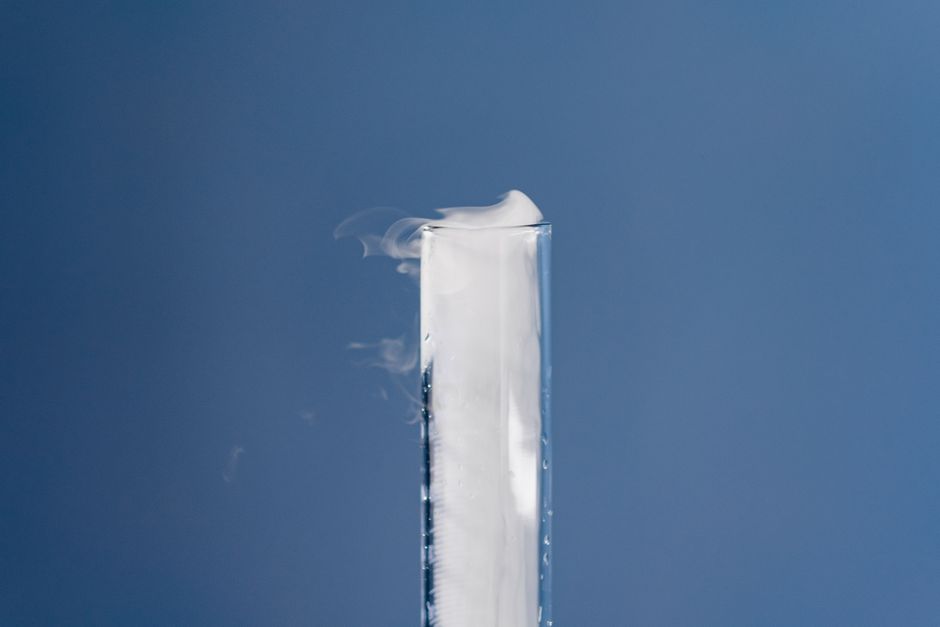
Photo by Ron Lach on Pexels
The three primary states of matter you'll encounter most often are solid, liquid, and gas. A fourth state, plasma, is less common on Earth but makes up most of the universe. The key differences lie in how tightly packed and energetic the particles (atoms or molecules) are.
- Solids: Particles are tightly packed in fixed positions, vibrating in place. They have a definite shape and a definite volume. Think of an ice cube.
- Liquids: Particles are close together but can move past each other. They have a definite volume but take the shape of their container. Think of liquid water.
- Gases: Particles are far apart and move randomly and rapidly. They have no definite shape or volume and will expand to fill their container. Think of steam.
- Plasma: An ionized gas, meaning atoms have lost or gained electrons, resulting in a mix of ions and electrons. It's highly energetic and conductive. Think of lightning or the inside of a fluorescent light bulb.
Changing between these states (e.g., melting, freezing, boiling, condensing, subliming, depositing) involves adding or removing thermal energy.
graph TD
    A["Solid (fixed shape/volume)"] -->|Melting (add energy)| B["Liquid (fixed volume, variable shape)"];
    B -->|Freezing (remove energy)| A;
    B -->|Evaporation/Boiling (add energy)| C["Gas (variable shape/volume)"];
    C -->|Condensation (remove energy)| B;
    A -->|Sublimation (add energy)| C;
    C -->|Deposition (remove energy)| A;
    C -->|Ionization (add energy)| D["Plasma (ionized gas)"];
    D -->|Recombination (remove energy)| C;
Chemical Principles

Photo by Tima Miroshnichenko on Pexels
Chemical principles explain how atoms interact to form molecules and how these molecules react to form new substances.
- Atoms and Elements: Everything is made of atoms, the smallest unit of an element. Elements are pure substances that cannot be broken down into simpler substances by chemical means (e.g., oxygen, carbon, gold).
- Molecules and Compounds: Atoms can bond together to form molecules. If different types of atoms bond, they form a compound (e.g., H₂O is a molecule and a compound; O₂ is a molecule but not a compound).
- Chemical Bonds: These are the forces that hold atoms together.
- Ionic bonds: Formed when atoms transfer electrons, creating oppositely charged ions that attract each other (e.g., NaCl).
- Covalent bonds: Formed when atoms share electrons (e.g., H₂O, CO₂).
- Chemical Reactions: Processes where atoms rearrange to form new substances. This involves breaking existing bonds and forming new ones. Chemical reactions are always accompanied by an energy change (either released or absorbed). For example, burning wood (combustion) releases energy.
3. Worked Example
Let's consider how water behaves as its state changes and why it's a compound.
Imagine you have an ice cube (solid water) at -10°C.
1. Heating the ice: As you add heat, the water molecules (H₂O) in the ice cube start vibrating more vigorously. The temperature rises until it reaches 0°C.
2. Melting: At 0°C, the added energy overcomes the forces holding the molecules in their fixed solid structure. The ice starts to melt, turning into liquid water. During this phase change, the temperature stays at 0°C even though you're adding heat, as the energy is used to break the solid structure.
3. Heating the liquid: Once all the ice has melted, further heating increases the kinetic energy of the liquid water molecules. The temperature rises until it reaches 100°C.
4. Boiling: At 100°C, the water begins to boil and turn into steam (gaseous water). Again, the temperature remains constant at 100°C as the energy is used to overcome the attractions between liquid molecules, allowing them to escape as gas.
Water (H₂O) is a compound because it's formed from two different elements, Hydrogen (H) and Oxygen (O), chemically bonded together in a fixed ratio (two hydrogen atoms for every one oxygen atom) via covalent bonds. If you try to separate hydrogen from oxygen in water, you'd need a chemical reaction (like electrolysis), not just a physical change.
4. Key Takeaways
- Matter's state (solid, liquid, gas, plasma) depends on particle arrangement and energy.
- Adding or removing thermal energy causes substances to change states (phase changes).
- Solids have definite shape/volume; liquids have definite volume, variable shape; gases have variable shape/volume.
- Chemical principles govern how atoms form bonds (ionic or covalent) to create molecules and compounds.
- Chemical reactions involve rearranging atoms to form new substances, always with an energy change.
- Physical changes alter a substance's form but not its chemical identity (e.g., melting ice).
- Chemical changes result in new substances with different properties (e.g., burning wood).
Common Mistakes to Avoid:
* Confusing a phase change (like boiling water) with a chemical reaction; boiling is physical, forming steam, which is still H₂O.
* Thinking all molecules are compounds; O₂ is a molecule, but not a compound because it's only one type of atom.
* Believing that atoms are destroyed or created in a chemical reaction; they are only rearranged.
* Forgetting that plasma is a state of matter, even if it's less common than solid, liquid, and gas.
5. Now Try It
Think about a candle burning. Describe the changes you observe, distinguishing between physical and chemical changes based on what you've learned about states of matter and chemical principles.
What success looks like: You can identify the melting of the wax as a physical change (solid to liquid), the burning of the wick and vaporized wax as a chemical change (forming new substances like CO₂ and H₂O, releasing light and heat), and discuss the different states of matter involved.
Frequently asked about States of Matter and Chemical Principles
Study this next
Get the full science curriculum
Clone the complete plan to your dashboard for unlimited AI-generated notes, practice quizzes, and a personalised revision schedule.
Save this course free