Linear Motion and Forces
From the Physics Grade 11 review QCAA curriculum
TL;DR
Linear motion describes how objects move in a straight line, focusing on concepts like displacement, velocity, and acceleration. Forces are pushes or pulls that cause changes in an object's motion, governed by Newton's Laws. Understanding these principles helps predict and explain the movement of objects around us.
1. The Mental Model
Think of linear motion as literally drawing a straight line through space as something moves. Forces are the "nudges" or "shoves" that make that line change, either in speed or direction. It's all about how things get from A to B and what makes them do it.
2. The Core Material
Displacement, Velocity, and Acceleration

Photo by 子刚 chen on Pexels
When an object moves in a straight line, we track a few key things:
- Displacement ($\Delta x$ or $s$): This is the change in an object's position, measured from a starting point to an ending point, including its direction. It's not the total distance travelled, just how far and in what direction it ended up from where it began.
- Velocity ($v$): This is how fast an object's displacement changes over time, including its direction. It's displacement divided by time.
$v = \Delta x / \Delta t$ - Acceleration ($a$): This is how fast an object's velocity changes over time. It can mean speeding up, slowing down, or changing direction (though for linear motion, it's usually speeding up or slowing down).
$a = \Delta v / \Delta t$
Uniform vs. Non-uniform Motion

Photo by Isaias Aravena on Pexels
- Uniform motion means constant velocity, so acceleration is zero. The object covers equal displacements in equal time intervals.
- Non-uniform motion means changing velocity, so there's acceleration. The object covers unequal displacements in equal time intervals.
Newton's Laws of Motion

Photo by Jose Manuel Gonzalez Lupiañez Photography on Pexels
These three laws are fundamental to understanding how forces affect motion:
- Newton's First Law (Inertia): An object at rest stays at rest, and an object in motion stays in motion with the same speed and in the same direction, unless acted upon by an unbalanced external force. Think of why a ball rolls further on a smooth surface than on grass.
- Newton's Second Law ($F = ma$): The acceleration of an object is directly proportional to the net force acting on it and inversely proportional to its mass. The force is in the same direction as the acceleration. This is often the most used equation in mechanics.
$F_{net} = m \times a$
Where $F_{net}$ is the net force, $m$ is mass, and $a$ is acceleration. - Newton's Third Law (Action-Reaction): For every action, there is an equal and opposite reaction. If you push on a wall, the wall pushes back on you with the same force.
Types of Forces
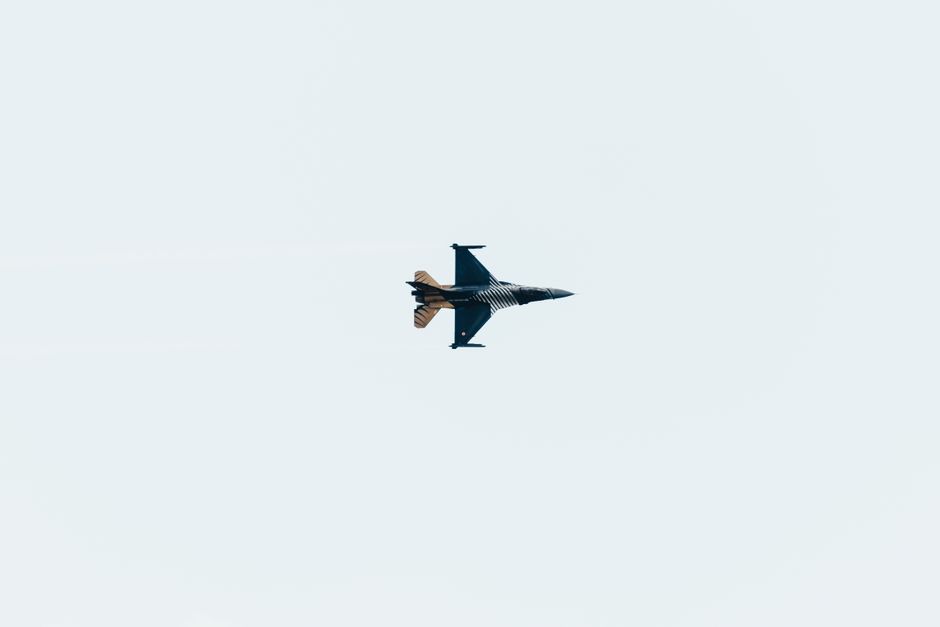
Photo by Hobi Photography on Pexels
Forces can be categorised based on how they interact:
* Contact Forces: Require direct contact between objects (e.g., friction, normal force, tension, applied force).
* Non-Contact Forces (Field Forces): Act without direct contact (e.g., gravity, magnetic force, electrostatic force).
Understanding how these concepts link together is key:
graph TD
    A["Initial Position"] --> B["Final Position"];
    B --> C["Displacement (Δx)"];
    C --> D["Time Interval (Δt)"];
    D --> E["Velocity (v = Δx/Δt)"];
    E --> F["Change in Velocity (Δv)"];
    F --> G["Time Interval (Δt)"];
    G --> H["Acceleration (a = Δv/Δt)"];
    H --> I["Mass (m)"];
    I --> J["Net Force (F_net = m * a)"];
    J --> K["Change in Motion"];
3. Worked Example
Let's say a car starts from rest and accelerates uniformly to a velocity of 20 m/s in 5 seconds. The car has a mass of 1200 kg. What is the acceleration of the car and the net force acting on it?
-
Identify given values:
- Initial velocity ($u$) = 0 m/s (starts from rest)
- Final velocity ($v$) = 20 m/s
- Time ($\Delta t$) = 5 s
- Mass ($m$) = 1200 kg
-
Calculate acceleration ($a$):
Using the formula $a = \Delta v / \Delta t = (v - u) / \Delta t$
$a = (20 \text{ m/s} - 0 \text{ m/s}) / 5 \text{ s}$
$a = 20 \text{ m/s} / 5 \text{ s}$
$a = 4 \text{ m/s}^2$ -
Calculate net force ($F_{net}$):
Using Newton's Second Law: $F_{net} = m \times a$
$F_{net} = 1200 \text{ kg} \times 4 \text{ m/s}^2$
$F_{net} = 4800 \text{ N}$
So, the car's acceleration is 4 m/s$^2$ and the net force acting on it is 4800 Newtons.
4. Key Takeaways
- Displacement is the straight-line distance and direction from start to end, not necessarily the total path travelled.
- Velocity describes both speed and direction, while acceleration is the rate of change of velocity.
- Newton's First Law explains inertia: objects resist changes in their state of motion.
- Newton's Second Law ($F = ma$) quantifies the relationship between force, mass, and acceleration.
- Newton's Third Law states that forces always occur in equal and opposite action-reaction pairs.
- Forces cause acceleration; if there's no net force, there's no acceleration (constant velocity or at rest).
Common Mistakes to Avoid:
- Confusing distance with displacement, or speed with velocity.
- Forgetting that acceleration is a vector and has a direction.
- Not considering net force when applying $F=ma$, but rather just one force.
- Misunderstanding action-reaction pairs: they act on different objects.
5. Now Try It
Imagine you're pushing a 50 kg trolley across a supermarket aisle. You apply a constant force of 100 N to get it moving.
1. Calculate the acceleration of the trolley.
2. If the trolley starts from rest, how fast will it be moving after 3 seconds?
Success looks like: You've correctly calculated both the acceleration and the final velocity using the formulas we've covered, showing your working clearly.
Frequently asked about Linear Motion and Forces
Study this next
Get the full Physics Grade 11 review QCAA curriculum
Clone the complete plan to your dashboard for unlimited AI-generated notes, practice quizzes, and a personalised revision schedule.
Save this course free