Attributes and Physical Competence
From the physical literciy KP100 curriculum
TL;DR
Physical competence involves a mix of physical attributes like strength and endurance, and movement skills. Developing these attributes and skills helps you perform well in various physical activities and stay healthy. It's about more than just being fit; it's about being able to move effectively and confidently in many situations.
1. The Mental Model
Think of physical competence as a toolbox for your body. This toolbox is full of different tools (physical attributes) and how to use them effectively (movement skills). The more tools you have and the better you can use them, the more things you can do physically.
2. The Core Material
Physical competence isn't just one thing; it's a combination of several key components that allow you to move efficiently and effectively in many different situations. It helps you perform well in sports, daily tasks, and keeps you healthy.
Physical Attributes

Photo by Markus Winkler on Pexels
These are the foundational qualities your body possesses. They're often improved through specific training.
- Strength: The ability of your muscles to exert force. Think about lifting something heavy or pushing off the ground.
- Example: Lifting weights, pushing a car.
- Endurance (Cardiovascular): Your body's ability to sustain prolonged physical activity. This is about how long your heart and lungs can keep up.
- Example: Running a marathon, cycling for an hour.
- Endurance (Muscular): Your muscles' ability to perform repeated contractions without fatiguing.
- Example: Doing many push-ups, holding a plank for a long time.
- Flexibility: The range of motion around a joint. It helps prevent injuries and improves movement efficiency.
- Example: Touching your toes, doing a deep squat.
- Speed: The ability to move your body or parts of your body quickly.
- Example: Sprinting, a quick punch.
- Power: The ability to exert maximum force in the shortest possible time. It's a combination of strength and speed.
- Example: Jumping, throwing a ball hard.
- Agility: The ability to change direction quickly and efficiently while maintaining control.
- Example: Dodging an opponent, changing lanes quickly while running.
- Balance: The ability to maintain your body's equilibrium, whether stationary or in motion.
- Example: Standing on one leg, walking on a narrow beam.
- Coordination: The ability to use different parts of your body together smoothly and efficiently.
- Example: Juggling, hitting a tennis ball.
Movement Skills
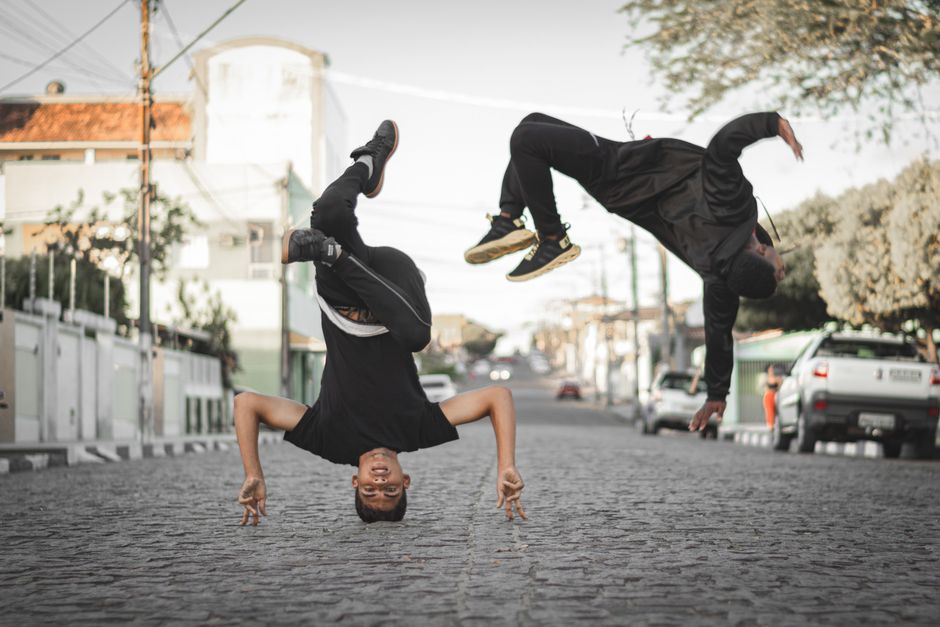
Photo by Edslan Silva on Pexels
These are learned abilities that allow you to perform specific tasks. They often combine multiple physical attributes.
- Fundamental Movement Skills (FMS): Basic movement patterns that form the building blocks for more complex skills.
- Locomotor skills: Running, jumping, hopping, skipping, galloping.
- Manipulative skills: Throwing, catching, kicking, striking.
- Stability skills: Balancing, bending, twisting.
- Specialized Movement Skills: More complex skills specific to certain sports or activities, built upon FMS.
- Example: Shooting a basketball, performing a gymnastics routine, swimming strokes.
Physical competence is the interplay between these attributes and skills. You need a certain level of strength (attribute) to kick a ball far (skill), and good balance (attribute) to stand on a surfboard (skill).
graph LR
    A["Physical Competence"] --> B["Physical Attributes"];
    A --> C["Movement Skills"];

    B --> B1["Strength"];
    B --> B2["Endurance (Cardiovascular)"];
    B --> B3["Endurance (Muscular)"];
    B --> B4["Flexibility"];
    B --> B5["Speed"];
    B --> B6["Power"];
    B --> B7["Agility"];
    B --> B8["Balance"];
    B --> B9["Coordination"];

    C --> C1["Fundamental Movement Skills (FMS)"];
    C --> C2["Specialized Movement Skills"];

    C1 --> C1a["Locomotor (e.g., Running)"];
    C1 --> C1b["Manipulative (e.g., Throwing)"];
    C1 --> C1c["Stability (e.g., Balancing)"];

    B1 & B5 --> B6; %% Power is strength + speed
    B & C --> D["Better Performance & Health"];
3. Worked Example
Imagine someone wants to improve their ability to play recreational basketball.
- Identify the goal: Play basketball more effectively and for longer without getting tired.
- Break down required attributes:
- Endurance (Cardiovascular): To run up and down the court for extended periods.
- Speed & Agility: For quick breaks, defensive movements, and dodging opponents.
- Power: For jumping (rebounds, layups) and throwing (passing, shooting).
- Strength (Muscular): For holding defensive positions, pushing for rebounds, core stability.
- Coordination: For dribbling, shooting, and passing accurately.
- Balance: For landing after jumps, pivoting, and maintaining control.
- Identify required movement skills:
- Locomotor FMS: Running, jumping.
- Manipulative FMS: Throwing (passing), catching, shooting (a form of striking/propelling).
- Specialized skills: Dribbling, pivoting, specific shooting forms, defensive slides.
- Develop a plan:
- Cardio: Interval running, playing short games.
- Speed/Agility: Ladder drills, cone drills, shuttle runs.
- Power: Box jumps, medicine ball throws.
- Strength: Squats, lunges, push-ups, core exercises.
- Coordination/Balance: Dribbling drills, single-leg balancing.
- Skill practice: Shooting drills, passing drills, small-sided games.
By focusing on improving these underlying attributes and practicing the specific skills, the individual will become more physically competent in basketball.
4. Key Takeaways
- Physical competence is the capacity to perform various physical activities effectively and efficiently.
- It involves a blend of distinct physical attributes and learned movement skills.
- Physical attributes like strength, endurance, and flexibility are the body's foundational capabilities.
- Movement skills, such as running and throwing, are learned patterns built upon these attributes.
- Developing physical competence contributes significantly to overall health, well-being, and injury prevention.
- Improving one attribute or skill can positively impact others, creating a virtuous cycle.
Common Mistakes to Avoid

Photo by KATRIN BOLOVTSOVA on Pexels
- Focusing only on one attribute (e.g., just strength) and neglecting others like flexibility or balance.
- Believing that being good at one sport automatically means you're physically competent in all areas.
- Ignoring fundamental movement skills in favor of complex specialized skills too early.
- Not understanding the connection between your physical attributes and your ability to perform skills.
- Neglecting consistency in training, which is crucial for developing both attributes and skills.
5. Now Try It
Think about a physical activity or sport you enjoy, or one you'd like to improve at (e.g., hiking, swimming, dancing, playing soccer, gardening). Spend 15 minutes listing at least five key physical attributes (like strength, agility, endurance) and five key movement skills (like running, throwing, balancing) that are important for success in that activity. Then, for each, jot down one quick idea of how you could specifically train or practice to improve it.
What success looks like: You'll have a clear, personalized breakdown of the components of physical competence relevant to your chosen activity and a few actionable steps you could take to enhance them.
Frequently asked about Attributes and Physical Competence
Study this next
Get the full physical literciy KP100 curriculum
Clone the complete plan to your dashboard for unlimited AI-generated notes, practice quizzes, and a personalised revision schedule.
Save this course free