Fundamental Concepts of Electricity
From the Electric circuits curriculum
TL;DR
Electricity is the flow of tiny charged particles, usually electrons, which creates an electric current. This flow is driven by voltage, a kind of electrical "pressure," and is opposed by resistance, which limits the current. Understanding these three core concepts — voltage, current, and resistance — is crucial for analyzing any electric circuit.
1. The Mental Model
Think of electricity like water flowing through pipes. Voltage is the water pressure pushing the water, current is the amount of water flowing past a point, and resistance is how narrow or rough the pipe is, restricting the flow.
2. The Core Material
Electricity is all about the movement of charge. The fundamental unit of charge is the electron, which carries a negative charge.
2.1. Charge (Q)

Photo by Reinhard Bruckner on Pexels
Charge is a fundamental property of matter. In circuits, we're usually talking about the movement of electrons.
* Unit: Coulomb (C). One Coulomb is roughly the charge of 6.24 x 10^18 electrons.
* Key Idea: Charge doesn't get created or destroyed, it just moves around.
2.2. Current (I)
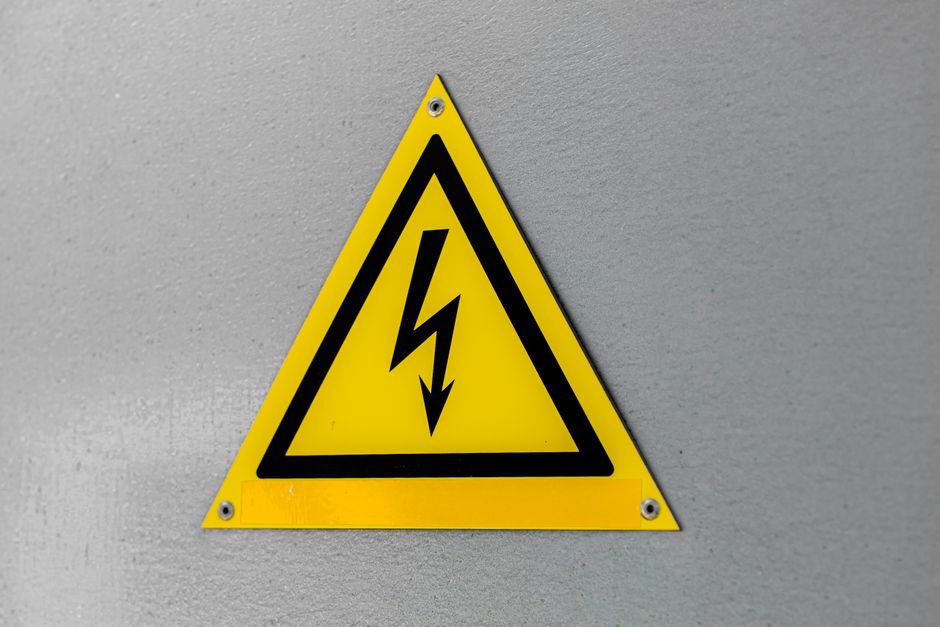
Photo by Anastasiya Badun on Pexels
Current is the rate at which charge flows past a point in a circuit. Think of it as how many electrons pass a specific spot per second.
* Definition: $I = \frac{\Delta Q}{\Delta t}$ (Charge per unit time).
* Unit: Ampere (A), which is Coulombs per second (C/s).
* Direction: Conventionally, current is said to flow from positive to negative, even though electrons (which are negative) actually flow from negative to positive. We stick with conventional current.
2.3. Voltage (V)
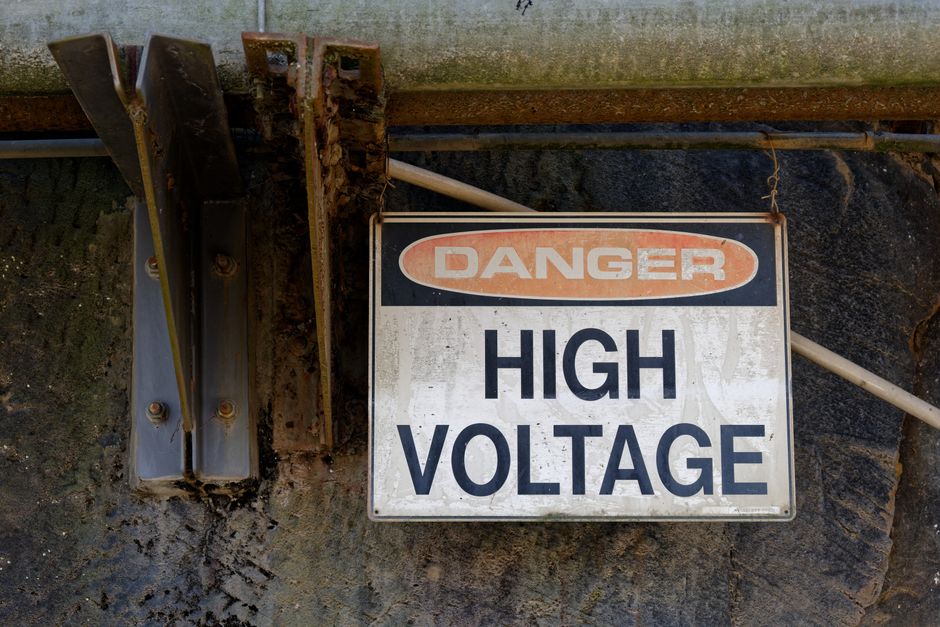
Photo by Gu Bra on Pexels
Voltage, also known as electric potential difference, is the "push" or "pressure" that drives current. It's the energy per unit charge required to move charge between two points.
* Definition: $V = \frac{\Delta E}{\Delta Q}$ (Energy per unit charge).
* Unit: Volt (V), which is Joules per Coulomb (J/C).
* Key Idea: Current only flows when there's a voltage difference between two points. No voltage difference, no current.
2.4. Resistance (R)
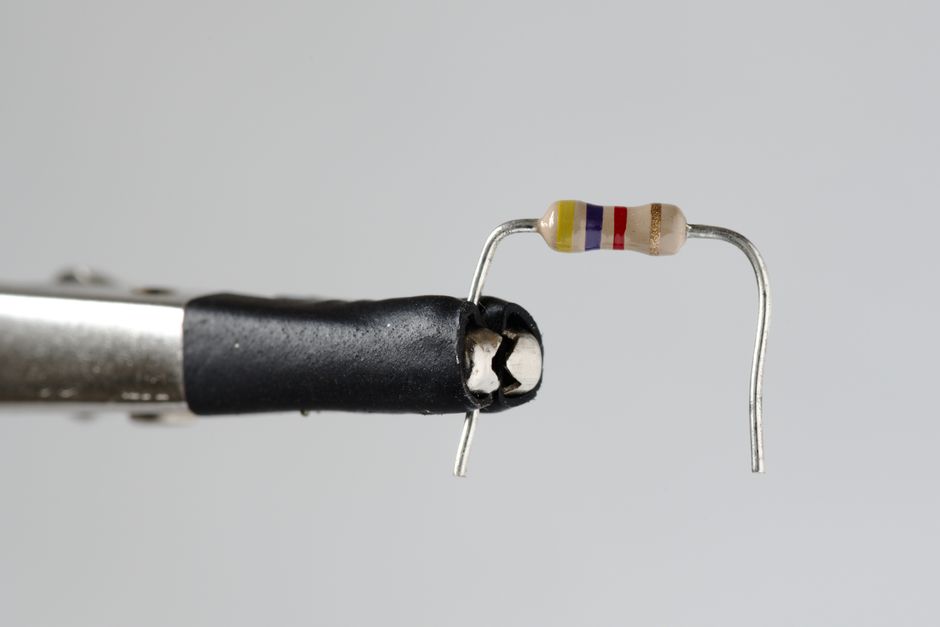
Photo by Zacharias Korsalka on Pexels
Resistance is the opposition to the flow of current. Materials that resist current flow a lot are called insulators (like rubber), while materials that resist it very little are conductors (like copper).
* Unit: Ohm ($\Omega$).
* Factors affecting resistance:
* Material: Some materials naturally resist current more than others.
* Length: Longer wires have more resistance.
* Cross-sectional Area: Thicker wires have less resistance.
* Temperature: For most materials, resistance increases with temperature.
Here's how these concepts relate:
graph TD
    A["Voltage (V)"] --> B{"Drives"};
    B --> C["Current (I)"];
    D["Resistance (R)"] --> E{"Opposes"};
    E --> C;
    C --> F["Flow of Charge"];
2.5. Power (P)
Power is the rate at which energy is transferred or consumed in a circuit. It tells you how much "work" is being done per second.
* Definition: $P = V \times I$ (Voltage times Current).
* Unit: Watt (W), which is Joules per second (J/s).
* Key Idea: Higher power means more energy used or delivered per unit of time.
3. Worked Example
Imagine you have a simple circuit with a 9V battery connected to a light bulb. If we measure the current flowing through the bulb and find it's 0.3 Amperes, what is the resistance of the bulb and how much power is it consuming?
-
Given:
- Voltage (V) = 9 V
- Current (I) = 0.3 A
-
Find Resistance (R):
We use Ohm's Law (which we'll cover more deeply later, but it's $V = I \times R$, so $R = \frac{V}{I}$).
$R = \frac{9 \text{ V}}{0.3 \text{ A}} = 30 \Omega$
So, the light bulb has a resistance of 30 Ohms. -
Find Power (P):
We use the power formula $P = V \times I$.
$P = 9 \text{ V} \times 0.3 \text{ A} = 2.7 \text{ W}$
The light bulb consumes 2.7 Watts of power.
4. Key Takeaways
- Charge (Coulombs) is the fundamental property responsible for electricity.
- Current (Amperes) is the rate of charge flow, moving from positive to negative terminals conventionally.
- Voltage (Volts) is the electrical "pressure" or potential difference that pushes charge to create current.
- Resistance (Ohms) is the opposition to current flow within a material.
- Power (Watts) is the rate at which energy is used or transferred in a circuit.
- These concepts are interconnected; changing one often affects the others.
Common Mistakes to Avoid:
- Confusing voltage with current: Voltage causes current, it isn't current itself.
- Thinking resistance is always bad: Resistance is necessary for components like light bulbs to convert electrical energy into light and heat.
- Ignoring conventional current direction: Always assume current flows from positive to negative unless specifically dealing with electron flow.
- Mixing up units: Always use the correct units (Volts, Amperes, Ohms, Watts, Coulombs) for calculations.
5. Now Try It
You have a portable fan that draws 0.5 Amperes of current when connected to a 12V battery. Calculate the fan's resistance and the power it consumes. What would happen to the current if the battery voltage was halved while resistance stayed the same?
What success looks like: You should be able to calculate the resistance in Ohms and the power in Watts for the fan. You should also correctly describe the change in current (it would also be halved, becoming 0.25 A).
Frequently asked about Fundamental Concepts of Electricity
Study this next
Get the full Electric circuits curriculum
Clone the complete plan to your dashboard for unlimited AI-generated notes, practice quizzes, and a personalised revision schedule.
Save this course free