Fundamental Electrical Concepts
From the Module 3 Electrical Fundamentals curriculum
TL;DR
Electricity is the flow of electrons, driven by voltage, through a conductor, limited by resistance. Understanding voltage, current, and resistance is crucial for grasping how electrical circuits work. Ohm's Law, V=IR, describes the fundamental relationship between these three core concepts.
1. The Mental Model
Think of electricity like water flowing through a pipe. Voltage is the "pressure" pushing the water, current is the amount of water flowing, and resistance is anything that narrows the pipe or obstructs the flow.
2. The Core Material
In electrical circuits, we're talking about the movement of tiny charged particles called electrons.
What is Voltage (V)?
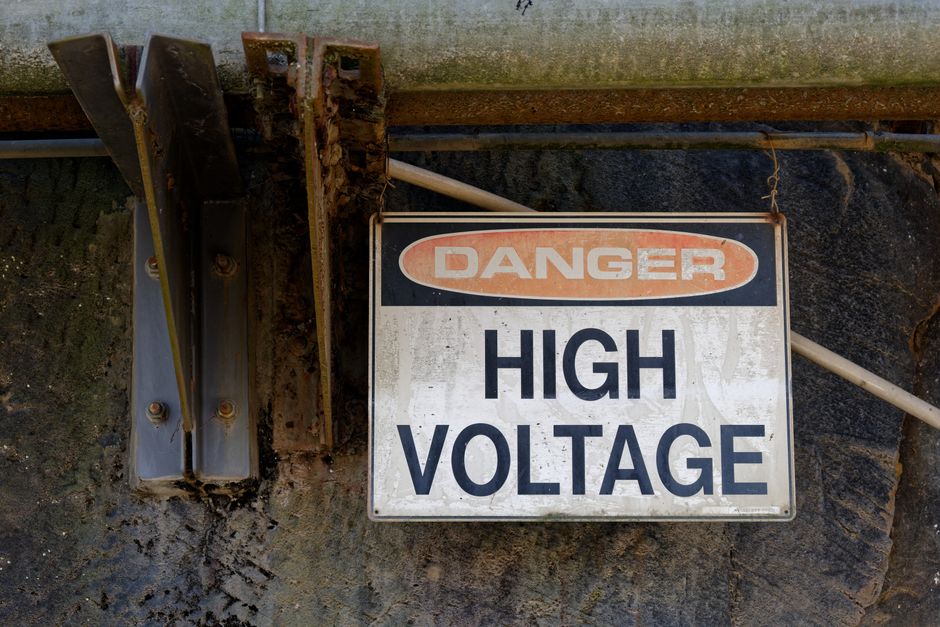
Photo by Gu Bra on Pexels
Voltage, often called potential difference or electromotive force (EMF), is the "push" or "force" that makes electrons move. It's the difference in electrical potential energy between two points in a circuit. We measure voltage in Volts (V). Think of a battery: it creates a voltage difference between its terminals, ready to push electrons through a circuit.
What is Current (I)?

Photo by Efrem Efre on Pexels
Current is the rate of flow of electric charge. In simpler terms, it's how many electrons are passing a point in a circuit per second. We measure current in Amperes (A), often shortened to "amps". High current means lots of electrons flowing.
What is Resistance (R)?
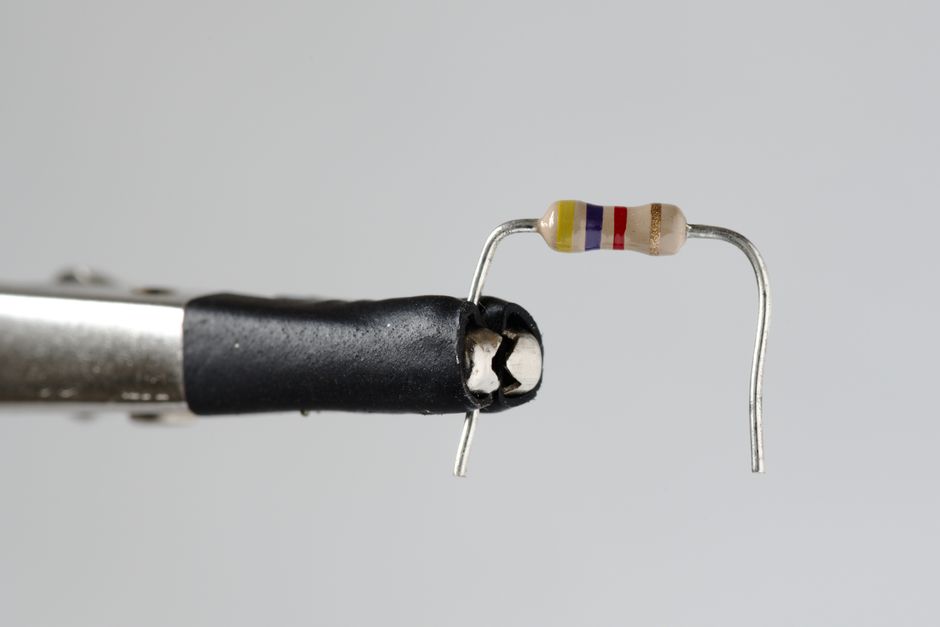
Photo by Zacharias Korsalka on Pexels
Resistance is the opposition to the flow of electric current. Every material offers some resistance to current. Materials that offer very little resistance are called conductors (like copper wires), while materials that offer high resistance are called insulators (like plastic coatings). We measure resistance in Ohms (Ω). Components specifically designed to add resistance are called resistors.
Ohm's Law
Photo by Zacharias Korsalka on Pexels
The relationship between voltage, current, and resistance is described by Ohm's Law, one of the most fundamental laws in electricity:
$$V = I \times R$$
Where:
* V is Voltage (in Volts)
* I is Current (in Amperes)
* R is Resistance (in Ohms)
This law is incredibly powerful because if you know any two of these values, you can calculate the third.
Here's a simple way to visualize the relationship:
graph TD
    A["Voltage (V)"] --> B["Drives"]
    B --> C["Current (I)"]
    C --> D["Limited by"]
    D --> A
    D --> E["Resistance (R)"]
    E --> C
Power (P)
While not directly part of Ohm's Law, electrical power is closely related and very important. Power is the rate at which electrical energy is converted into another form (like heat, light, or mechanical motion). We measure power in Watts (W).
The formula for power is:
$$P = V \times I$$
You can also combine Ohm's Law with the power formula to get variations like $P = I^2 \times R$ or $P = V^2 / R$.
3. Worked Example
Let's say you have a simple circuit with a 9V battery and you want to power a small LED that requires a 20mA (0.02A) current to operate safely. LEDs need a resistor in series to limit the current. What resistance do you need?
- Identify knowns:
- Voltage (V) = 9V
- Current (I) = 20mA = 0.02A (Remember to convert milliamps to amps!)
- Identify unknown:
- Resistance (R)
- Apply Ohm's Law: $V = I \times R$
We need to find R, so rearrange the formula: $R = V / I$ - Calculate:
$R = 9V / 0.02A$
$R = 450 \Omega$
So, you would need a 450 Ohm resistor to limit the current through the LED to 20mA when powered by a 9V battery.
4. Key Takeaways
- Voltage is the "push" that drives electrons, measured in Volts (V).
- Current is the flow rate of electrons, measured in Amperes (A).
- Resistance is the opposition to current flow, measured in Ohms (Ω).
- Ohm's Law, V=IR, is fundamental for understanding circuit behavior.
- Power (P=VI) is the rate at which electrical energy is consumed or converted.
- Conductors allow easy electron flow; insulators resist it.
- Always convert units (like mA to A) before using formulas.
Common Mistakes to Avoid:
- Mixing up voltage and current: they are distinct concepts.
- Forgetting to convert units (e.g., mA to A, kΩ to Ω).
- Not applying Ohm's Law correctly, especially when rearranging for I or R.
- Ignoring resistance when designing circuits; it's always present.
5. Now Try It
You have a light bulb with a resistance of 240Ω. If you plug it into a standard household outlet that provides 120V, what current will flow through the bulb, and how much power will it consume? What to do: Use Ohm's Law and the Power formula to calculate I and P. What success looks like: You'll have two numerical answers, one in Amperes and one in Watts.
Frequently asked about Fundamental Electrical Concepts
Study this next
Get the full Module 3 Electrical Fundamentals curriculum
Clone the complete plan to your dashboard for unlimited AI-generated notes, practice quizzes, and a personalised revision schedule.
Save this course free