Populations and Communities
From the Science chapter 11 curriculum
TL;DR
You'll learn about how individual organisms interact to form populations and how different populations interact within a community. Understanding these interactions helps explain how ecosystems function and how environmental changes can impact life. It's all about who lives where, with whom, and what they do together.
1. The Mental Model
Imagine your neighborhood. A population is all the people living in one house. A community is all the people, pets, and plants living together in your whole neighborhood. They all affect each other in different ways.
2. The Core Material
In biology, a population is a group of individuals of the same species living in the same geographic area at the same time. Think of all the deer in a particular forest or all the dandelions in your backyard.
A community is made up of all the different populations of different species that live and interact in a specific area. So, in that same forest, the community would include the deer, the oak trees, the squirrels, the birds, and even the bacteria in the soil.
Let's break down some key characteristics and interactions:
Population Characteristics

Photo by RDNE Stock project on Pexels
- Population Size: The total number of individuals in a population.
- Population Density: How many individuals live per unit of area or volume (e.g., 10 trees per acre).
- Dispersion Patterns: How individuals are spaced out:
- Clumped: Individuals are grouped together (e.g., a herd of elephants). This is the most common pattern.
- Uniform: Individuals are evenly spaced (e.g., trees in an orchard, or some nesting birds).
- Random: Individuals are positioned without any predictable pattern (e.g., dandelions in a field).
Community Interactions
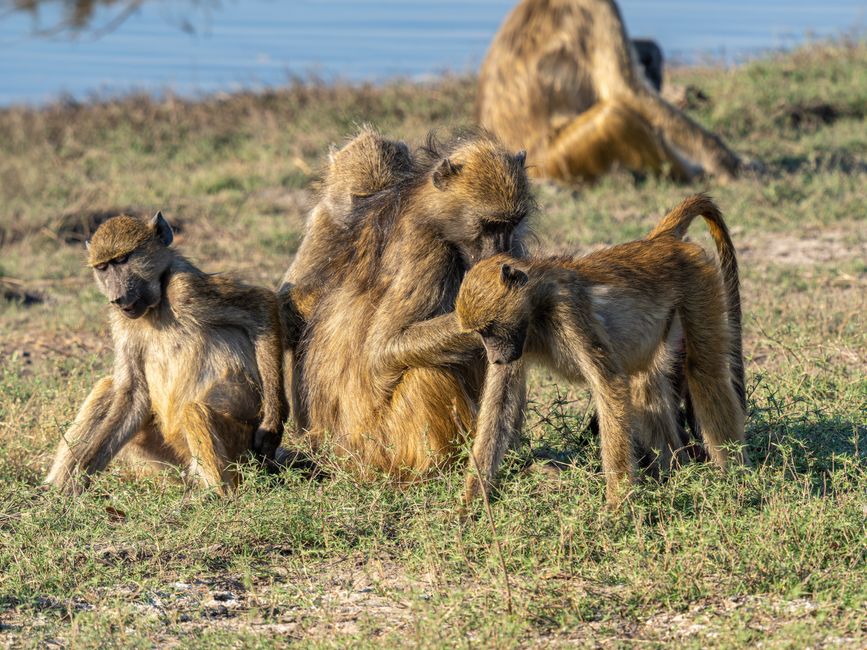
Photo by Rino Adamo on Pexels
Different species in a community interact in various ways, often impacting each other's survival and reproduction.
graph LR
    A["Organism 1 (Species A)"] --> B["Organism 2 (Species B)"]
    subgraph Types of Interactions
        C["Competition"] --> D["Negative for both (-/-)"]
        E["Predation"] --> F["Positive for predator, negative for prey (+/-)"]
        G["Parasitism"] --> H["Positive for parasite, negative for host (+/-)"]
        I["Mutualism"] --> J["Positive for both (+/+)"]
        K["Commensalism"] --> L["Positive for one, neutral for other (+/0)"]
    end
    A -- Interacts with --> C
    A -- Interacts with --> E
    A -- Interacts with --> G
    A -- Interacts with --> I
    A -- Interacts with --> K
- Competition (-/-): Occurs when two or more species require the same limited resource (like food, water, or space). Both species are negatively affected because they have to work harder for the resource.
- Example: Lions and hyenas competing for the same zebra kill.
- Predation (+/-): One species (the predator) hunts and kills another species (the prey) for food.
- Example: A fox hunting a rabbit.
- Parasitism (+/-): One species (the parasite) lives on or in another species (the host), benefiting from it while harming the host. The host is usually not killed immediately.
- Example: A tick feeding on a dog.
- Mutualism (+/+): Both species benefit from the interaction.
- Example: Bees pollinating flowers (bees get nectar, flowers get pollinated).
- Commensalism (+/0): One species benefits, and the other is neither helped nor harmed.
- Example: Barnacles living on a whale (barnacles get a place to live and filter feed, the whale isn't affected).
These interactions are the building blocks of how communities are structured and how energy flows through them.
3. Worked Example
Let's consider a simple marine community: a coral reef.
- Populations: You have populations of specific coral species (e.g., staghorn coral), clownfish, sea anemones, various types of algae, reef sharks, and many different kinds of invertebrates.
- Community: All these different populations living together on the reef form the coral reef community.
- Interactions:
- Mutualism: Clownfish and sea anemones. The clownfish gets protection from predators by living among the anemone's stinging tentacles (to which it's immune), and the anemone might get cleaned or defended by the clownfish.
- Predation: A reef shark hunting a smaller fish.
- Competition: Two different species of coral growing close to each other, competing for light and space on the reef.
- Parasitism: A marine worm living inside a specific fish species.
- Commensalism: Small fish sheltering in the spines of a sea urchin, getting protection without significantly affecting the urchin.
Understanding these individual populations and their interactions helps us see how stable (or unstable) the entire reef community is.
4. Key Takeaways
- A population is all individuals of one species in an area; a community is all the different populations (species) interacting in an area.
- Population size, density, and dispersion describe how individuals are distributed.
- Dispersion patterns are usually clumped, uniform, or random.
- Community interactions can be beneficial, harmful, or neutral for each species involved.
- Key interaction types are competition, predation, parasitism, mutualism, and commensalism.
- These interactions are crucial for the flow of energy and the structure of an ecosystem.
Common Mistakes to Avoid

Photo by KATRIN BOLOVTSOVA on Pexels
- Don't confuse "population" (one species) with "community" (many species).
- Remember that competition is typically bad for both species involved.
- Don't think all interactions are about food; some are about shelter or protection.
- Avoid thinking that parasites always kill their hosts; they usually need them alive to thrive.
5. Now Try It
Think about your own local park or backyard. List at least three different populations you might find there (e.g., squirrels, oak trees, dandelions). Then, for each population, describe its likely dispersion pattern (clumped, uniform, or random). Finally, identify one potential interaction between two different populations in your park/backyard community (e.g., a bird and a worm) and classify it (predation, mutualism, etc.). Success looks like correctly identifying populations, their dispersion, and one accurate interaction with its classification.
Frequently asked about Populations and Communities
Study this next
Get the full Science chapter 11 curriculum
Clone the complete plan to your dashboard for unlimited AI-generated notes, practice quizzes, and a personalised revision schedule.
Save this course free