Understanding Acceleration
From the science, physics, motion, speed,distance, time,velocity and acceleration, motion graphs, displacement curriculum
TL;DR
Acceleration tells us how quickly an object's velocity changes, whether it's speeding up, slowing down, or changing direction. It's a vector quantity, meaning it has both magnitude (how much) and direction. You can figure out acceleration by looking at how velocity changes over time.
1. The Mental Model
Think of acceleration as the "change-maker" for velocity. If an object's velocity isn't staying constant, it's accelerating. This change can be in speed, direction, or both.
2. The Core Material
Acceleration is all about how fast your velocity is changing. Remember, velocity isn't just speed; it also includes direction. So, if you speed up, slow down, or turn a corner, you're accelerating.
The formula for average acceleration is:
$a = \frac{\Delta v}{\Delta t} = \frac{v_{final} - v_{initial}}{t_{final} - t_{initial}}$
Where:
* $a$ is acceleration (measured in meters per second squared, $m/s^2$)
* $\Delta v$ is the change in velocity
* $\Delta t$ is the change in time
* $v_{final}$ is the final velocity
* $v_{initial}$ is the initial velocity
* $t_{final}$ is the final time
* $t_{initial}$ is the initial time
Positive and Negative Acceleration

Photo by ClickerHappy on Pexels
It's important to understand what positive and negative acceleration mean:
* Positive Acceleration: Often means speeding up in the positive direction (e.g., car accelerating forward). It can also mean slowing down if the velocity is negative (e.g., a car moving backward slowing down to a stop).
* Negative Acceleration (Deceleration): Often means slowing down when moving in the positive direction (e.g., hitting the brakes in a car moving forward). It can also mean speeding up if the velocity is negative (e.g., a car accelerating backward).
The sign of acceleration tells you its direction relative to your chosen positive direction. If acceleration has the same sign as velocity, you're speeding up. If they have opposite signs, you're slowing down.
Acceleration and Motion Graphs
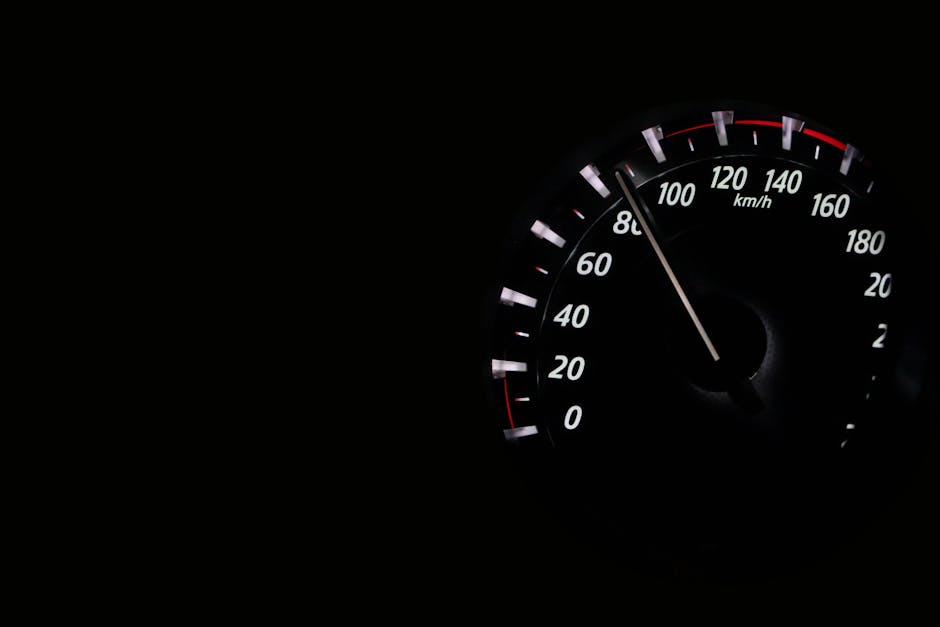
Photo by Pixabay on Pexels
You'll often see acceleration represented on motion graphs:
* Velocity-Time Graphs: The slope of a velocity-time graph gives you the acceleration. A straight line means constant acceleration. A horizontal line means zero acceleration (constant velocity). A curved line means changing acceleration.
* Position-Time Graphs: For acceleration, you'd look for a curve on a position-time graph. A curved line indicates that velocity is changing, meaning there's acceleration.
Here's a simple flow to help understand how different scenarios relate to acceleration:
graph TD
    A["Is velocity changing?"] -->|Yes| B["Is there acceleration?"]
    B --> C1{"Is speed changing?"}
    B --> C2{"Is direction changing?"}
    C1 --> |Yes| D1["Speeding up or slowing down (magnitude change)"]
    C2 --> |Yes| D2["Turning (direction change)"]
    D1 --> E["Acceleration is present"]
    D2 --> E
    A --> |No| F["Is velocity constant?"]
    F --> G["Zero acceleration (constant speed & direction)"]
3. Worked Example
Let's say a car starts from rest (0 m/s) and reaches a velocity of 20 m/s in 5 seconds. What's its average acceleration?
Here's how we'd break it down:
* $v_{initial}$ = 0 m/s (starts from rest)
* $v_{final}$ = 20 m/s
* $t_{initial}$ = 0 s (we'll assume the starting time is 0)
* $t_{final}$ = 5 s
Using the formula:
$a = \frac{v_{final} - v_{initial}}{t_{final} - t_{initial}}$
$a = \frac{20 \text{ m/s} - 0 \text{ m/s}}{5 \text{ s} - 0 \text{ s}}$
$a = \frac{20 \text{ m/s}}{5 \text{ s}}$
$a = 4 \text{ m/s}^2$
The car's average acceleration is 4 meters per second squared. This means its velocity increases by 4 m/s every second.
4. Key Takeaways
- Acceleration is the rate at which velocity changes, including changes in speed or direction.
- It's a vector quantity, meaning it has both magnitude and direction.
- A positive acceleration doesn't always mean speeding up, and negative doesn't always mean slowing down; it depends on the direction of velocity.
- On a velocity-time graph, the slope represents acceleration.
- Constant velocity means zero acceleration.
Common Mistakes to Avoid

Photo by KATRIN BOLOVTSOVA on Pexels
- Confusing speed with velocity: Acceleration is about changing velocity, not just speed. Turning at a constant speed is still acceleration.
- Forgetting units: Always include $m/s^2$ for acceleration.
- Misinterpreting the sign: A negative acceleration just means it's in the opposite direction of your chosen positive reference, not necessarily "bad" or "slowing down."
- Assuming constant acceleration: Not all motion has constant acceleration; sometimes it changes over time.
5. Now Try It
Imagine you're on a bicycle. You're cruising at a steady 5 m/s for 10 seconds. Then, you decide to pedal harder, and in the next 5 seconds, you increase your speed to 15 m/s. Calculate your average acceleration during that second 5-second interval. What would your acceleration be if you then applied the brakes and came to a stop in 3 seconds? Success looks like calculating both accelerations correctly, including their units and signs, and being able to explain what the signs mean in this context.
Frequently asked about Understanding Acceleration
Study this next
Get the full science, physics, motion, speed,distance, time,velocity and acceleration, motion graphs, displacement curriculum
Clone the complete plan to your dashboard for unlimited AI-generated notes, practice quizzes, and a personalised revision schedule.
Save this course free