Introduction to Patterns
From the Pattern curriculum
TL;DR
Patterns are about recognizing and describing repeating elements or structures in data, events, or designs. Understanding patterns helps you predict what comes next, make sense of complex information, and create organized solutions. It's a fundamental skill for problem-solving across many fields.
1. The Mental Model
Think of patterns like finding recurring melodies in music, repeating shapes in art, or predictable sequences in numbers. Once you spot the repetition and understand its rule, you can anticipate future elements or replicate the structure.
2. The Core Material
A pattern is essentially a recurring arrangement or sequence. It can be something simple, like a sequence of numbers, or something more complex, like a design principle in software development. The key is that there's a predictable relationship between its parts.
We often categorize patterns based on their nature:
a. Numerical Patterns
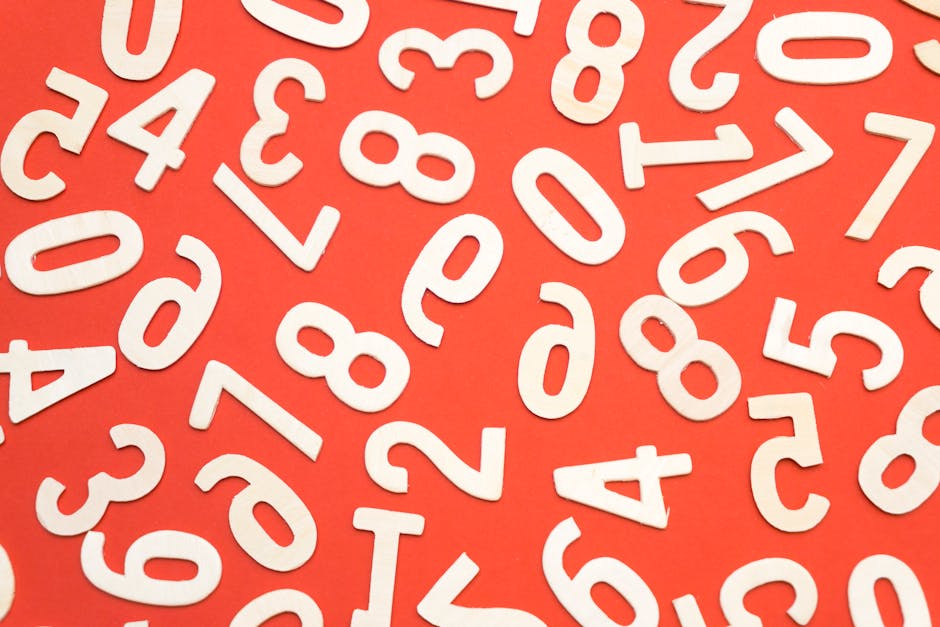
Photo by Black ice on Pexels
These involve numbers where there's a clear mathematical relationship between terms.
- Arithmetic Sequences: Each term is found by adding a constant value to the previous term.
- Example: 2, 5, 8, 11, ... (add 3 each time)
- Geometric Sequences: Each term is found by multiplying the previous term by a constant value.
- Example: 3, 6, 12, 24, ... (multiply by 2 each time)
- Other Sequences: Many other types exist, like Fibonacci (each number is the sum of the two preceding ones: 0, 1, 1, 2, 3, 5...).
b. Visual Patterns
Photo by Google DeepMind on Pexels
These are about repeating shapes, colors, or arrangements.
- Symmetry: Mirroring of parts.
- Tessellations: Repeating shapes that tile a surface without gaps or overlaps.
- Fractals: Complex patterns that look similar at different scales.
c. Behavioral or Event Patterns

Photo by Jason Deines on Pexels
These describe recurring actions or sequences of events.
- Daily routines: Waking up, eating, going to work.
- Seasonal changes: Spring, summer, autumn, winter.
- User interactions: How people typically navigate a website.
Identifying Patterns

Photo by wal_ 172619 on Pexels
To identify a pattern, you usually follow these steps:
graph TD
    A["Observe the data/elements"] --> B["Look for repetition or regularity"];
    B --> C["Hypothesize a rule or relationship"];
    C --> D{"Does the rule predict the next elements?"};
    D -- Yes --> E["Confirm the pattern"];
    D -- No --> B;
This process helps you move from just seeing individual pieces to understanding the underlying structure.
Describing Patterns
Once you've found a pattern, you need to describe it clearly. This might involve:
- Verbal description: "Each number is 3 more than the last."
- Mathematical formula: For an arithmetic sequence, $a_n = a_1 + (n-1)d$, where $a_n$ is the nth term, $a_1$ is the first term, and $d$ is the common difference.
- Diagrams or pseudocode: For more complex visual or behavioral patterns.
3. Worked Example
Let's look at the sequence: 1, 4, 9, 16, 25, ...
- Observe: We have a list of numbers.
- Look for repetition/regularity:
- Differences: 4-1=3, 9-4=5, 16-9=7, 25-16=9. The differences are increasing by 2 each time (3, 5, 7, 9). This isn't a simple arithmetic sequence.
- What about other relationships?
- 1 is $1^2$
- 4 is $2^2$
- 9 is $3^2$
- 16 is $4^2$
- 25 is $5^2$
- Hypothesize a rule: It looks like each number is the square of its position in the sequence.
- Does the rule predict the next elements? If the next element is the 6th, the rule predicts $6^2 = 36$. This fits the progression.
- Confirm the pattern: The pattern is that the nth term is $n^2$.
4. Key Takeaways
- Patterns are predictable repetitions or structures in data, events, or designs.
- You can find numerical, visual, and behavioral patterns.
- Identifying patterns involves observing, looking for regularity, hypothesizing a rule, and testing it.
- Describing a pattern clearly is crucial for communication and use.
- Understanding patterns helps you predict, organize, and solve problems.
Common Mistakes to Avoid:
- Jumping to conclusions: Don't assume a pattern from just two or three elements; test it with more.
- Ignoring context: Sometimes, the pattern only makes sense within a specific domain or scenario.
- Overlooking simple explanations: Complex rules aren't always necessary; look for the simplest explanation first.
- Confusing correlation with causation: Just because two things repeat together doesn't mean one causes the other.
5. Now Try It
Take a standard calendar and observe the dates for any given month. Can you identify a numerical pattern in the days of the week? For instance, look at all the dates that fall on a Tuesday. Describe the pattern you find, and formulate a simple rule (e.g., using addition) that connects them. What would be the next Tuesday's date if the calendar continued?
Frequently asked about Introduction to Patterns
Study this next
Get the full Pattern curriculum
Clone the complete plan to your dashboard for unlimited AI-generated notes, practice quizzes, and a personalised revision schedule.
Save this course free