**Introductory University Physics** (calculus-based or algebra-based)
From the PHSICS curriculum
TL;DR
Physics is the study of how the universe works, from tiny particles to massive galaxies, using observations and mathematical models. It helps us understand natural phenomena and build new technologies. You'll learn to apply fundamental laws to solve problems and predict outcomes in various physical situations.
1. The Mental Model
Think of physics as a toolkit for understanding how and why things move, interact, and change. It's like having a set of rules for the universe that allows you to explain everything from why an apple falls to how a lightbulb works.
2. The Core Material
Introductory University Physics typically covers several key areas. We'll start with mechanics, which deals with motion and its causes, then move into oscillations and waves, thermodynamics, electricity and magnetism, and finally touch on optics and modern physics.
2.1 Mechanics: Motion and Forces

Photo by Pixabay on Pexels
Mechanics is foundational. You'll learn about kinematics, which describes how things move (position, velocity, acceleration), and dynamics, which explains why they move (forces, Newton's Laws).
-
Kinematics:
- Displacement: Change in position ($\Delta x$).
- Velocity: Rate of change of position ($v = \Delta x / \Delta t$).
- Acceleration: Rate of change of velocity ($a = \Delta v / \Delta t$).
- Equations of motion (constant acceleration): $v = v_0 + at$, $x = x_0 + v_0 t + \frac{1}{2}at^2$, $v^2 = v_0^2 + 2a(x - x_0)$.
-
Dynamics:
- Newton's First Law (Inertia): An object at rest stays at rest and an object in motion stays in motion with the same speed and in the same direction unless acted upon by an unbalanced force.
- Newton's Second Law: The acceleration of an object is directly proportional to the net force acting on it and inversely proportional to its mass ($F_{net} = ma$).
- Newton's Third Law: For every action, there is an equal and opposite reaction.
- Types of Forces: Gravity, Normal Force, Tension, Friction, Applied Force.
- Work and Energy: Work done by a force ($W = Fd \cos\theta$), kinetic energy ($KE = \frac{1}{2}mv^2$), potential energy ($PE_g = mgh$, $PE_s = \frac{1}{2}kx^2$), conservation of mechanical energy ($KE_i + PE_i = KE_f + PE_f$).
- Momentum: Product of mass and velocity ($p = mv$), conservation of momentum.
2.2 Problem-Solving Strategy

Photo by Arturo A on Pexels
Physics problems aren't just about plugging numbers into formulas. You need a systematic approach:
graph TD
    A["Read & Understand (Identify knowns, unknowns, goal)"] --> B["Draw a Diagram (Visualise the situation)"];
    B --> C["Choose Physical Principles (Which laws apply?)"];
    C --> D["Set Up Equations (Translate principles into math)"];
    D --> E["Solve Algebraically (Isolate the unknown)"];
    E --> F["Substitute Numbers & Calculate (Get the final answer)"];
    F --> G["Check & Interpret (Does it make sense?)"];
2.3 Electricity and Magnetism
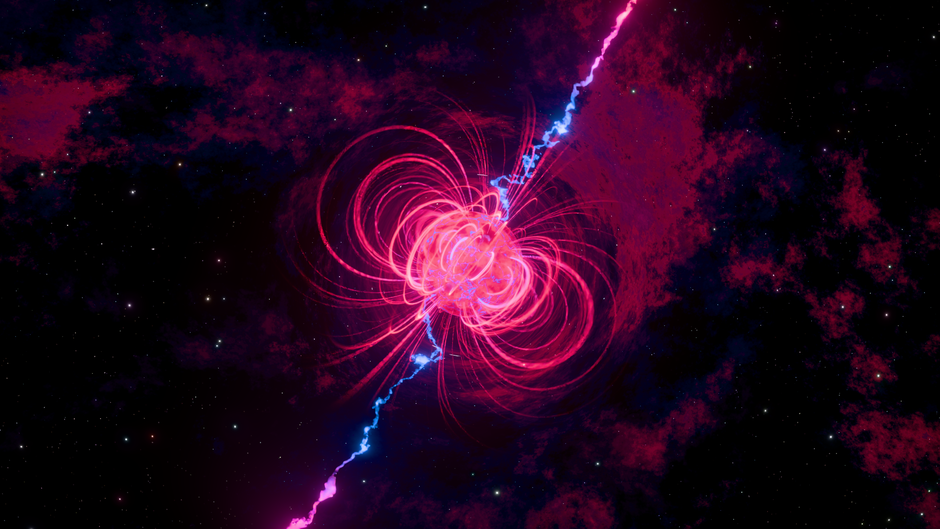
Photo by Nicola Narracci on Pexels
This section introduces charges, electric fields, electric potential, current, resistance, circuits, magnetic fields, and electromagnetic induction. Key concepts include Coulomb's Law, Ohm's Law ($V=IR$), and Maxwell's equations (though you might only see simplified forms).
2.4 Waves and Optics

Photo by Anthony Dalesandro on Pexels
You'll explore different types of waves (transverse, longitudinal), their properties (amplitude, frequency, wavelength, speed), and phenomena like interference and diffraction. Optics focuses on light as a wave and particle, reflection, refraction (Snell's Law), lenses, and mirrors.
3. Worked Example
Let's apply Newton's Second Law to a simple scenario.
Problem: A 2.0 kg block is pulled across a frictionless horizontal surface by a rope with a tension of 10.0 N at an angle of 30 degrees above the horizontal. What is the acceleration of the block?
Solution:
1. Understand: We know mass (m=2.0 kg), tension (T=10.0 N), angle ($\theta=30^\circ$). We need to find acceleration (a). "Frictionless" means no friction force.
2. Diagram: Imagine a block on a flat surface. A rope pulls it upwards and to the right. Gravity pulls down, normal force pushes up.
3. Principles: Newton's Second Law ($F_{net} = ma$). We'll break the tension into x and y components.
4. Equations:
* Forces in the x-direction: $F_{net,x} = T_x = T \cos\theta$.
* Since the block accelerates horizontally, $F_{net,x} = ma_x$. So, $ma_x = T \cos\theta$.
* Forces in the y-direction: $F_{net,y} = N + T_y - mg = 0$ (no vertical acceleration). This helps find the normal force if needed, but not directly for acceleration here.
5. Solve Algebraically:
$a_x = \frac{T \cos\theta}{m}$
6. Substitute and Calculate:
$a_x = \frac{10.0 \text{ N} \cdot \cos(30^\circ)}{2.0 \text{ kg}}$
$a_x = \frac{10.0 \text{ N} \cdot 0.866}{2.0 \text{ kg}}$
$a_x = \frac{8.66 \text{ N}}{2.0 \text{ kg}}$
$a_x = 4.33 \text{ m/s}^2$
7. Check: The units work out (N/kg = (kg*m/s^2)/kg = m/s^2), and a positive acceleration in the direction of the pull makes sense.
4. Key Takeaways
- Physics uses mathematical models to describe and predict how the physical world behaves.
- Newton's Laws of Motion are central to understanding forces and motion in mechanics.
- Conservation laws (energy, momentum) are powerful tools for solving complex problems without detailing every force.
- Vectors are crucial; always break forces and velocities into components when dealing with angles.
- Drawing free-body diagrams is often the most important first step in mechanics problems.
-
Systematically applying a problem-solving strategy will improve your accuracy and understanding.
-
Common Mistakes:
- Confusing speed with velocity or distance with displacement.
- Forgetting that force and acceleration are vectors, meaning direction matters.
- Not correctly identifying all forces acting on an object (e.g., forgetting normal force or friction).
- Mixing up units or not converting them consistently.
- Jumping directly to equations without first understanding the physical situation.
5. Now Try It
A 0.5 kg ball is dropped from a height of 5.0 meters.
1. What is its speed just before it hits the ground, ignoring air resistance?
2. If it takes 0.75 seconds to hit the ground, what was its average speed during the fall?
(Hint: Use conservation of energy for part 1, and the definition of average speed for part 2. Assume $g = 9.8 \text{ m/s}^2$).
Success means you can correctly calculate both speeds and explain which physics principles you used for each part.
Frequently asked about **Introductory University Physics** (calculus-based or algebra-based)
More from PHSICS
Get the full PHSICS curriculum
Clone the complete plan to your dashboard for unlimited AI-generated notes, practice quizzes, and a personalised revision schedule.
Save this course free