Planktonic Communities: Phytoplankton and Zooplankton
From the aquatic ecology curriculum
TL;DR
Plankton are tiny organisms floating in water, forming the base of most aquatic food webs. Phytoplankton are plant-like primary producers, converting sunlight into energy, while zooplankton are animal-like consumers, grazing on phytoplankton and smaller zooplankton. Their interactions drive nutrient cycling and energy flow in aquatic ecosystems.
1. The Mental Model
Think of plankton as the "invisible gardens" and "grazers" of the ocean and freshwater. Phytoplankton are the grass, using sunlight to grow, and zooplankton are the tiny cows and predators that eat the grass and each other.
2. The Core Material
Plankton are organisms that live in the water column and cannot swim against a current. This broad category is split into two main functional groups: phytoplankton and zooplankton. They are crucial for nearly all aquatic food webs, from small ponds to the vast open ocean.
Phytoplankton: The Primary Producers

Photo by qi yuan on Pexels
Phytoplankton are microscopic, photosynthetic organisms, similar to plants on land. They contain chlorophyll and use sunlight to convert carbon dioxide and water into organic compounds and oxygen through photosynthesis. This process makes them primary producers, meaning they form the base of the food web, creating energy that other organisms can consume.
Key groups of phytoplankton include:
* Diatoms: Often have intricate silica (glass) cell walls, common in both freshwater and marine environments.
* Dinoflagellates: Have two flagella for limited movement, some can produce toxins (e.g., red tides).
* Cyanobacteria (blue-green algae): Prokaryotic organisms, important nitrogen fixers, common in freshwater.
* Coccolithophores: Marine phytoplankton covered in calcium carbonate plates.
Phytoplankton growth is influenced by:
* Light: Essential for photosynthesis; abundance decreases with depth.
* Nutrients: Especially nitrates, phosphates, and silicates; can be limiting.
* Temperature: Affects metabolic rates.
* Water mixing: Brings nutrients to the surface and keeps cells in the photic zone.
Zooplankton: The Consumers
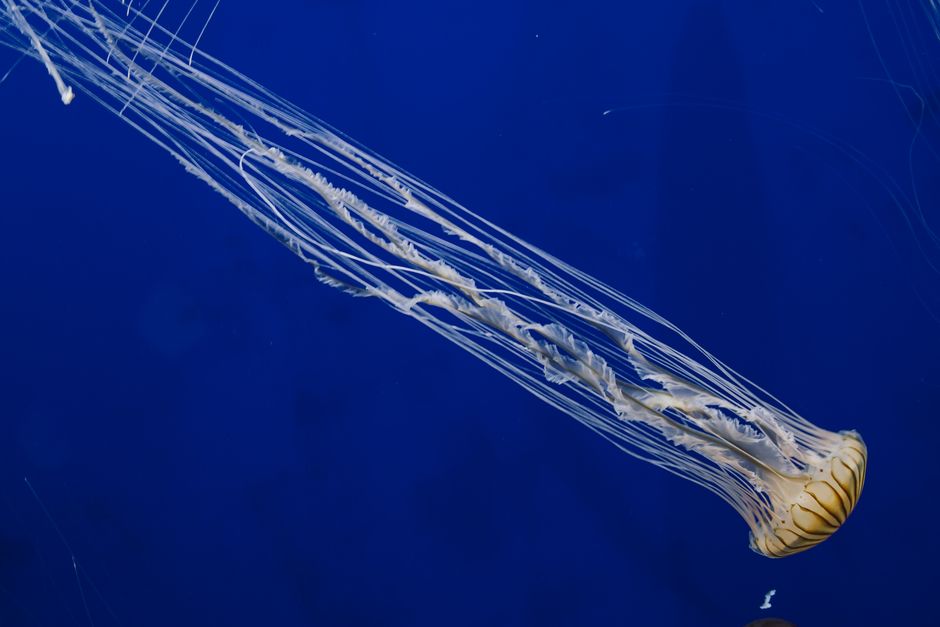
Photo by Thuan Vo on Pexels
Zooplankton are heterotrophic (animal-like) plankton that consume other organisms. They are the primary consumers when they eat phytoplankton (herbivorous zooplankton) and secondary consumers or higher when they eat other zooplankton or small larvae (carnivorous/omnivorous zooplankton). They link the energy from phytoplankton to higher trophic levels like fish, whales, and seabirds.
Key groups of zooplankton include:
* Copepods: Small crustaceans, often the most abundant zooplankton, crucial grazers of phytoplankton.
* Cladocerans (e.g., Daphnia): Common in freshwater, often filter feeders.
* Rotifers: Microscopic, ciliated animals, important in freshwater.
* Larval stages of other animals: Many marine invertebrates and fish have planktonic larval stages (e.g., crab zoea, fish larvae).
Zooplankton exhibit diverse feeding strategies:
* Filter feeding: Straining small particles (like phytoplankton) from the water.
* Predation: Actively capturing and consuming other zooplankton or small larvae.
The Planktonic Food Web
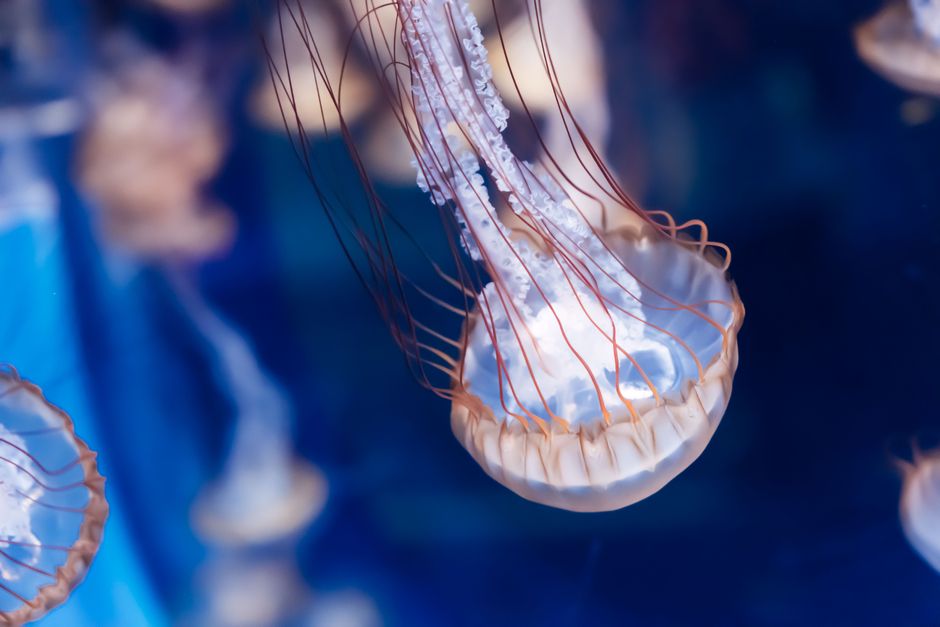
Photo by limoo on Pexels
The interaction between phytoplankton and zooplankton is a fundamental ecological process.
graph TD
    Sunlight["Sunlight (Energy Source)"] -->|Provides energy for| Phytoplankton["Phytoplankton (Primary Producers)"]
    Nutrients["Dissolved Nutrients (N, P, Si)"] -->|Supports growth of| Phytoplankton
    Phytoplankton -->|Consumed by| Herbivorous_Zooplankton["Herbivorous Zooplankton"]
    Herbivorous_Zooplankton -->|Consumed by| Carnivorous_Omnivorous_Zooplankton["Carnivorous/Omnivorous Zooplankton"]
    Carnivorous_Omnivorous_Zooplankton -->|Consumed by| Small_Fish_Larvae["Small Fish / Larvae"]
    Small_Fish_Larvae -->|Consumed by| Larger_Fish_Invertebrates["Larger Fish / Invertebrates"]
    Dead_Organic_Matter["Dead Plankton / Waste"] -->|Decomposed by| Bacteria_Fungi["Bacteria & Fungi"]
    Bacteria_Fungi -->|Recycles nutrients to| Nutrients
This diagram shows how energy flows from the sun to phytoplankton, then to zooplankton, and up the food chain. Nutrients are cycled back into the system through decomposition.
Diel Vertical Migration (DVM)
Photo by Dirk Baker on Pexels
Many zooplankton species exhibit diel vertical migration (DVM), where they move to deeper, darker waters during the day to avoid visual predators (like fish) and then migrate up to the surface at night to feed on phytoplankton. This daily migration plays a significant role in nutrient mixing and carbon cycling in the water column.
3. Worked Example
Imagine a small freshwater lake. During spring, after ice-out, sunlight penetration increases and nutrient levels are high from winter runoff. This leads to a phytoplankton bloom – a rapid increase in their population, often making the water appear green.
Let's say a common phytoplankton species, Chlamydomonas, is abundant. A few weeks later, as Chlamydomonas populations peak, you'd observe a corresponding increase in herbivorous zooplankton, like Daphnia (water fleas). The Daphnia graze heavily on the Chlamydomonas, reducing the phytoplankton population.
As Daphnia become abundant, their predators, such as copepods like Cyclops (which are omnivorous and can eat Daphnia and smaller phytoplankton), and larval fish, will also increase. This sequence demonstrates the direct trophic link: sunlight and nutrients fuel phytoplankton, phytoplankton fuel herbivorous zooplankton, and these zooplankton then fuel higher trophic levels. This dynamic balance determines the overall productivity of the lake.
4. Key Takeaways
- Plankton are microscopic organisms unable to swim against currents, divided into producers (phytoplankton) and consumers (zooplankton).
- Phytoplankton perform photosynthesis, forming the base of aquatic food webs, turning sunlight into organic matter.
- Zooplankton are animal-like consumers that graze on phytoplankton or other zooplankton, linking energy to higher trophic levels.
- Factors like light, nutrients, and temperature heavily influence phytoplankton growth and, consequently, zooplankton populations.
- Diel vertical migration is a common zooplankton behavior to avoid predators and access food.
- The "invisible gardens" of phytoplankton and their zooplankton grazers are essential for the health and productivity of aquatic ecosystems.
Common mistakes to avoid:
- Confusing phytoplankton with zooplankton; remember "phyto" means plant-like, "zoo" means animal-like.
- Underestimating the importance of plankton; they are tiny but globally significant for oxygen production and carbon cycling.
- Thinking all zooplankton are herbivores; many are omnivores or carnivores.
- Forgetting the role of nutrient availability; it's a major limiting factor for phytoplankton growth.
5. Now Try It
Spend 15 minutes researching a specific type of phytoplankton (e.g., Prochlorococcus, Emiliania huxleyi, a specific diatom genus) and a specific type of zooplankton (e.g., a specific copepod genus, Krill, Daphnia). For each, identify: 1) its primary habitat (marine/freshwater), 2) its typical size range, and 3) one unique ecological characteristic or adaptation. Success looks like you being able to describe how these two specific organisms might interact in their shared environment, forming a part of a local food web.
Frequently asked about Planktonic Communities: Phytoplankton and Zooplankton
More from aquatic ecology
Get the full aquatic ecology curriculum
Clone the complete plan to your dashboard for unlimited AI-generated notes, practice quizzes, and a personalised revision schedule.
Save this course free