Aquatic Flora: Classification and Ecological Roles
From the aquatic ecology curriculum
TL;DR
Aquatic flora are diverse plant and plant-like organisms essential to all aquatic ecosystems. They're broadly classified into submerged, emergent, and floating forms, along with microscopic algae. These organisms form the base of food webs, produce oxygen, and provide critical habitat.
1. The Mental Model
Think of aquatic flora as the "forests" and "farms" of aquatic environments. They come in many forms, from giant seaweeds to microscopic specks, and each plays a vital role in keeping the water healthy and supporting all other life.
2. The Core Material
Aquatic flora refers to the plants and plant-like organisms (like algae) that live in water. They're incredibly diverse and crucial for ecosystem health, influencing everything from water chemistry to habitat structure.
We can broadly classify them based on their growth form relative to the water surface:
a. Macrophytes (Larger Plants)
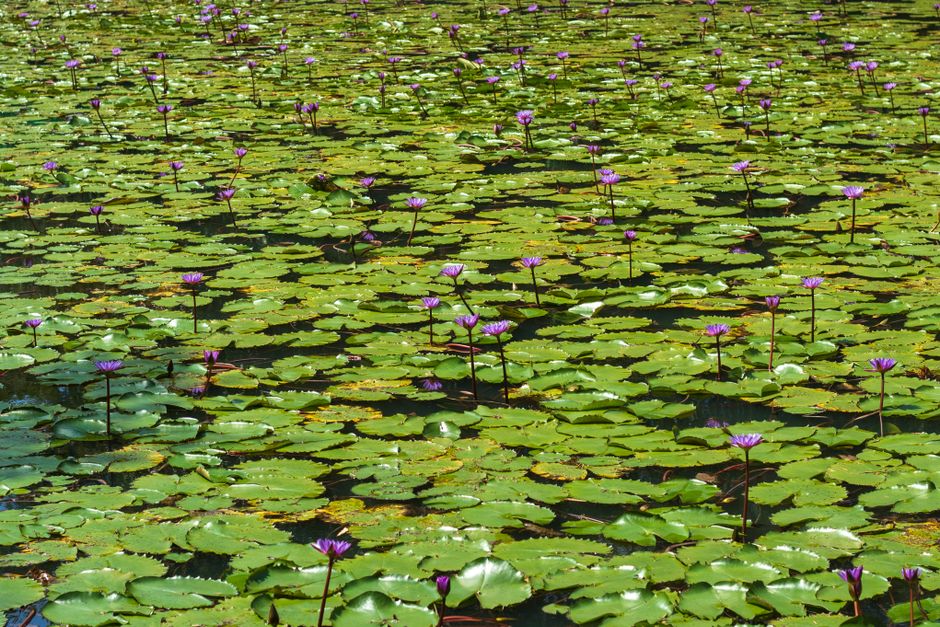
Photo by Abhinav Ravindran on Pexels
These are generally visible to the naked eye and can be true plants (vascular plants with roots, stems, leaves, and flowers) or large algae (like seaweeds).
- Emergent Plants: These rooted plants have stems and leaves that extend above the water surface. Think of cattails, bulrushes, or water lilies (though water lilies have floating leaves, their classification often puts them here due to their rooted nature and structural similarity to other emergent forms).
- Ecological Roles: Provide habitat and shelter for birds, fish, and insects; stabilize shorelines, reducing erosion; filter pollutants.
- Submerged Plants: These plants grow entirely underwater, though some may flower at the surface. Examples include pondweeds, coontail, and various types of seagrasses.
- Ecological Roles: Oxygenate the water, provide food for herbivores, offer complex habitat for fish and invertebrates, absorb nutrients from the water and sediment.
- Floating Plants: These plants float freely on the water's surface or are rooted with floating leaves. Examples include duckweed (free-floating) and water hyacinth (free-floating), or water lilies (rooted with floating leaves).
- Ecological Roles: Provide shade, reducing water temperature and algal growth; offer shelter for small aquatic organisms; can remove excess nutrients, but can also cover entire surfaces, blocking light if overabundant.
b. Algae (Microscopic & Macroscopic)
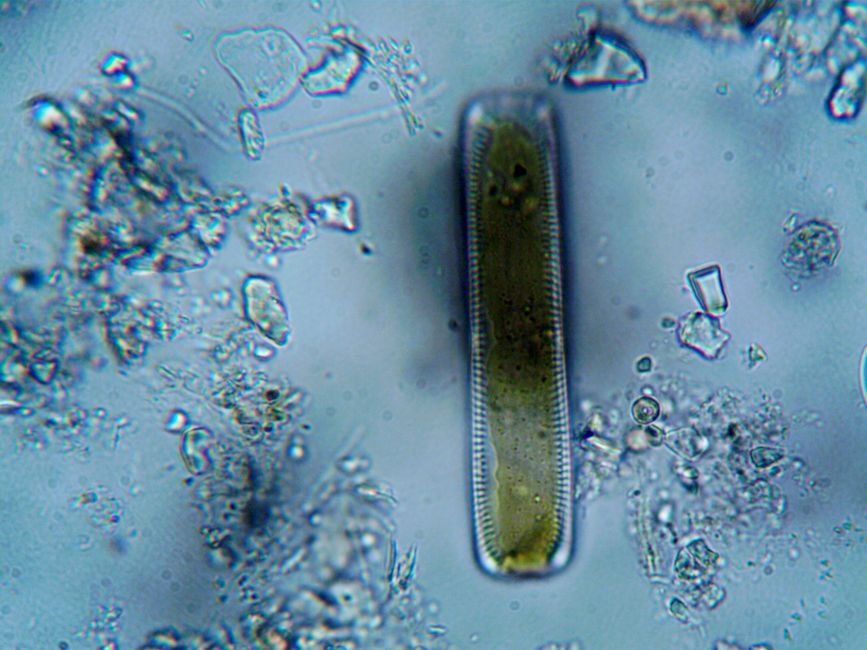
Photo by turek on Pexels
Algae are a vast and diverse group of photosynthetic organisms, ranging from single-celled phytoplankton to large seaweeds. They lack the true roots, stems, and leaves of vascular plants.
- Phytoplankton: Microscopic, free-floating algae that drift in the water column. They are the primary producers in most open water ecosystems.
- Ecological Roles: The absolute base of most aquatic food webs; responsible for a significant portion of the Earth's oxygen production.
- Benthic Algae: Algae that grow attached to surfaces (rocks, sediment, other plants) on the bottom of aquatic environments.
- Ecological Roles: Important food source for grazers; contribute to oxygen production and nutrient cycling in benthic zones.
- Macroalgae (Seaweeds): Larger, multi-cellular algae often found in marine environments (e.g., kelp, rockweed) or some freshwater systems.
- Ecological Roles: Create complex "forests" (kelp forests) providing habitat and food; contribute significantly to primary production.
Here's a simplified view of their classification and impact:
graph TD
    A["Aquatic Flora"] --> B["Macrophytes (Vascular Plants)"]
    A --> C["Algae (Simple Photosynthetic Organisms)"]

    B --> B1["Emergent Plants (e.g., Cattails)"]
    B --> B2["Submerged Plants (e.g., Pondweeds)"]
    B --> B3["Floating Plants (e.g., Duckweed)"]

    C --> C1["Phytoplankton (Microscopic)"]
    C --> C2["Benthic Algae (Attached)"]
    C --> C3["Macroalgae (Large Seaweeds)"]

    B1 --> E["Habitat, Erosion Control"]
    B2 --> E
    B3 --> E
    C1 --> E
    C2 --> E
    C3 --> E
    E["Key Ecological Roles"] --> F["Primary Production (Food Source)"]
    E --> G["Oxygenation"]
    E --> H["Nutrient Cycling"]
    E --> I["Habitat/Shelter"]
    E --> J["Sediment Stabilization/Filtration"]
3. Worked Example
Let's consider a small freshwater pond.
- Emergent Plants: Along the pond edges, you'd likely see cattails (Typha latifolia) and arrowhead (Sagittaria latifolia). They provide cover for frogs and dragonflies, and their roots help hold the pond bank in place.
- Submerged Plants: Deeper in the pond, you might find coontail (Ceratophyllum demersum) or pondweed (Potamogeton spp.). These plants release oxygen, which fish need, and offer hiding spots for small fish and insects. They also absorb excess nutrients, helping to keep the water clear.
- Floating Plants: On the surface, you'd probably spot patches of tiny duckweed (Lemna minor) or larger water lily (Nymphaea odorata) pads. Duckweed is a quick food source for ducks, while lily pads provide shade and resting spots for frogs.
- Algae: The water itself would contain countless microscopic phytoplankton, the primary food source for zooplankton, which then feed small fish. If you picked up a rock from the bottom, you might see a green film of benthic algae on it, grazed upon by snails.
Together, these different forms of aquatic flora create a healthy, functioning ecosystem.
4. Key Takeaways
- Aquatic flora includes true plants (macrophytes) and various forms of algae, each with distinct growth forms.
- Macrophytes are classified as emergent, submerged, or floating based on their position relative to the water surface.
- Algae range from microscopic phytoplankton to large macroalgae, forming the base of most aquatic food webs.
- All aquatic flora contribute significantly to primary production, providing food and oxygen for other aquatic life.
- They create vital habitat, stabilize sediments, and play a crucial role in nutrient cycling within aquatic ecosystems.
- The diversity of aquatic flora directly correlates with the overall health and biodiversity of an aquatic environment.
- Understanding their classification helps predict their ecological roles and potential impacts on water quality.
Common mistakes to avoid:
- Confusing all aquatic green things as "seaweed" or "pond scum" – there's much more specific diversity!
- Underestimating the role of microscopic algae; phytoplankton are globally critical.
- Assuming all aquatic plants are beneficial; invasive species can outcompete native flora and harm ecosystems.
- Forgetting that the physical structure created by macrophytes is as important as their chemical contributions.
5. Now Try It
Go to a local pond, stream, or even look at pictures online of different aquatic environments (e.g., a coral reef, a temperate lake, a slow-moving river). For each environment, try to identify at least one example of an emergent, submerged, floating plant, and a type of algae, and describe one specific ecological role each example plays in that particular environment. Success looks like accurately identifying the growth form and a relevant ecological function for each example.
Frequently asked about Aquatic Flora: Classification and Ecological Roles
More from aquatic ecology
Get the full aquatic ecology curriculum
Clone the complete plan to your dashboard for unlimited AI-generated notes, practice quizzes, and a personalised revision schedule.
Save this course free