Photosynthesis, Respiration, Fermentation and Enzymes
From the bio exam revision curriculum
TL;DR
Photosynthesis uses light to make glucose and oxygen, while cellular respiration breaks down glucose to release energy. Fermentation is an anaerobic way to get some energy from glucose when oxygen isn't around. Enzymes are essential proteins that speed up all these chemical reactions without being used up themselves.
1. The Mental Model
Think of glucose as your body's fuel. Photosynthesis is like a solar-powered factory making that fuel. Respiration is the engine burning the fuel for energy, and fermentation is a backup generator when the main engine can't run. Enzymes are the specialized tools that make all the factory, engine, and generator processes happen quickly and efficiently.
2. The Core Material
Photosynthesis: Making Food
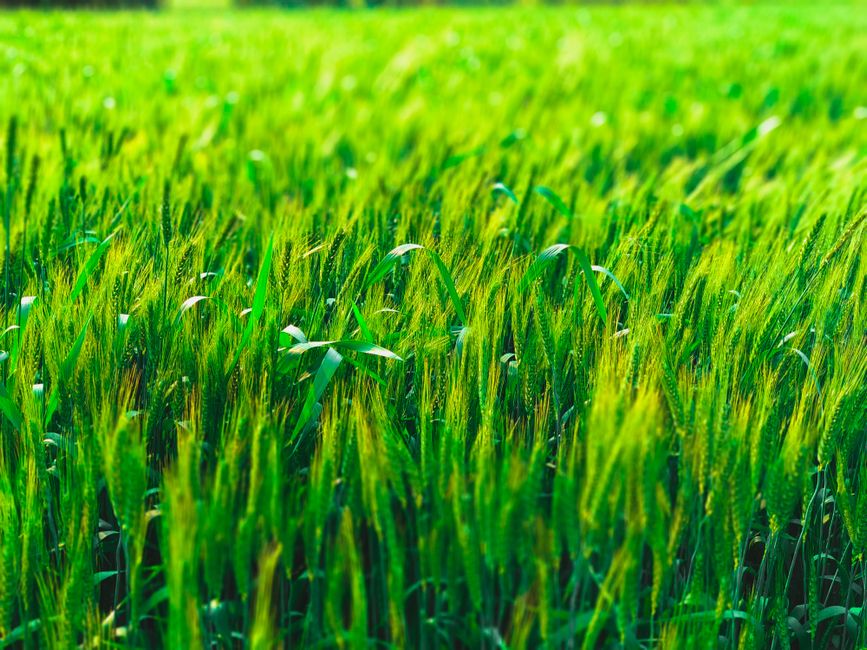
Photo by Sourabh Yadav on Pexels
Photosynthesis is how plants, algae, and some bacteria create their own food (glucose) using light energy. It mainly happens in chloroplasts and has two main stages:
- Light-Dependent Reactions: Occur in the thylakoid membranes. Light energy is absorbed, water is split, producing oxygen, ATP (energy currency), and NADPH (electron carrier).
- Light-Independent Reactions (Calvin Cycle): Occur in the stroma. ATP and NADPH from the light reactions are used to convert carbon dioxide into glucose.
Overall equation: $6CO_2 + 6H_2O + \text{Light Energy} \rightarrow C_6H_{12}O_6 + 6O_2$
Cellular Respiration: Breaking Down Food for Energy

Photo by George Milton on Pexels
Cellular respiration is the process where organisms break down glucose to release energy in the form of ATP. It's a key process in both plants and animals. There are three main stages:
- Glycolysis: Happens in the cytoplasm. Glucose is split into two molecules of pyruvate, producing a small amount of ATP and NADH. This step doesn't require oxygen.
- Krebs Cycle (Citric Acid Cycle): Occurs in the mitochondrial matrix. Pyruvate is converted and then completely broken down, producing more ATP, NADH, and FADH2 (another electron carrier), and releasing $CO_2$. This step requires oxygen indirectly.
- Electron Transport Chain (ETC): Occurs in the inner mitochondrial membrane. NADH and FADH2 donate their electrons, which move through a series of proteins, creating a proton gradient. This gradient powers ATP synthase to produce a large amount of ATP. Oxygen is the final electron acceptor, forming water.
Overall equation: $C_6H_{12}O_6 + 6O_2 \rightarrow 6CO_2 + 6H_2O + \text{Energy (ATP)}$
Fermentation: Anaerobic Energy Release

Photo by Sami Abdullah on Pexels
When oxygen isn't available, cells can't perform the Krebs Cycle or ETC. Instead, they rely on fermentation to regenerate NAD+ from NADH so that glycolysis can continue to produce a small amount of ATP.
- Lactic Acid Fermentation: Occurs in animal muscle cells during intense exercise. Pyruvate is converted to lactic acid.
- Alcoholic Fermentation: Occurs in yeast and some bacteria. Pyruvate is converted to ethanol and carbon dioxide.
Enzymes: Biological Catalysts

Photo by Jahra Tasfia Reza on Pexels
Enzymes are proteins that act as biological catalysts, meaning they speed up biochemical reactions without being consumed in the process.
- Specificity: Each enzyme usually acts on only one specific substrate (the molecule it changes). This is often described by the "lock and key" or "induced fit" model.
- Active Site: The region on the enzyme where the substrate binds.
- Factors Affecting Enzyme Activity:
- Temperature: Each enzyme has an optimal temperature. Too low, and activity slows down; too high, and the enzyme denatures (loses its 3D shape and function).
- pH: Each enzyme has an optimal pH. Extreme pH values can also cause denaturation.
- Substrate Concentration: Increasing substrate concentration generally increases reaction rate until the enzyme becomes saturated.
- Inhibitors: Molecules that reduce enzyme activity.
graph TD
    A["Sunlight Energy"] --> B["Chloroplast (Photosynthesis)"]
    B --> C["Glucose (C6H12O6)"]
    B --> D["Oxygen (O2)"]

    C --> E["Mitochondria (Cellular Respiration)"]
    D --> E

    E --> F["ATP (Energy for cell activities)"]
    E --> G["Carbon Dioxide (CO2)"]
    E --> H["Water (H2O)"]

    C --> I["Cytoplasm (Glycolysis)"]
    I --> J{"Oxygen Present?"}
    J -- "Yes" --> E
    J -- "No" --> K["Fermentation"]

    K --> L["Lactic Acid (Animals)"]
    K --> M["Ethanol + CO2 (Yeast)"]

    Sub["Substrate"] --> N["Enzyme"]
    N --> Prod["Products"]

    style A fill:#FFD700,stroke:#333,stroke-width:2px
    style B fill:#90EE90,stroke:#333,stroke-width:2px
    style E fill:#ADD8E6,stroke:#333,stroke-width:2px
    style N fill:#FFB6C1,stroke:#333,stroke-width:2px
3. Worked Example
Let's trace a glucose molecule's journey from sunlight to cellular energy or a fermented product.
Imagine a plant leaf absorbing sunlight.
1. Photosynthesis: Within the chloroplasts, the plant uses light energy and water to split water, releasing oxygen, and then uses $CO_2$, ATP, and NADPH to build glucose ($C_6H_{12}O_6$).
2. Glycolysis (common to both respiration and fermentation): A cell (either in the plant or an animal that eats the plant) takes this glucose molecule. In the cytoplasm, glycolysis breaks it down into two pyruvate molecules, producing 2 ATP and 2 NADH.
3. Aerobic Respiration Path: If oxygen is available, these two pyruvate molecules enter the mitochondria. They go through the Krebs Cycle, producing $CO_2$, more ATP, NADH, and FADH2. Finally, NADH and FADH2 fuel the Electron Transport Chain, where oxygen acts as the final electron acceptor, generating a large amount of ATP (around 30-32 total per glucose) and water.
4. Anaerobic Fermentation Path: If oxygen isn't available (e.g., muscle cells during a sprint), the pyruvate from glycolysis doesn't go to the mitochondria. Instead, to keep glycolysis running, it's converted. In human muscle, pyruvate becomes lactic acid. In yeast, it becomes ethanol and $CO_2$. This only yields the 2 ATP from glycolysis.
4. Key Takeaways
- Photosynthesis converts light energy into chemical energy stored in glucose, releasing oxygen.
- Cellular respiration breaks down glucose in the presence of oxygen to release a large amount of ATP for cellular activities.
- Fermentation provides a way to produce a small amount of ATP from glucose without oxygen, regenerating molecules needed for glycolysis.
- Enzymes are protein catalysts that speed up specific biochemical reactions by lowering activation energy.
- Enzyme activity is sensitive to temperature and pH, and extreme conditions can lead to denaturation.
- Photosynthesis and aerobic respiration are essentially opposite processes, forming a cycle of matter and energy.
- Glycolysis is the first step for both aerobic respiration and fermentation.
Common Mistakes to Avoid:
- Confusing the inputs and outputs of photosynthesis and respiration.
- Thinking fermentation produces as much energy as aerobic respiration.
- Forgetting that enzymes are specific and sensitive to their environment.
- Believing enzymes are used up during the reaction they catalyze.
5. Now Try It
Draw a simple diagram showing the interdependence of a plant and an animal in terms of photosynthesis and cellular respiration, including the main inputs and outputs for each process. Make sure to label where glucose, oxygen, carbon dioxide, and water are exchanged between them.
What success looks like: Your diagram clearly shows arrows indicating oxygen and glucose moving from the plant to the animal, and carbon dioxide and water moving from the animal to the plant, with "sunlight" as an input for the plant and "ATP" as an output for both.
Frequently asked about Photosynthesis, Respiration, Fermentation and Enzymes
More from bio exam revision
Get the full bio exam revision curriculum
Clone the complete plan to your dashboard for unlimited AI-generated notes, practice quizzes, and a personalised revision schedule.
Save this course free