Primate and Human Evolution
From the bio exam revision curriculum
TL;DR
Primate and human evolution traces the development of primates from early ancestors, focusing on key adaptations like grasping hands and larger brains. It highlights the divergence of hominins, leading to distinct human traits such as bipedalism and complex culture. Understanding this journey helps explain our current biological and behavioral characteristics.
1. The Mental Model
Think of primate and human evolution as a long, branching tree where different groups adapted to their environments over millions of years. Some branches led to monkeys, others to apes, and one specific branch led to us, humans, with unique evolutionary changes along the way.
2. The Core Material
Primate evolution begins with common mammalian ancestors and is characterized by several key features:
* Arboreal Adaptations: Early primates developed traits suited for living in trees. This includes grasping hands and feet with opposable thumbs/big toes for climbing and holding branches, and stereoscopic vision (eyes facing forward) for better depth perception.
* Brain Enlargement: Over time, primates developed larger and more complex brains relative to their body size, leading to enhanced cognitive abilities.
* Dental Changes: Evolution of different tooth types (incisors, canines, premolars, molars) adapted for varied diets.
The human lineage, called hominins, diverged from other apes approximately 6-7 million years ago. This divergence is marked by several defining characteristics:
Bipedalism
Walking upright on two legs is perhaps the most significant hominin adaptation. It predates large brains and tool use.
* Skeletal Changes:
* Foramen Magnum: Positioned more centrally at the base of the skull, allowing the head to balance on an upright spine.
* Spinal Curvature: S-shaped spine for shock absorption and balance.
* Pelvis: Shorter, broader, and bowl-shaped to support internal organs and provide muscle attachment for bipedal locomotion.
* Femur: Angled inward (valgus angle) so knees are directly under the body.
* Foot: Arched to absorb shock, with a non-opposable big toe for propulsion.
Brain Size and Complexity
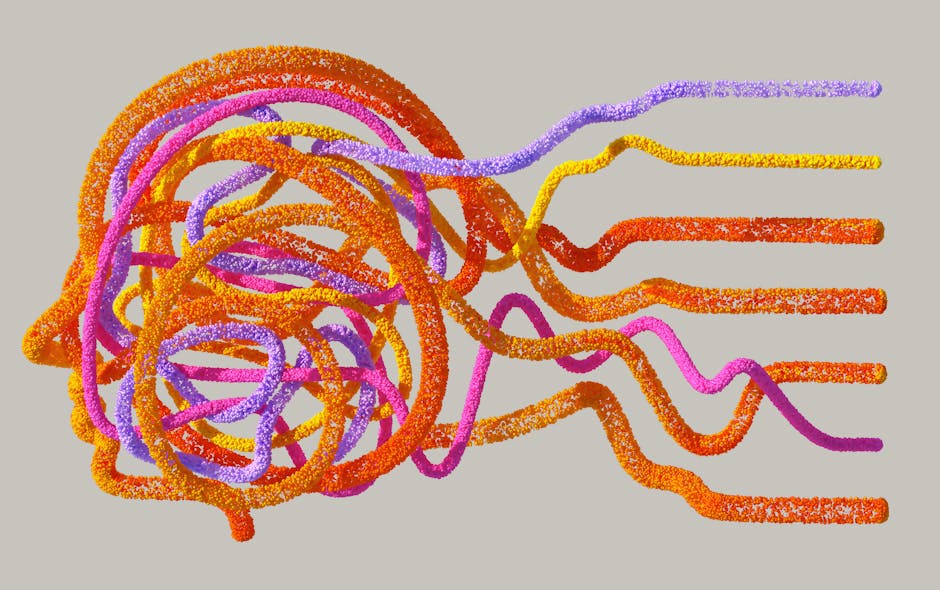
Photo by Google DeepMind on Pexels
While early hominins weren't necessarily big-brained, brain size increased significantly in later Homo species, leading to:
* Tool Use: Early stone tools (Oldowan, Acheulean) are strong evidence of cognitive advancement.
* Language: The development of complex communication.
* Culture: Transmission of knowledge, beliefs, and practices across generations.
Tool Use and Diet

Photo by Michaela St on Pexels
The development of stone tools allowed for processing new food sources, which likely played a role in dietary changes and the subsequent increase in brain size (brains are metabolically expensive).
Here's a simplified timeline of key hominin evolutionary steps:
graph TD
    A["Last Common Ancestor (LCA) with chimps"] --> B["~6-7 MYA: First Hominins (e.g., Sahelanthropus)"];
    B --> C["~4.4 MYA: Ardipithecus (early bipedalism?)"];
    C --> D["~4-2 MYA: Australopithecus (definite bipedalism)"];
    D --> E["~2.8 MYA: Homo habilis (first stone tools, brain expansion)"];
    E --> F["~1.9 MYA: Homo erectus (leaving Africa, fire, more complex tools)"];
    F --> G["~300,000 YA: Homo neanderthalensis (Europe/Asia)"];
    F --> H["~300,000 YA: Homo sapiens (Africa, complex culture)"];
    G & H --> I["~40,000 YA: Coexistence & eventual replacement/assimilation"];
3. Worked Example
Imagine you discover a fossilized pelvis. To determine if it belongs to a bipedal hominin, you'd look for specific features. If the pelvis is short and broad, with a wide, flared ilium (the upper part of the hip bone) and a strong attachment area for gluteal muscles on the side, it strongly suggests bipedalism. This is because these adaptations create a stable base for an upright posture and allow for the necessary muscle action to balance on one leg while walking, unlike the longer, narrower pelvis found in quadrupedal apes.
4. Key Takeaways
- Primates share common features like grasping hands, stereoscopic vision, and relatively large brains, developed for an arboreal lifestyle.
- Hominins are the group including modern humans and all our extinct bipedal ancestors after the split from the chimp lineage.
- Bipedalism is the defining characteristic of hominins and evolved before significant brain enlargement or complex tool use.
- The evolution of bigger brains in Homo species is linked to increasingly sophisticated tool-making and the development of culture.
- The fossil record provides crucial evidence for understanding evolutionary transitions in primates and hominins.
Common Mistakes to Avoid:
- Don't assume that bipedalism appeared simultaneously with large brains or advanced tools; bipedalism came first.
- Don't confuse the terms "ape" and "hominin"; all hominins are apes, but not all apes are hominins.
- Avoid thinking of evolution as a ladder directly leading to humans; it's a branching bush with many extinct lineages.
- Don't believe that human evolution stopped; we are still evolving.
5. Now Try It
Review the skeletal differences between a modern human and a chimpanzee, focusing on the skull, pelvis, and femur. For each bone, describe one specific feature that reflects the difference between bipedalism (human) and knuckle-walking/quadrupedalism (chimpanzee). What success looks like: You should be able to identify at least one distinct feature for each bone and explain its functional significance in relation to locomotion.
Frequently asked about Primate and Human Evolution
More from bio exam revision
Get the full bio exam revision curriculum
Clone the complete plan to your dashboard for unlimited AI-generated notes, practice quizzes, and a personalised revision schedule.
Save this course free