Evolution, Speciation and Evidence for Evolution
From the bio exam revision curriculum
TL;DR
Evolution is the change in heritable characteristics of biological populations over successive generations, driven primarily by natural selection. Speciation is the process by which new species arise, often due to reproductive isolation. We have a lot of evidence, from fossils to DNA, that supports these processes.
1. The Mental Model
Think of evolution as a tree of life, where each branch represents a lineage of organisms changing over time. Speciation is when a branch splits into two new ones. The evidence we have is like the different pieces of a puzzle that, when put together, show us how this tree grew.
2. The Core Material
Evolution is fundamentally about how life changes over time. It's not about individuals changing, but about changes in the genetic makeup of populations across generations.
Natural Selection: The Main Driver

Photo by Ritam Das on Pexels
Natural selection is the primary mechanism for evolutionary change. It has four key components:
- Variation: Individuals within a population have different traits (e.g., some birds have longer beaks, some have shorter).
- Heritability: These traits are passed from parents to offspring.
- Overproduction: More offspring are produced than can survive.
- Differential Survival and Reproduction: Individuals with traits better suited to their environment are more likely to survive and reproduce, passing on those advantageous traits.
Over many generations, these advantageous traits become more common in the population, leading to evolution.
Speciation: How New Species Form

Photo by Charl Durand on Pexels
Speciation is the evolutionary process by which populations evolve to become distinct species. A species is generally defined as a group of organisms that can interbreed and produce fertile offspring. Speciation often occurs when populations become reproductively isolated.
Here’s a common way speciation happens:
graph TD
    A["Original Population (interbreeding)"] --> B["Geographic Barrier (e.g., river, mountain)"]
    B --> C1["Isolated Population 1"]
    B --> C2["Isolated Population 2"]
    C1 --> D1["Genetic Divergence (different mutations, selection pressures)"]
    C2 --> D2["Genetic Divergence (different mutations, selection pressures)"]
    D1 --> E1["Reproductive Isolation (can't interbreed, or infertile offspring)"]
    D2 --> E2["Reproductive Isolation (can't interbreed, or infertile offspring)"]
    E1 --> F1["New Species 1"]
    E2 --> F2["New Species 2"]
Types of Speciation:
- Allopatric Speciation: Occurs when populations are geographically separated, preventing gene flow. This is the most common type. The geographic barrier leads to reproductive isolation.
- Sympatric Speciation: Occurs when new species arise within the same geographic area as the parent species. This is less common and can happen through mechanisms like polyploidy (extra sets of chromosomes) or disruptive selection (favoring extremes).
Evidence for Evolution
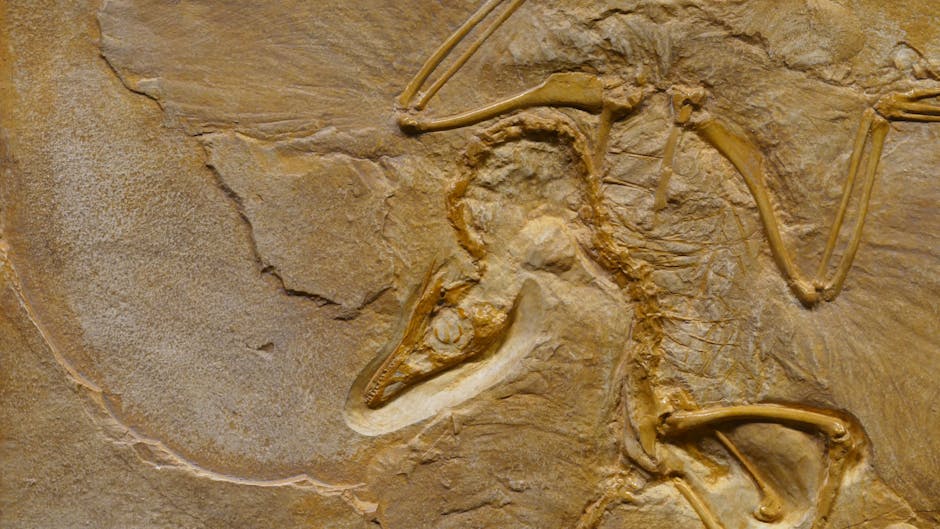
Photo by Marcus Lange on Pexels
There's a mountain of evidence supporting evolution:
- Fossil Record: Shows a progression of life forms over time, with simpler organisms appearing first and more complex ones later. We can see transitional fossils that link ancestral forms to modern species (e.g., Archaeopteryx linking reptiles and birds).
- Comparative Anatomy:
- Homologous Structures: Similar structures in different species inherited from a common ancestor, even if they have different functions (e.g., the pentadactyl limb in humans, bats, whales).
- Analogous Structures: Structures with similar functions that evolved independently in different species due to similar environmental pressures (e.g., wings of birds and insects). These don't indicate a close common ancestor.
- Vestigial Structures: Reduced or non-functional structures that are remnants of a functional structure in an ancestor (e.g., human appendix, whale pelvic bones).
- Embryology: Early embryonic stages of different vertebrates often look very similar, suggesting a common ancestry.
- Biogeography: The geographic distribution of species makes sense in an evolutionary context (e.g., marsupials are mostly found in Australia because they evolved there before the continents fully separated).
- Molecular Biology (DNA and Proteins):
- DNA and amino acid sequence similarities: The more closely related two species are, the more similar their DNA sequences and protein sequences will be.
- Universal Genetic Code: All known life uses the same genetic code, strongly suggesting a single common ancestor.
- Direct Observation: We can observe evolution happening in real-time, especially in organisms with short generation times (e.g., antibiotic resistance in bacteria, pesticide resistance in insects).
3. Worked Example
Let's look at the Galapagos finches, a classic example of evolution and speciation.
- Original Population: An ancestral finch population arrived on the Galapagos Islands from mainland South America.
- Geographic Isolation: As finches spread to different islands, they became geographically isolated from each other. Each island had slightly different environments (e.g., different types of food available – seeds, insects, cactus).
- Genetic Divergence: On each island, natural selection favored finches with beaks best suited to the local food source. For example, islands with large, hard seeds selected for finches with stronger, thicker beaks, while islands with small seeds selected for finches with smaller beaks. Over generations, mutations also accumulated independently.
- Reproductive Isolation: Eventually, the finch populations on different islands became so genetically distinct that if they were brought back together, they could no longer interbreed successfully or produce fertile offspring. Their mating calls or behaviors might also have diverged.
- New Species: This resulted in many distinct species of finches, each adapted to its specific island environment, all descended from a common ancestor.
4. Key Takeaways
- Evolution is the change in the heritable traits of populations over generations, driven mainly by natural selection.
- Natural selection requires variation, heritability, overproduction, and differential survival/reproduction.
- Speciation is the process where one species splits into two or more distinct species, often due to reproductive isolation.
- Allopatric speciation involves geographic separation, while sympatric speciation occurs in the same area.
- The fossil record provides a timeline of life and shows transitional forms.
- Homologous structures indicate common ancestry, while analogous structures show convergent evolution.
- Molecular evidence, like DNA similarity and the universal genetic code, strongly supports common descent.
Common Mistakes to Avoid:
- Don't confuse evolution with an individual organism changing during its lifetime; evolution applies to populations.
- Don't think natural selection is a conscious process; it's an outcome of environmental pressures.
- Don't confuse homologous structures (shared ancestry) with analogous structures (shared function, different ancestry).
- Don't assume speciation is a quick event; it typically occurs over long periods.
5. Now Try It
Imagine a population of squirrels living in a large forest. A new, wide river suddenly forms, splitting the forest in half and making it impossible for squirrels to cross. Design a scenario where this event leads to allopatric speciation. Describe the steps involved and what evidence you'd look for in the future to confirm speciation has occurred.
Success looks like: You've outlined the geographic isolation, described how different selective pressures might arise on each side of the river (e.g., different predators, food sources), explained how these pressures lead to genetic divergence, and finally, how reproductive isolation could develop. You should also mention at least two types of evidence (e.g., genetic differences, inability to interbreed) that would indicate speciation.
Frequently asked about Evolution, Speciation and Evidence for Evolution
More from bio exam revision
Get the full bio exam revision curriculum
Clone the complete plan to your dashboard for unlimited AI-generated notes, practice quizzes, and a personalised revision schedule.
Save this course free