IB Chemistry (HL/SL): Stoichiometry, Bonding, Energetics and Equilibria
From the IB Prep curriculum
TL;DR
This topic covers how matter interacts quantitatively (stoichiometry), how atoms bind together (bonding), the energy changes involved in reactions (energetics), and the balance between forward and reverse reactions (equilibria). Mastering these concepts is crucial for understanding chemical processes and predicting reaction outcomes.
1. The Mental Model
Think of chemistry like building with LEGOs: stoichiometry tells you how many pieces you need; bonding explains how pieces connect; energetics describes the effort to build or break structures; and equilibria show when the building and unbuilding are happening at the same rate.
2. The Core Material
Stoichiometry: Counting Atoms and Molecules

Photo by Steve A Johnson on Pexels
Stoichiometry is all about the quantitative relationships between reactants and products in chemical reactions. The mole concept is central here. One mole (mol) of any substance contains Avogadro's number ($6.02 \times 10^{23}$) of particles.
Key calculations include:
* Molar mass (Mr): Sum of atomic masses of all atoms in a compound. Units: g/mol.
* Moles from mass: $n = m / Mr$ (where $n$ is moles, $m$ is mass).
* Limiting reactant: The reactant that runs out first and limits the amount of product formed.
* Theoretical yield: The maximum amount of product that can be formed from a given amount of reactants.
* Percentage yield: (Actual yield / Theoretical yield) $\times 100\%$.
Chemical Bonding: How Atoms Stick Together

Photo by Artem Podrez on Pexels
Bonding explains why and how atoms join to form molecules and compounds. The main types are:
* Ionic bonding: Electrostatic attraction between oppositely charged ions (metals + non-metals). Involves electron transfer.
* Covalent bonding: Sharing of electron pairs between non-metal atoms. Can be single, double, or triple bonds.
* Metallic bonding: A "sea" of delocalised electrons shared among a lattice of positive metal ions.
Bonding influences a substance's physical properties like melting point, conductivity, and solubility. You'll also need to understand VSEPR theory for predicting molecular shapes and intermolecular forces (IMFs), which are forces between molecules (e.g., hydrogen bonds, dipole-dipole, London dispersion forces).
Energetics: Energy in Reactions
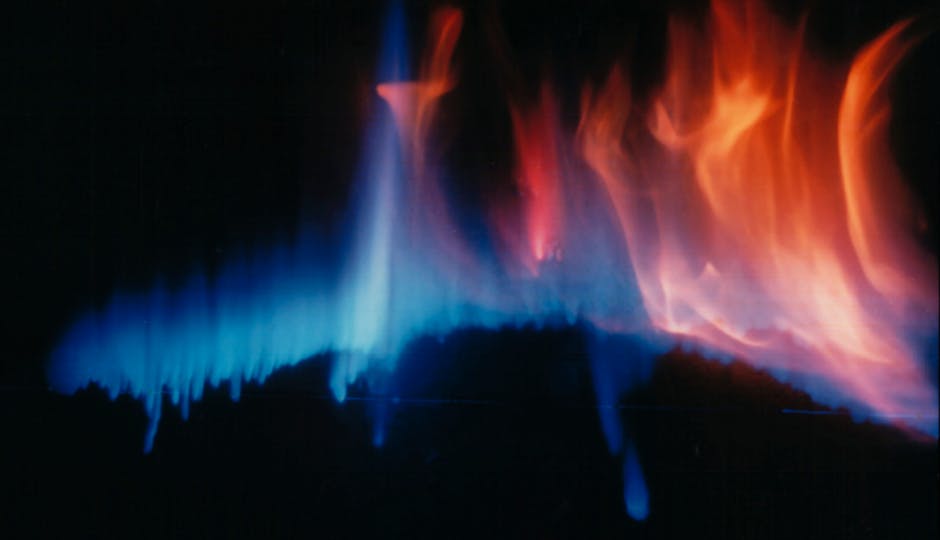
Photo by Adam spinos on Pexels
Energetics studies the energy changes accompanying chemical reactions.
* Exothermic reactions: Release heat to the surroundings ($ \Delta H < 0$). Products are more stable than reactants.
* Endothermic reactions: Absorb heat from the surroundings ($ \Delta H > 0$). Products are less stable than reactants.
Key concepts include:
* Enthalpy change ($ \Delta H$): The heat absorbed or released at constant pressure.
* Standard enthalpy changes: Formation ($ \Delta H_f^\circ$), combustion ($ \Delta H_c^\circ$), neutralisation ($ \Delta H_{neut}^\circ$), bond enthalpy.
* Hess's Law: The total enthalpy change for a reaction is independent of the pathway taken.
* Activation energy ($E_a$): The minimum energy required for a reaction to occur.
graph TD
    A["Reactants"] --> B{"Energy Input (Activation Energy)"}
    B --> C{"Transition State"}
    C --> D["Products"]

    style A fill:#aaffdd,stroke:#333,stroke-width:2px
    style D fill:#ddaaee,stroke:#333,stroke-width:2px
    style B fill:#ffddee,stroke:#333,stroke-width:2px
    style C fill:#ddddff,stroke:#333,stroke-width:2px

    subgraph Reaction Profile
        A --- D
    end
Equilibria: Reversible Reactions
Photo by Vitaly Gariev on Pexels
Many reactions are reversible, meaning products can react to reform reactants. When the rates of the forward and reverse reactions become equal, the system reaches equilibrium.
* Dynamic equilibrium: Reactions are still occurring, but there's no net change in concentrations of reactants or products.
* Equilibrium constant ($K_c$ or $K_p$): A ratio of product concentrations to reactant concentrations at equilibrium, each raised to the power of their stoichiometric coefficients. It indicates the extent of a reaction.
* Le Chatelier's Principle: If a change of condition (temperature, pressure, concentration) is applied to a system at equilibrium, the system will shift in a direction that counteracts the change.
3. Worked Example
Let's calculate the theoretical yield and percentage yield for the synthesis of ammonia ($ \text{NH}_3$).
Given:
$ \text{N}_2(\text{g}) + 3\text{H}_2(\text{g}) \rightarrow 2\text{NH}_3(\text{g}) $
Starting with 28.0 g of $ \text{N}_2$ and 9.0 g of $ \text{H}_2$.
Actual yield of $ \text{NH}_3$ obtained is 30.0 g.
-
Calculate moles of reactants:
- Molar mass of $ \text{N}_2 = 2 \times 14.01 = 28.02 \text{ g/mol} $
- Moles of $ \text{N}_2 = 28.0 \text{ g} / 28.02 \text{ g/mol} \approx 0.999 \text{ mol} $
- Molar mass of $ \text{H}_2 = 2 \times 1.01 = 2.02 \text{ g/mol} $
- Moles of $ \text{H}_2 = 9.0 \text{ g} / 2.02 \text{ g/mol} \approx 4.46 \text{ mol} $
-
Determine the limiting reactant:
- From the equation, 1 mol $ \text{N}_2$ reacts with 3 mol $ \text{H}_2$.
- If all $ \text{N}_2$ reacts: $0.999 \text{ mol } \text{N}_2 \times (3 \text{ mol } \text{H}_2 / 1 \text{ mol } \text{N}_2) = 2.997 \text{ mol } \text{H}_2$ needed.
- We have $4.46 \text{ mol } \text{H}_2$, which is more than needed. So, $ \text{N}_2$ is the limiting reactant.
-
Calculate theoretical yield of $ \text{NH}_3$:
- From the equation, 1 mol $ \text{N}_2$ produces 2 mol $ \text{NH}_3$.
- Moles of $ \text{NH}_3$ produced = $0.999 \text{ mol } \text{N}_2 \times (2 \text{ mol } \text{NH}_3 / 1 \text{ mol } \text{N}_2) = 1.998 \text{ mol } \text{NH}_3$
- Molar mass of $ \text{NH}_3 = 14.01 + 3 \times 1.01 = 17.04 \text{ g/mol} $
- Theoretical yield (mass) of $ \text{NH}_3 = 1.998 \text{ mol} \times 17.04 \text{ g/mol} \approx 34.05 \text{ g} $
-
Calculate percentage yield:
- Percentage yield = (Actual yield / Theoretical yield) $ \times 100\% $
- Percentage yield = (30.0 g / 34.05 g) $ \times 100\% \approx 88.1\% $
4. Key Takeaways
- Stoichiometry: The mole is your central unit for converting between mass, number of particles, and volume of gases.
- Limiting Reactants: Always identify the limiting reactant first as it dictates the maximum product you can make.
- Bonding Properties: The type of bonding (ionic, covalent, metallic) directly determines a substance's physical properties.
- Energetics: Understand the difference between exothermic (releases heat, $ \Delta H < 0$) and endothermic (absorbs heat, $ \Delta H > 0$) reactions.
- Hess's Law: Allows you to calculate $ \Delta H$ for a reaction by summing known $ \Delta H$ values of other reactions.
- Equilibrium Shifts: Le Chatelier's Principle helps predict how changes in conditions will affect the position of an equilibrium.
- Dynamic Equilibrium: Remember that at equilibrium, reactions are still happening, just at equal rates in both directions.
Common Mistakes to Avoid:
- Not balancing chemical equations before performing stoichiometric calculations.
- Confusing intramolecular bonds (within a molecule) with intermolecular forces (between molecules).
- Mixing up $ \Delta H$ signs for exothermic and endothermic reactions.
- Forgetting that solids and pure liquids are not included in $K_c$ expressions.
- Applying Le Chatelier's Principle incorrectly, especially regarding temperature (consider $ \Delta H$).
5. Now Try It
Choose a specific chemical reaction (e.g., the combustion of methane). First, write a balanced chemical equation. Then, identify the types of bonds present in the reactants and products. Next, decide whether you expect the reaction to be exothermic or endothermic and briefly explain why. Finally, if this reaction were reversible, describe how increasing the pressure (for gaseous reactants/products) would affect the equilibrium position according to Le Chatelier's Principle.
Success looks like: A correctly balanced equation, accurate identification of bond types, a reasonable prediction for energy change with a clear justification, and a correct application of Le Chatelier's Principle to pressure changes.
Frequently asked about IB Chemistry (HL/SL): Stoichiometry, Bonding, Energetics and Equilibria
Study this next
Get the full IB Prep curriculum
Clone the complete plan to your dashboard for unlimited AI-generated notes, practice quizzes, and a personalised revision schedule.
Save this course free