Identification of Sycamore, Tuliptree, and Hornbeam
From the Lab notes (1-5) curriculum
TL;DR
You'll learn to distinguish Sycamore, Tuliptree, and Hornbeam by focusing on their unique leaf shapes, bark characteristics, and fruit. Sycamore has large, lobed leaves and peeling bark; Tuliptree has distinct four-lobed leaves and straight bark; while Hornbeam has smaller, doubly serrated leaves and muscle-like bark. Observing these key features will help you quickly identify each tree in the field.
1. The Mental Model
Think of each tree having a "signature look" for its leaves, bark, and fruit. Once you learn to spot these three signatures, you'll be able to tell these trees apart without much trouble. It’s like knowing someone by their face, clothes, and accessories.
2. The Core Material
Identifying Sycamore, Tuliptree, and Hornbeam involves looking closely at three main features: leaves, bark, and fruit. Each tree has distinct characteristics that make it unique.
Leaf Morphology
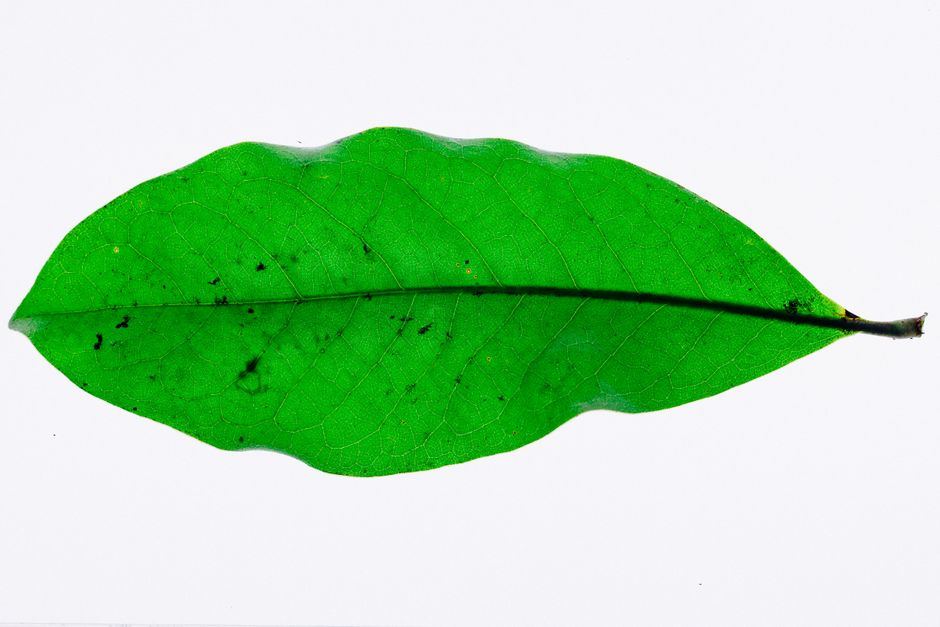
Photo by K on Pexels
- Sycamore (Platanus occidentalis): Sycamore leaves are large, typically 4-10 inches wide, with 3 to 5 pointed lobes. They resemble maple leaves but are usually coarser and often have toothed margins. The leaf stems (petioles) often have a swollen base.
- Tuliptree (Liriodendron tulipifera): Tuliptree leaves are very distinctive, often described as "tulip-shaped." They are usually 5-8 inches long, with four pointed lobes and a straight, flat base. There's often a V-shaped notch at the tip.
- Hornbeam (Carpinus caroliniana): Hornbeam leaves are much smaller, 2-5 inches long, and oval-shaped with finely doubly serrated (double-toothed) margins. They have prominent parallel veins that extend to the leaf edge.
Bark Characteristics
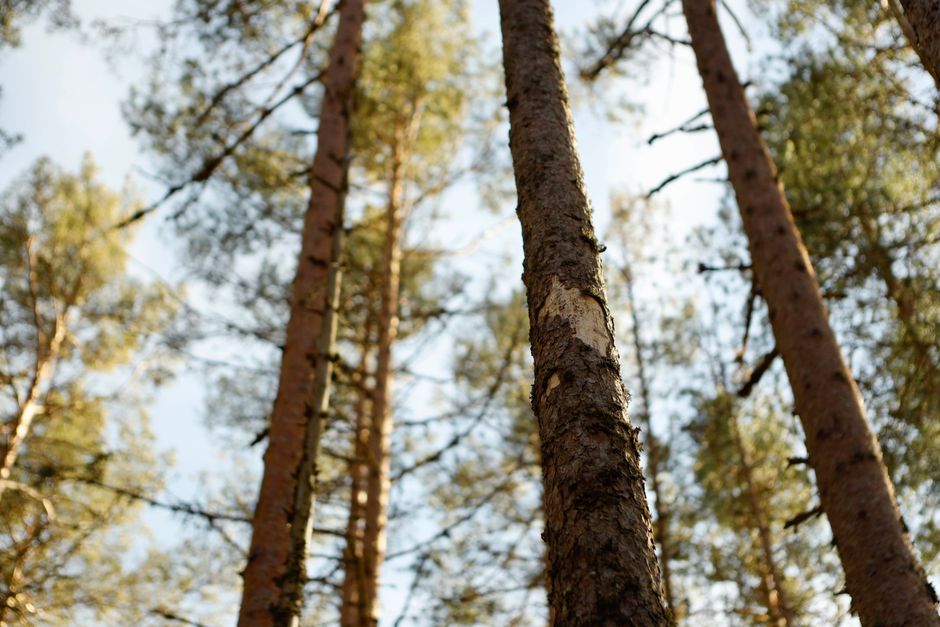
Photo by Vladislav Šmigelski on Pexels
- Sycamore: The bark is one of Sycamore's most recognizable features. It exfoliates (peels off) in irregular patches, revealing lighter, creamy-white or greenish-yellow inner bark underneath. This gives the trunk a mottled, camouflage-like appearance, especially higher up.
- Tuliptree: Young Tuliptree bark is smooth and greenish-gray. As it matures, it develops deep, straight furrows and ridges, becoming dark gray. It doesn't peel like Sycamore.
- Hornbeam: Hornbeam bark is smooth and sinewy, often described as looking like a "muscle-bound" trunk due to its fluted or rippled appearance. It's typically gray-brown.
Fruit & Other Features

Photo by Inna Mykytas on Pexels
- Sycamore: Produces characteristic sycamore balls (achenes grouped into a spherical head), which are brown, spiky, and hang singly on long stalks. They often persist on the tree through winter.
- Tuliptree: Its fruit is an aggregate of samaras, forming an upright, cone-like cluster that disintegrates in autumn, releasing winged seeds. The tree also produces beautiful, yellowish-green, tulip-shaped flowers in late spring/early summer.
- Hornbeam: Bears small nutlets attached to three-lobed, leafy bracts, which hang in clusters. The branchlets are slender and zig-zag.
Here's a comparison to help you visualize the differences:
graph TD
    A["Tree Identification"] --> B["Leaf Shape"]
    A --> C["Bark Type"]
    A --> D["Fruit/Other"]

    B --> B1["Sycamore: Large, 3-5 pointed lobes"]
    B --> B2["Tuliptree: 4 lobes, V-notch, tulip-shaped"]
    B --> B3["Hornbeam: Small, oval, doubly serrated"]

    C --> C1["Sycamore: Peeling, mottled (camo)"]
    C --> C2["Tuliptree: Deep, straight furrows (mature)"]
    C --> C3["Hornbeam: Smooth, muscle-like (fluted)"]

    D --> D1["Sycamore: Spiky 'sycamore balls'"]
    D --> D2["Tuliptree: Upright cone-like samaras, tulip flowers"]
    D --> D3["Hornbeam: Nutlets with 3-lobed bracts"]
3. Worked Example
Imagine you're walking in a park and see three trees.
-
Tree 1: You notice the bark is peeling off in big, irregular patches, revealing lighter bark underneath, giving it a mottled look. You look up and see large leaves, roughly hand-sized, with 5 pointed lobes. Hanging from some branches are spherical, spiky brown balls. This is clearly a Sycamore.
-
Tree 2: This tree has a very straight trunk, and the bark is dark gray with deep, straight, vertical furrows, not peeling at all. You pick up a fallen leaf and it has a unique shape – four distinct lobes, almost like a silhouette of a tulip, with a flat base. You also notice some dried, brown, cone-like structures that are disintegrating. This is a Tuliptree.
-
Tree 3: The third tree has a smoother, gray bark that looks like it has ripples or sinews, almost like a flexing muscle. The leaves are much smaller, only a few inches long, and have very fine, sharp teeth along the edges that seem to be arranged in pairs. You don't see any obvious fruit, but the twig pattern is slender and zig-zagging. This is a Hornbeam.
4. Key Takeaways
- Sycamore's most defining features are its peeling, mottled bark and large, lobed leaves with spiky ball fruits.
- Tuliptree is unique for its distinctive four-lobed, tulip-shaped leaves and deeply furrowed, non-peeling bark.
- Hornbeam is identified by its "muscle-bound", fluted bark and smaller, doubly serrated leaves with prominent parallel veins.
- Always check at least two features (leaf, bark, fruit) for a confident identification.
- Fruit can be a great identifier, but it's seasonal, so rely on leaves and bark too.
Common mistakes to avoid:
- Confusing Sycamore leaves with some maple species; remember Sycamore's bark is a dead giveaway.
- Overlooking the "muscle-bound" texture of Hornbeam bark; it's a key distinguishing feature.
- Not checking the leaf margin for Hornbeam; the doubly serrated edge is critical.
- Mistaking Tuliptree's straight furrows for other trees; its unique leaf shape should clarify.
5. Now Try It
Go outside and find three different trees. Using only the notes above, try to identify if any of them are Sycamore, Tuliptree, or Hornbeam. Pay close attention to the bark texture, the shape and size of the leaves, and any fruit or old seed structures you can find.
Success looks like: You can confidently state whether each of your three chosen trees is a Sycamore, Tuliptree, Hornbeam, or none of the above, and explain why based on at least two identifying characteristics for each.
Frequently asked about Identification of Sycamore, Tuliptree, and Hornbeam
More from Lab notes (1-5)
Get the full Lab notes (1-5) curriculum
Clone the complete plan to your dashboard for unlimited AI-generated notes, practice quizzes, and a personalised revision schedule.
Save this course free