Foundations: Introduction, Cells, and Tissues
From the Human Anatomy and Physiology curriculum
TL;DR
Human Anatomy and Physiology explores the body's structure and how it works, building from basic chemical and cellular levels up to complex organ systems. Cells are the fundamental units of life, specializing to form different tissues like epithelial, connective, muscle, and nervous tissues. These tissues then group together to create organs and organ systems, working in a highly organized and interdependent way.
1. The Mental Model
Think of your body as a super-organized building. Cells are the individual bricks, tissues are the walls or plumbing made of similar bricks, and organs are like entire rooms, all working together to keep the whole structure functional.
2. The Core Material
You're diving into the amazing machine that is the human body. Anatomy is about its structure—what it's made of and where everything is. Physiology is about its function—how all those parts actually work. These two are always linked; structure determines function, and function often modifies structure.
Your body is organized in a hierarchy:
Levels of Organization

Photo by Robin Godefridi on Pexels
- Chemical Level: Atoms (like carbon, hydrogen, oxygen) form molecules (like water, proteins, DNA).
- Cellular Level: Molecules combine to form cells, the basic structural and functional units of life.
- Tissue Level: Groups of similar cells that work together to perform a specific function.
- Organ Level: Two or more different tissue types working together for a common purpose.
- Organ System Level: Multiple organs cooperating to achieve a major physiological function.
- Organismal Level: All organ systems working together to make a complete living being.
graph TD
    A["Chemical Level (Atoms, Molecules)"] --> B["Cellular Level (Cells)"]
    B --> C["Tissue Level (Groups of Cells)"]
    C --> D["Organ Level (Multiple Tissues)"]
    D --> E["Organ System Level (Multiple Organs)"]
    E --> F["Organismal Level (Complete Being)"]
The Cell: The Basic Unit of Life
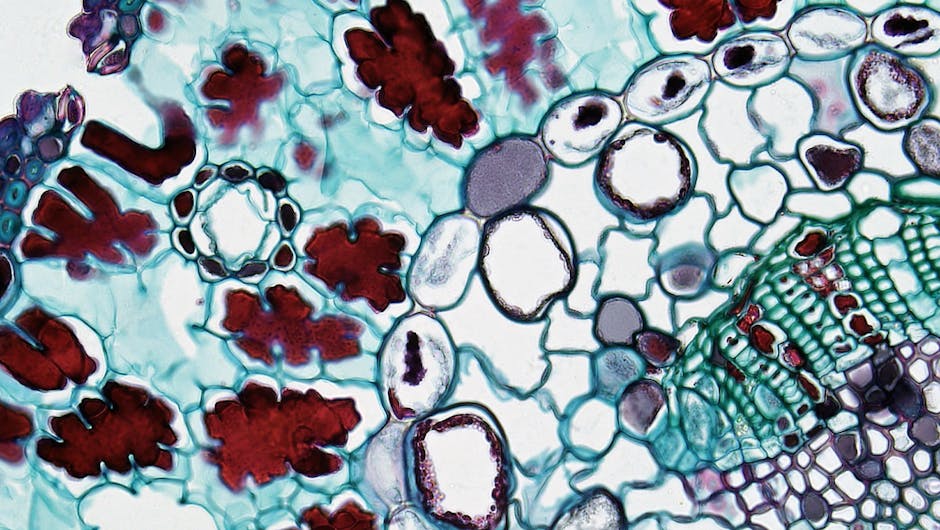
Photo by Fayette Reynolds M.S. on Pexels
Cells are tiny, but they're incredibly complex. They have a cell membrane (outer boundary), cytoplasm (the jelly-like stuff inside), and a nucleus (which houses your DNA, the cell's "control center"). Within the cytoplasm are various organelles—tiny structures with specific jobs, like mitochondria for energy production or ribosomes for protein synthesis. All cells have certain basic functions, but they can also specialize.
Tissues: Specialized Cell Groups
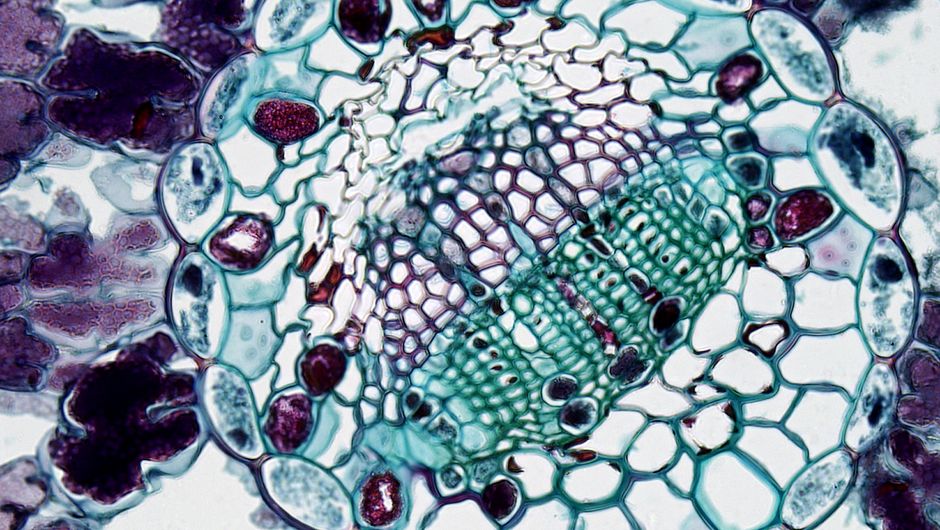
Photo by Fayette Reynolds M.S. on Pexels
When cells specialize and group up, they form tissues. There are four main types of tissue:
-
Epithelial Tissue:
- Function: Covers body surfaces, lines cavities, and forms glands. Think skin, lining of your gut, or sweat glands.
- Characteristics: Cells are closely packed, form sheets, and have a free surface exposed to the environment or an internal space. They protect, secrete, absorb, and filter.
-
Connective Tissue:
- Function: Supports, protects, binds other tissues together, and transports substances.
- Characteristics: Cells are scattered within an extracellular matrix (fibers like collagen, elastin, and ground substance). Examples include bone, cartilage, blood, fat, and ligaments.
-
Muscle Tissue:
- Function: Produces movement.
- Characteristics: Cells are specialized to contract.
- Skeletal muscle: Attached to bones, voluntary movement.
- Cardiac muscle: In the heart, involuntary pumping.
- Smooth muscle: In walls of internal organs (e.g., digestive tract), involuntary movement.
-
Nervous Tissue:
- Function: Transmits electrical signals rapidly throughout the body, coordinating body functions.
- Characteristics: Made of neurons (nerve cells that transmit impulses) and neuroglia (support cells). Found in the brain, spinal cord, and nerves.
3. Worked Example
Let's trace how something like your ability to flex your bicep muscle fits into these organizational levels.
- Chemical Level: Individual atoms like carbon and hydrogen form molecules like actin and myosin proteins.
- Cellular Level: These proteins are organized within specialized muscle cells (myocytes), which are elongated and packed with contractile fibers.
- Tissue Level: Many muscle cells group together, along with connective tissue that binds them, to form skeletal muscle tissue. This tissue is then surrounded by more connective tissue.
- Organ Level: The entire biceps muscle is an organ. It's made of skeletal muscle tissue, but also includes connective tissue (like the fascia covering it), nervous tissue (to tell it when to contract), and epithelial and connective tissues that form blood vessels to supply it with nutrients.
- Organ System Level: The biceps muscle works with other muscles, bones, and tendons as part of the muscular system and skeletal system (locomotor system) to create movement. It's also regulated by the nervous system.
- Organismal Level: Your ability to lift your arm is a function of your entire body working together.
4. Key Takeaways
- Anatomy is the study of structure, and physiology is the study of function; they are always intertwined.
- The body has a clear hierarchy of organization, from chemicals to the whole organism.
- Cells are the fundamental units of life, capable of specialization.
- There are four primary tissue types: epithelial, connective, muscle, and nervous.
- Epithelial tissue covers and lines, connective tissue supports and binds, muscle tissue moves, and nervous tissue communicates.
-
Each tissue type has unique characteristics that allow it to perform its specific role.
-
Don't confuse anatomy (what it is) with physiology (how it works).
- Don't forget that cells are the basic unit; everything builds from them.
- Avoid thinking of tissues as just random collections of cells; they're organized for specific jobs.
- Don't underestimate the importance of the extracellular matrix in connective tissue; it's a key component.
5. Now Try It
Take a common body action, like smelling a flower. For 15 minutes, try to break down this action by identifying which organ systems are primarily involved, then identify the main organs in each system, and finally, consider the types of tissues and cells that would be most active in that process.
Success looks like: You can identify at least three organ systems, name one or two organs within each, and describe the primary tissue types involved (e.g., nervous tissue for smell detection, muscle tissue for moving your head closer).
Frequently asked about Foundations: Introduction, Cells, and Tissues
Study this next
Get the full Human Anatomy and Physiology curriculum
Clone the complete plan to your dashboard for unlimited AI-generated notes, practice quizzes, and a personalised revision schedule.
Create Free Account