Introduction to Early Southeast Asian Civilizations
From the Kingdoms curriculum
TL;DR
Early Southeast Asian civilizations developed unique cultural identities influenced by India and China, but they weren't mere copies. These societies thrived through maritime trade and sophisticated agricultural practices, often centered around powerful kingdoms. Their lasting legacies include monumental architecture and diverse religious traditions that still shape the region today.
1. The Mental Model
Imagine Southeast Asia as a crossroads where ideas and goods from India and China met. Local communities didn't just absorb these influences; they adapted them, creating distinct civilizations that blended foreign concepts with their own traditions, especially in governance, religion, and art.
2. The Core Material
Early Southeast Asian civilizations were shaped by several key factors. First, their geography, particularly their maritime location, made them crucial hubs for trade routes connecting India, China, and the broader Indian Ocean world. This trade brought wealth, but also new ideas and technologies. Second, cultural diffusion, primarily from India (Brahmanism/Hinduism and Buddhism) and to a lesser extent China (Confucianism, Daoism), provided frameworks for state-building, religious practice, and artistic expression. However, local beliefs and practices were rarely fully replaced, leading to unique syntheses.
Early Kingdoms and Empires
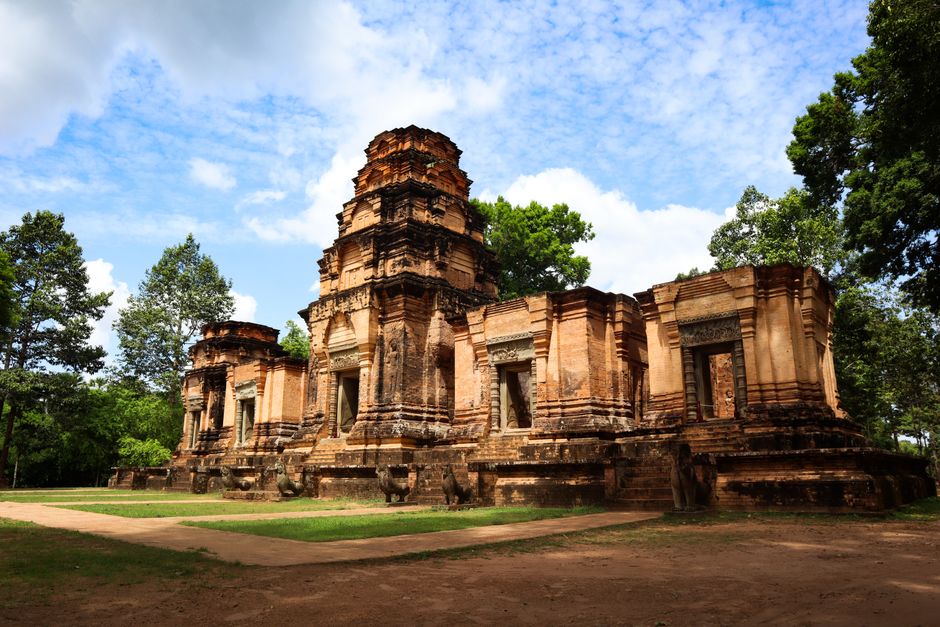
Photo by Pascal 📷 on Pexels
Several powerful kingdoms emerged, each with distinct characteristics:
- Funan (1st-7th century CE): Located in the Mekong Delta, it was one of the earliest major maritime states. It controlled key trade routes and adopted Indian political and religious ideas.
- Champa (2nd-15th century CE): Situated along the coast of central Vietnam, the Cham people were skilled seafarers and traders. They were primarily Hindu, with strong Indian cultural influences, and often engaged in conflicts with their Vietnamese neighbors.
- Srivijaya (7th-13th century CE): A powerful thalassocracy (maritime empire) centered on Sumatra. Srivijaya controlled the vital Malacca and Sunda straits, making it a dominant force in regional trade and a major center for Mahayana Buddhism.
- Khmer Empire/Angkor (9th-15th century CE): Based in Cambodia, this empire is famous for its monumental temple complexes like Angkor Wat. The Khmer rulers adopted Hindu and later Buddhist faiths, building vast hydraulic systems for rice cultivation that supported a large population.
These civilizations weren't isolated; they interacted constantly through trade, diplomacy, and warfare. The flow of goods like spices, textiles, and precious metals was accompanied by the exchange of religious texts, architectural styles, and administrative concepts.
graph TD
    A["Southeast Asian Geography (Maritime Routes)"] --> B["Attracts Indian/Chinese Traders/Ideas"]
    B --> C["Local Rulers Adopt/Adapt Foreign Concepts"]
    C --> D{"Emergence of Powerful Kingdoms"}
    D --> E["Funan (Mekong Delta)"]
    D --> F["Champa (Central Vietnam)"]
    D --> G["Srivijaya (Sumatra)"]
    D --> H["Khmer Empire (Cambodia)"]
    E --> I["Maritime Trade & Agriculture"]
    F --> I
    G --> I
    H --> I
    I --> J["Wealth, Cultural Flourishing, Monumental Works"]
    J --> K["Lasting Cultural & Religious Legacies"]
Key Cultural Features

Photo by Andrey Matveev on Pexels
- Indianization: This term describes the process of adopting Indian cultural elements, including Sanskrit language, Hindu and Buddhist religions, legal codes (Dharmashastras), and art forms. However, it was always an adaptation, not a complete replacement of indigenous cultures.
- Syncretism: The blending of different religious or cultural traditions. For example, Hindu deities might be incorporated into local animistic beliefs, or Buddhist practices might coexist with pre-existing spirit worship.
- Monarchical Systems: Most early Southeast Asian states were organized as monarchies, often with the king seen as a divine figure (e.g., Devaraja cult in Khmer Empire). These rulers often used religious patronage (building temples, sponsoring rituals) to legitimize their rule.
3. Worked Example
Let's look at the construction of Angkor Wat in the Khmer Empire. It wasn't just a temple; it was a cosmic mountain, a microcosm of the Hindu universe, and a funerary temple for King Suryavarman II. Its massive scale and intricate carvings reflect a highly organized society with advanced engineering skills. The extensive bas-reliefs depict Hindu myths (like the Churning of the Ocean of Milk) and historical scenes, demonstrating the deep influence of Indian religion. Yet, the architectural style also features unique Khmer elements, like the distinctive prangs (towers) and the use of Apsaras (celestial dancers) in a way that feels distinctly local. This synthesis of Indian religious themes with local artistic expression and monumental ambition perfectly illustrates the "Indianization" process.
4. Key Takeaways
- Early Southeast Asian civilizations were not passive recipients but active adapters of foreign influences.
- Maritime trade was a crucial driver of economic prosperity and cultural exchange in the region.
- "Indianization" refers to the selective adoption of Indian cultural, religious, and political ideas.
- Syncretism, the blending of local and foreign traditions, was a hallmark of these cultures.
- Powerful kingdoms like Funan, Srivijaya, and the Khmer Empire left significant architectural and religious legacies.
- These societies often had sophisticated agricultural systems, particularly for rice cultivation.
- The legacies of these early civilizations continue to shape the cultural and religious landscape of modern Southeast Asia.
5. Now Try It
Choose one of the early civilizations mentioned (Funan, Champa, Srivijaya, or Khmer Empire). Spend 15 minutes researching a specific aspect of its culture or achievements (e.g., Srivijaya's maritime network, Champa's brick temples, the hydraulic system of the Khmer Empire). Try to identify at least two ways it demonstrates both foreign influence and unique local characteristics. What did you find particularly interesting about how they blended these elements?
Frequently asked about Introduction to Early Southeast Asian Civilizations
Study this next
Get the full Kingdoms curriculum
Clone the complete plan to your dashboard for unlimited AI-generated notes, practice quizzes, and a personalised revision schedule.
Create Free Account