Introduction to Biological Organization and Cell Theory
From the Biology ca curriculum
TL;DR
Biology is organized in a hierarchical way, from the smallest atoms to the largest biosphere. The Cell Theory states that all living things are made of cells, cells are the basic unit of life, and all cells come from pre-existing cells. Understanding this organization helps us see how everything in biology is interconnected.
1. The Mental Model
Imagine building something with LEGOs: you start with tiny bricks, combine them into bigger structures, and eventually build a whole castle. Biological organization works similarly, with cells as the basic building blocks that combine to form increasingly complex living systems.
2. The Core Material
Biology isn't just a jumble of living things; it's structured! We can think about life in different levels, from the very small to the very large. This is called biological organization.
Here's how it generally works:
- Atoms: The smallest units of matter. (e.g., Carbon, Oxygen, Hydrogen)
- Molecules: Two or more atoms bonded together. (e.g., water H₂O, glucose C₆H₁₂O₆)
- Organelles: Specialized structures within a cell that perform specific functions. (e.g., nucleus, mitochondria)
- Cells: The basic unit of life. (e.g., muscle cell, plant cell)
- Tissues: Groups of similar cells working together to perform a specific function. (e.g., muscle tissue, nervous tissue)
- Organs: Structures made of different tissues working together. (e.g., heart, stomach)
- Organ Systems: Groups of organs working together. (e.g., circulatory system, digestive system)
- Organism: An individual living thing. (e.g., a human, a tree)
- Population: A group of organisms of the same species in the same area. (e.g., a herd of deer)
- Community: All the different populations living and interacting in an area. (e.g., deer, trees, birds, insects in a forest)
- Ecosystem: A community plus its non-living environment (e.g., a forest ecosystem including soil, water, air).
- Biosphere: All the parts of Earth where life exists.
graph TD
    A["Atoms"] --> B["Molecules"]
    B --> C["Organelles"]
    C --> D["Cells (The basic unit of life)"]
    D --> E["Tissues"]
    E --> F["Organs"]
    F --> G["Organ Systems"]
    G --> H["Organism"]
    H --> I["Population"]
    I --> J["Community"]
    J --> K["Ecosystem"]
    K --> L["Biosphere"]
Cell Theory
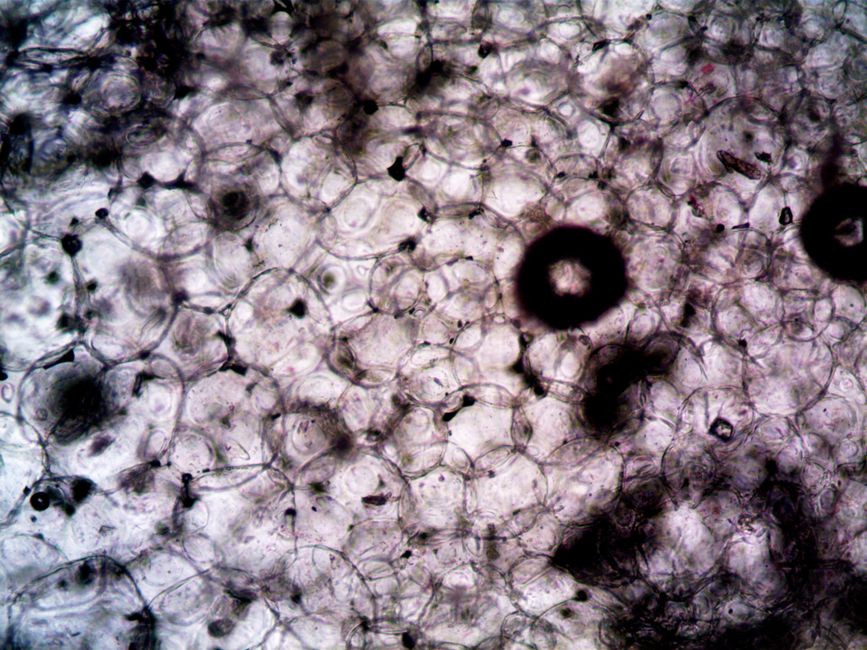
Photo by turek on Pexels
The concept of the cell is so fundamental that it's summarized in the Cell Theory, one of the foundational principles of biology. It has three main parts:
- All living organisms are composed of one or more cells. This means everything alive, from the smallest bacteria to the largest whale, is made of cells.
- The cell is the basic structural and functional unit of life. Cells are the smallest things that can be considered alive. They carry out all the processes necessary for life, like metabolism and reproduction.
- All cells arise from pre-existing cells. Cells don't spontaneously appear; they come from other cells dividing. This explains how life continues and grows.
The Cell Theory was developed over time with contributions from many scientists, including Robert Hooke (who coined the term "cell"), Anton van Leeuwenhoek (who observed living cells), Matthias Schleiden (plants are made of cells), Theodor Schwann (animals are made of cells), and Rudolf Virchow (cells come from pre-existing cells).
3. Worked Example
Let's trace the organization for a simple human example: Digestion.
We start with atoms like carbon, oxygen, hydrogen forming molecules like glucose. These molecules are part of organelles like mitochondria within cells, for instance, a stomach cell. Many stomach cells form epithelial tissue that lines the stomach. This tissue, along with muscle tissue and nervous tissue, forms the organ that is your stomach. Your stomach is part of the digestive system, which works with other systems in you, the organism. If we consider you and all other humans, that's a population. If we include other living things you interact with, that's a community, all within an ecosystem, which is part of the biosphere.
4. Key Takeaways
- Biological organization is a hierarchy from atoms to the biosphere, showing increasing complexity.
- Cells are the central level, acting as the fundamental units of life.
- The Cell Theory is a core biological principle with three essential statements.
- All living things are made of at least one cell.
- Cells perform all basic life functions.
- New cells always come from existing cells through division.
Common Mistakes to Avoid:
* Confusing an organelle with a cell; organelles are parts of cells.
* Thinking that organisms can spontaneously generate (Cell Theory disproves this).
* Forgetting that the Cell Theory applies to all living things, not just complex ones.
* Mixing up the order of hierarchical levels, e.g., putting organs before tissues.
5. Now Try It
Think about a tree. Starting from its leaves, trace its biological organization from the organ level all the way up to the biosphere. What type of cells would you find in the leaves, and what key life process do they perform?
Success looks like: You can name at least 5-6 levels of organization for the tree, identify the primary cell type in leaves, and state its main function.
Frequently asked about Introduction to Biological Organization and Cell Theory
Study this next
Get the full Biology ca curriculum
Clone the complete plan to your dashboard for unlimited AI-generated notes, practice quizzes, and a personalised revision schedule.
Create Free Account