Introduction to Ayala's Perspective on Evolution
From the Evolution according to Francisco Ayala curriculum
Introduction to Ayala's Perspective on Evolution
TL;DR
Francisco Ayala viewed evolution as a scientific fact supported by vast evidence, a process driven primarily by natural selection acting on genetic variation. He emphasized the creative power of natural selection and its role in shaping complex adaptations, distinguishing it from random chance. Ayala also saw no fundamental conflict between scientific evolution and religious belief, advocating for their separate domains.
1. The Mental Model
Think of evolution as a sculptor (natural selection) working with raw clay (genetic variation) over vast amounts of time, shaping it into diverse and functional forms (species). It's not a random explosion; it's a guided, creative process.
2. The Core Material
Francisco Ayala, a prominent evolutionary biologist and former priest, offered a nuanced and robust perspective on evolution. He wasn't just explaining Darwin's ideas; he was refining them, especially concerning the creative aspect of natural selection and the perceived conflict between science and faith.
2.1 Evolution as Fact and Theory
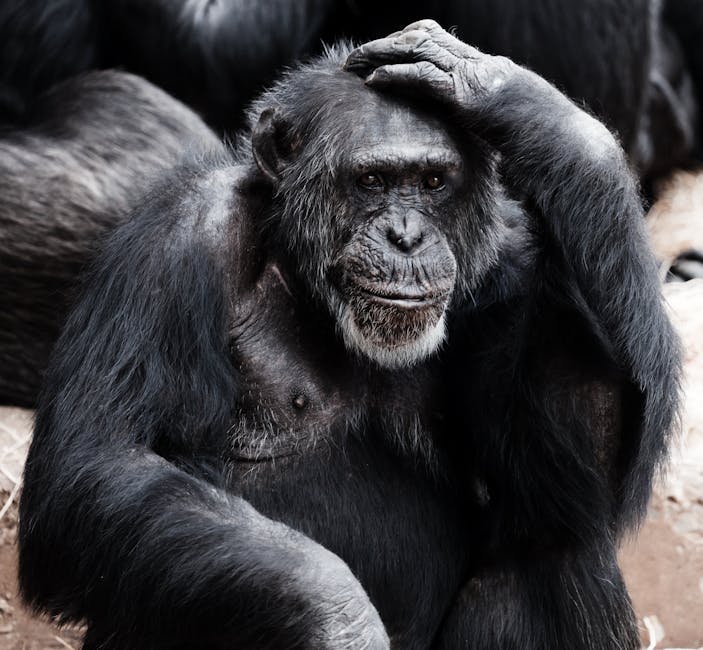
Photo by Public Domain Pictures on Pexels
Ayala firmly asserted that evolution, the idea that species change over time and share common ancestors, is a scientific fact. The evidence, from fossils to DNA, is overwhelming. The "theory" part of evolution refers to the mechanisms that explain this fact, primarily natural selection. He saw no debate about whether evolution happens, only how it happens in its intricate details.
2.2 Natural Selection: The Creative Force

Photo by Ron Lach on Pexels
Ayala strongly emphasized that natural selection isn't just about weeding out the unfit; it's a creative process. It isn't random. While mutations (the source of genetic variation) are random, natural selection acts on these variations in a directed, non-random way. Over generations, it accumulates beneficial traits, leading to new adaptations and increasing complexity. This "creative" aspect is key to understanding how complex structures like eyes or wings could evolve.
graph TD
    A["Genetic Variation (Random Mutations)"] --> B["Environmental Pressures (Challenges)"]
    B --> C{"Differential Survival & Reproduction"}
    C -- "Favorable Traits Persist" --> D["Accumulation of Adaptations"]
    C -- "Unfavorable Traits Decline" --> A
    D --> E["Increased Organismal Complexity"]
    E --> A
Figure 1: Ayala's view on the creative cycle of natural selection.
2.3 Chance and Necessity

Photo by DS stories on Pexels
Ayala often spoke about evolution as a combination of chance and necessity. The "chance" comes from random mutations and genetic recombination. The "necessity" comes from natural selection, which deterministically favors traits that improve survival and reproduction in a given environment. It's this interplay that drives evolutionary change. It's not pure chance, nor is it pure deterministic necessity.
2.4 Reconciliation with Religion

Photo by RDNE Stock project on Pexels
A significant part of Ayala's perspective involved addressing the perceived conflict between evolution and religious faith. He argued that science and religion are two different ways of understanding the world, operating in separate domains (magisteria). Science deals with the "how" – the natural processes. Religion deals with the "why" – meaning, purpose, and moral values. He believed they could coexist peacefully without contradiction, as evolution doesn't negate the possibility of a creator who established the natural laws.
3. Worked Example
Imagine a population of bacteria exposed to a new antibiotic.
- Genetic Variation: Within the bacterial population, some individuals might spontaneously (randomly) develop a mutation that confers slight resistance to the antibiotic. Most won't.
- Environmental Pressure: The antibiotic is introduced, acting as a strong selective pressure.
- Differential Survival & Reproduction: The non-resistant bacteria die off rapidly. The few resistant bacteria survive and reproduce, passing on their resistance genes.
- Accumulation of Adaptations: Over many generations, as the resistant bacteria reproduce, their proportion in the population increases. Further mutations might arise, leading to even higher levels of resistance.
- New Adaptation: Eventually, the entire population might become highly resistant to the antibiotic. This isn't random; it's a directed, creative outcome of natural selection accumulating beneficial mutations in response to the environmental challenge. Ayala would highlight that while the initial mutation was random, the subsequent increase in resistance was a predictable, non-random evolutionary process.
4. Key Takeaways
- Evolution is a scientific fact, with mechanisms like natural selection explaining how it occurs.
- Natural selection is a creative, non-random process that shapes adaptations, not just a filter for random chance.
- Ayala saw evolution as a blend of "chance" (mutations) and "necessity" (natural selection).
- He argued for the compatibility of evolution and religious faith by separating their domains of inquiry.
- The vast diversity of life and its intricate adaptations are products of this long-term evolutionary process.
Common Mistakes to Avoid:
- Don't confuse the "fact" of evolution with the "theory" explaining its mechanisms.
- Avoid thinking natural selection is a random process; it's highly directed by environmental pressures.
- Don't believe organisms "try" to evolve or adapt; evolution happens through differential survival and reproduction.
- Don't assume that accepting evolution means rejecting all forms of religious belief; Ayala showed they can be compatible.
5. Now Try It
Think about how human intelligence and our complex brains might have evolved from a less complex ancestor. Using Ayala's framework, write a short paragraph (3-4 sentences) explaining how natural selection could have "creatively" shaped these traits, differentiating between the role of random chance and the role of environmental pressures.
What to do: Explain how genetic variations (random) for slightly better cognitive abilities would arise and how natural selection (non-random) would favor them in a specific ancestral environment, leading to the accumulation of increasingly complex brains.
What success looks like: Your paragraph clearly uses Ayala's ideas of "chance," "necessity," and "creativity" in explaining the evolution of human intelligence, rather than just stating it "happened."
Frequently asked about Introduction to Ayala's Perspective on Evolution
Study this next
Get the full Evolution according to Francisco Ayala curriculum
Clone the complete plan to your dashboard for unlimited AI-generated notes, practice quizzes, and a personalised revision schedule.
Create Free Account