Introduction to Phycology and Algal Diversity
From the phycology 1 curriculum
Introduction to Phycology and Algal Diversity
TL;DR
Phycology is the study of algae, a diverse group of photosynthetic organisms critical to ecosystems. Algae aren't plants; they lack true roots, stems, and leaves. You'll learn how to classify them by pigments, cell structure, and life cycles.
1. The Mental Model
Think of algae as the ocean's (and many freshwater bodies') primary producers. They're like the grass of the aquatic world, forming the base of most food chains, but they come in an incredible variety of forms, from microscopic single cells to giant seaweeds.
2. The Core Material
Phycology is simply the scientific study of algae. These aren't plants, even though they photosynthesize. Plants evolved from a specific group of green algae, but algae as a whole are a much broader and more ancient collection of organisms. What sets them apart from plants is their simpler body structure – they don't have true roots, stems, leaves, or flowers.
What are Algae?

Photo by 🇻🇳🇻🇳Nguyễn Tiến Thịnh 🇻🇳🇻🇳 on Pexels
Algae are primarily aquatic, photosynthetic organisms. They range from tiny, single-celled organisms (like phytoplankton) that float in water to large, multicellular seaweeds that attach to rocks. They're incredibly diverse in size, form, habitat, and even their biochemistry.
Why are Algae Important?
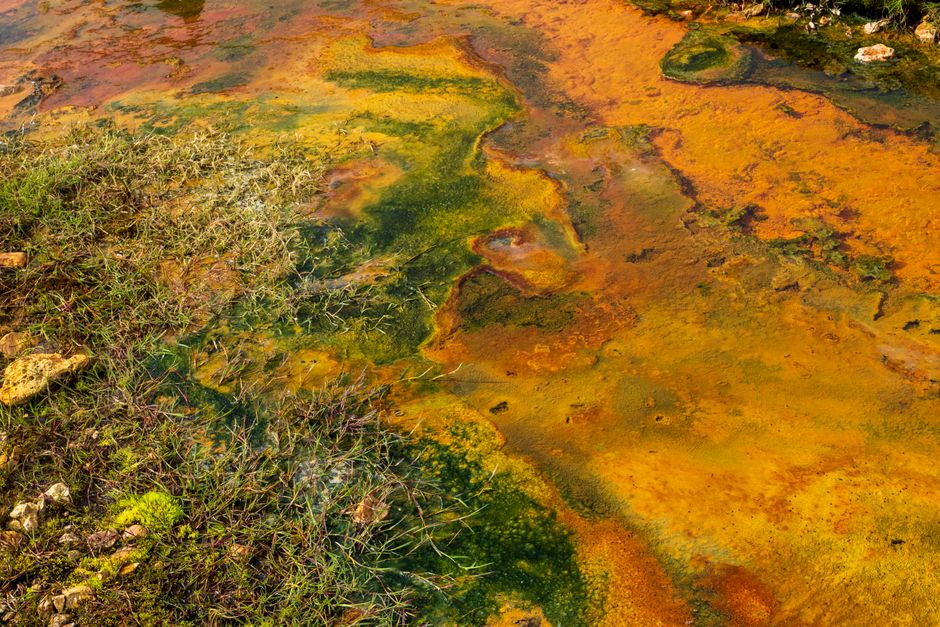
Photo by Rino Adamo on Pexels
Algae are vital for life on Earth. They produce a significant portion of the oxygen we breathe and are the base of most aquatic food webs. Without them, marine life as we know it wouldn't exist. They're also used in many human applications, from food and fertilizers to biofuels and medicines.
Algal Diversity: How Do We Classify Them?

Photo by Wei86 Travel on Pexels
Classifying algae can be tricky because they're not a single evolutionary group (they're polyphyletic). Instead, we group them based on shared characteristics, primarily:
- Pigmentation: The types of photosynthetic pigments they use (e.g., chlorophylls a, b, c, phycobilins, carotenoids). This is often the most visible characteristic and gives many algal groups their distinctive colors.
- Cell Wall Composition: What their cell walls are made of (e.g., cellulose, agar, carrageenan, silica).
- Storage Products: The form in which they store excess energy (e.g., starch, oil, laminarin).
- Flagella: Presence, number, and type of flagella (whip-like structures for movement).
- Cellular Organization: Unicellular, colonial, filamentous, or thalloid (multicellular but simple body).
Here's a simplified look at some major groups:
graph TD
    A["Algal Diversity"] --> B["Green Algae (Chlorophyta)"]
    A --> C["Red Algae (Rhodophyta)"]
    A --> D["Brown Algae (Phaeophyceae)"]
    A --> E["Diatoms (Bacillariophyta)"]
    A --> F["Dinoflagellates (Dinophyta)"]

    B --> B1["Pigments: Chl a & b"]
    B --> B2["Storage: Starch"]
    B --> B3["Cell Wall: Cellulose"]
    B --> B4["Examples: Sea lettuce, Chlamydomonas"]

    C --> C1["Pigments: Chl a, Phycobilins"]
    C --> C2["Storage: Floridean starch"]
    C --> C3["Cell Wall: Agar, Carrageenan"]
    C --> C4["Examples: Nori, Coralline algae"]

    D --> D1["Pigments: Chl a & c, Fucoxanthin"]
    D --> D2["Storage: Laminarin, Oil"]
    D --> D3["Cell Wall: Cellulose, Alginates"]
    D --> D4["Examples: Kelp, Fucus"]

    E --> E1["Pigments: Chl a & c, Fucoxanthin"]
    E --> E2["Storage: Oils, Chrysolaminarin"]
    E --> E3["Cell Wall: Silica frustule"]
    E --> E4["Examples: Pennate diatoms, Centric diatoms"]

    F --> F1["Pigments: Chl a & c, Peridinin"]
    F --> F2["Storage: Starch, Oils"]
    F --> F3["Cell Wall: Cellulose plates (theca)"]
    F --> F4["Examples: Red tide organisms, Bioluminescent species"]
3. Worked Example
Imagine you're examining an unknown algal sample under a microscope.
- Observation: You notice the cells are golden-brown and have intricate, glass-like cell walls. They move with a gliding motion, but you don't see obvious flagella.
- Deduction based on color: The golden-brown color suggests the presence of accessory pigments like fucoxanthin, which masks the green chlorophyll. This narrows it down to groups like diatoms or brown algae.
- Deduction based on cell wall: The "glass-like" cell wall is a dead giveaway for silica, which is characteristic of diatoms (Bacillariophyta). Brown algae have cellulose and alginate cell walls, not silica.
- Deduction based on movement: While some diatoms are planktonic, many benthic (bottom-dwelling) pennate diatoms can glide, even without prominent flagella, matching your observation.
Conclusion: Based on these features, you'd confidently identify the sample as diatoms.
4. Key Takeaways
- Phycology is the study of algae, photosynthetic organisms distinct from plants.
- Algae are incredibly diverse, ranging from microscopic unicells to giant seaweeds.
- They are crucial primary producers, generating oxygen and forming the base of aquatic food webs.
- Key classification criteria include pigmentation, cell wall composition, storage products, and flagella.
- Different algal groups have unique combinations of these features, like the silica walls of diatoms or the phycobilins of red algae.
Common mistakes to avoid:
- Don't confuse algae with plants; algae lack true roots, stems, and leaves.
- Don't assume all algae are green; many are red, brown, or golden-colored due to different pigments.
- Avoid thinking of "algae" as a single, unified evolutionary group; they're very diverse.
- Don't underestimate their ecological importance; they're more than just pond scum.
5. Now Try It
Find two different types of algae in your local environment (e.g., pond scum, seaweed on a beach, or even a green film on a damp wall). Observe their color and texture. Based on what you've learned, make an educated guess about which broad algal group they might belong to and why. What success looks like: You can describe two distinct algal forms and provide at least one reasoned guess for each, linking your observation to a characteristic discussed (e.g., "This green film could be green algae because it's bright green and filamentous").
Frequently asked about Introduction to Phycology and Algal Diversity
Study this next
Get the full phycology 1 curriculum
Clone the complete plan to your dashboard for unlimited AI-generated notes, practice quizzes, and a personalised revision schedule.
Create Free Account