Evolution and Diversity of Life
From the Life Science curriculum
TL;DR
Evolution explains how life changes over generations through natural selection, leading to new species and the vast diversity we see today. All living things share a common ancestor, but they've adapted to countless environments, resulting in incredible biodiversity. Understanding evolution helps us connect all living things and make sense of their differences.
1. The Mental Model
Think of all life as one giant, branching family tree. Evolution is the process that drives the branching and changing of species over millions of years, adapting them to new "neighborhoods" (environments) and creating the incredible variety of life forms on Earth.
2. The Core Material
Evolution is the central unifying concept in biology. It explains both the striking similarities among different species and their unique differences. It's not about individuals changing during their lifetime, but about populations changing over many generations.
2.1 What is Evolution?
At its simplest, evolution is a change in the heritable characteristics of biological populations over successive generations. This means that the traits passed down from parents to offspring change over time within a group of organisms.
The main mechanism driving this change is natural selection, proposed by Charles Darwin and Alfred Russel Wallace. Here's how it works:
- Variation: Individuals within a population are not identical; they have slightly different traits (e.g., some are faster, some have slightly different colored fur).
- Heritability: Many of these variations are heritable, meaning they can be passed down from parents to offspring.
- Overproduction: Organisms produce more offspring than can possibly survive.
- Differential Survival and Reproduction: Because resources are limited, individuals with traits that are better suited to their environment are more likely to survive, reproduce, and pass on those advantageous traits. Those less suited are less likely to survive and reproduce.
Over time, these "favored" traits become more common in the population, leading to the population evolving.
2.2 Evidence for Evolution
There's a mountain of evidence supporting evolution:
- Fossil Record: Fossils show a progression of life forms over geological time, with simpler organisms appearing before more complex ones, and transitional forms linking different groups.
- Comparative Anatomy: Similar bone structures (like the forelimbs of humans, bats, whales, and cats) suggest a common ancestor, even if they've adapted for different functions. These are called homologous structures.
- Molecular Biology: All life uses DNA and RNA as genetic material, and the genetic code is nearly universal. Comparing DNA sequences shows how closely related species are. The more similar the DNA, the more recently they shared a common ancestor.
- Biogeography: The distribution of species around the world makes sense in light of continental drift and evolutionary history. For example, marsupials are mostly found in Australia because they evolved there after it separated from other continents.
- Direct Observation: We can observe evolution happening in real-time with organisms that reproduce quickly, like bacteria evolving antibiotic resistance or insects evolving pesticide resistance.
2.3 Diversity of Life (Biodiversity)
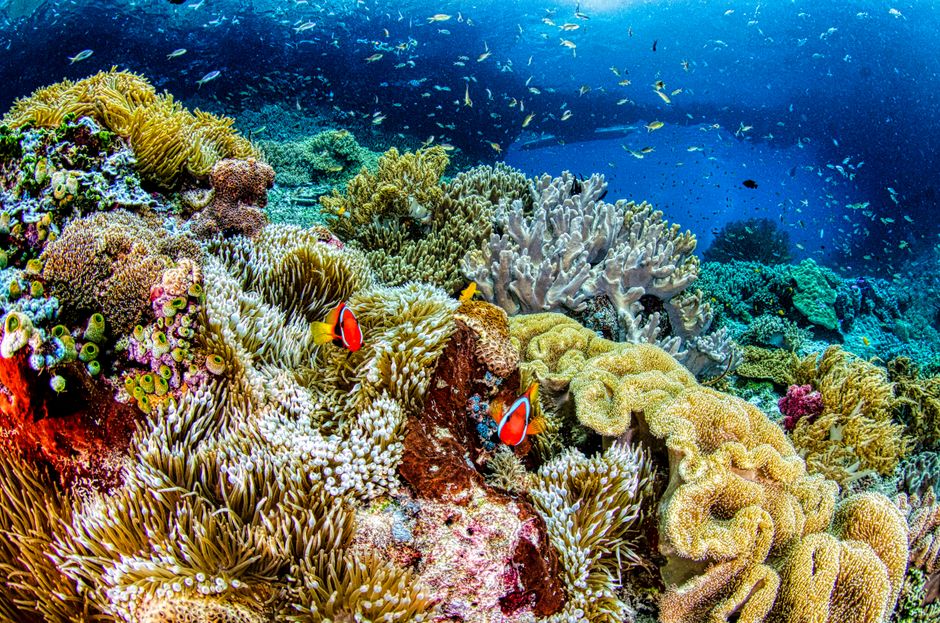
Photo by Tom Fisk on Pexels
Evolution explains why there's such an amazing variety of life on Earth, known as biodiversity. From tiny bacteria to giant whales, all life traces back to a common ancestor, but through processes like natural selection and speciation, new species arise.
Speciation is the process by which one species splits into two or more distinct species. This often happens when populations become isolated (e.g., by a geographical barrier like a mountain range or a river) and then evolve independently, accumulating enough differences that they can no longer interbreed.
Here's a simplified view of how natural selection leads to adaptation:
graph TD
    A["Population with Genetic Variation"] --> B["Environmental Pressure (e.g., predation, climate change)"]
    B --> C{"Individuals with advantageous traits survive & reproduce more"}
    C --> D["Advantageous traits become more common in population"]
    D --> E["Population adapted to environment (Evolution!)"]
    E --> F["New environmental pressure or isolation"]
    F --> G["Potential Speciation"]
3. Worked Example
Let's look at the classic example of antibiotic resistance in bacteria.
Imagine a population of bacteria causing an infection. When you treat it with an antibiotic:
- Variation: Within the bacterial population, there might be a few individual bacteria that have a random genetic mutation making them slightly resistant to the antibiotic. Most are susceptible.
- Environmental Pressure: The antibiotic acts as a strong environmental pressure, killing off most of the susceptible bacteria.
- Differential Survival & Reproduction: The few resistant bacteria survive the treatment. With less competition from the susceptible bacteria, these resistant ones can now reproduce rapidly, passing on their resistance genes.
- Evolution: Over a few generations (which can be hours for bacteria!), the bacterial population evolves. The proportion of resistant bacteria increases dramatically, making the antibiotic treatment ineffective. This is why it's so important to finish antibiotic courses, even if you feel better, to kill as many bacteria as possible before resistance can fully develop.
4. Key Takeaways
- Evolution is the change in heritable traits of populations over generations, driven primarily by natural selection.
- Natural selection favors individuals with traits that enhance their survival and reproduction in a given environment.
- All life on Earth shares a common ancestor, and evolution explains both our similarities and our vast diversity.
- Evidence for evolution comes from fossils, comparative anatomy, DNA, biogeography, and direct observation.
- Biodiversity is the result of evolutionary processes, especially speciation, where new species arise from existing ones.
- Evolution is a continuous process; species are always adapting to changing environments.
- Antibiotic resistance in bacteria is a clear, observable example of evolution happening right now.
5. Now Try It
Think about a different animal or plant species you're familiar with (e.g., polar bears, cacti, cheetahs). For your chosen species, identify at least two specific traits (adaptations) that help it survive in its particular environment. Then, briefly explain how you think natural selection could have led to the development of these adaptations over many generations. What "environmental pressures" would have favored those traits?
Success looks like: You've clearly identified adaptations and logically connected them to how natural selection would have worked in that environment, showing your understanding of variation, heritability, and differential survival.
Frequently asked about Evolution and Diversity of Life
Study this next
Get the full Life Science curriculum
Clone the complete plan to your dashboard for unlimited AI-generated notes, practice quizzes, and a personalised revision schedule.
Save this course free