Culture: Definition, Characteristics, Diversity, and Biases
From the sociology curriculum
TL;DR
Culture is the shared, learned, and transmitted way of life within a society, shaping how individuals think and behave. It's dynamic and diverse, varying significantly between different groups and continuously evolving. Understanding culture helps us analyze society and human interaction at both broad and individual levels.
1. The Mental Model
Think of culture as the "operating system" of a society – it's the invisible software that dictates how people interact, what they value, and how they interpret the world around them. It's not something you're born with, but rather something you acquire and share by living with others.
2. The Core Material
Culture is a fundamental concept in sociology, referring to the shared beliefs, values, customs, behaviors, and artifacts that characterize a group or society. It's everything that people create and transmit through social interaction.
Characteristics of Culture

Photo by Marco Alhelm on Pexels
Understanding culture starts with recognizing its key features:
- Learned: You aren't born with culture; you acquire it through socialization from birth. Things like language, manners, and beliefs are taught and absorbed from others.
- Social: Culture is a product of society, not an individual creation. It develops through human interaction and helps individuals become truly "human" within a social environment.
- Shared: Culture isn't unique to one person but is common among members of a territory. Customs, traditions, and values are shared and adopted by many.
- Transmitted: Culture passes from one generation to the next, usually from parents to children, ensuring its continuity.
- Adaptive: Culture helps humans adjust to their environment. It changes to meet new challenges and needs.
- Integrated: Different parts of a culture (like values, morality, and religion) are interconnected and influence each other.
- Changing: Culture isn't static; it evolves over time, though the speed of change can vary between societies and generations.
- Varies from Society to Society: No two cultures are exactly alike. Each society has its own unique customs, values, and traditions.
- Responsive: Culture responds to changes in the physical world, offering solutions and safety, like houses protecting us from weather.
- Gratifying: Culture provides ways to satisfy both biological and social needs and desires.
Cultural Diversity
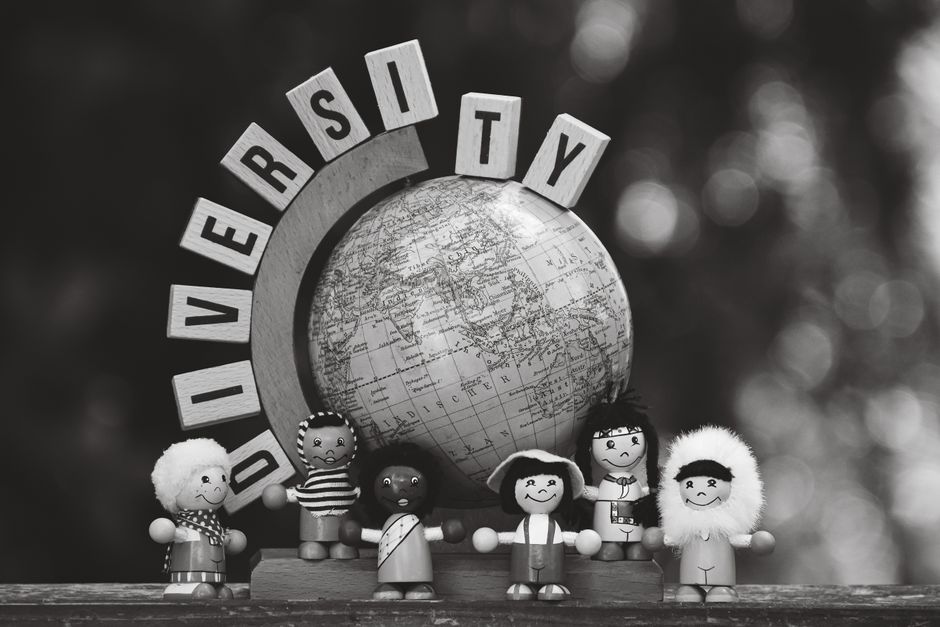
Photo by Alexas Fotos on Pexels
Within and between societies, culture expresses itself in many ways:
- High Culture: Refers to cultural patterns that distinguish a society's elite, often associated with art, literature, and classical music.
- Popular Culture: Cultural patterns that are widespread among the general population, like popular music, movies, or fashion trends.
- Subculture: Cultural patterns that set apart a segment of society's population. These groups have distinct norms, values, or practices, but generally coexist within the larger society (e.g., goth subculture, skateboarding culture).
- Counterculture: Cultural patterns that strongly oppose the widely accepted norms and values of the dominant society. They often challenge established ways of life (e.g., 1960s hippie movement).
- Multiculturalism: A perspective that recognizes the cultural diversity of a society and promotes equal standing for all cultural traditions.
Here's a diagram showing the relationship between these types of culture:
graph TD
    A["Society's Culture"] --> B["Dominant Culture"]
    B --> C["High Culture"]
    B --> D["Popular Culture"]
    B --> E["Subculture"]
    B --> F["Counterculture"]
    E -- "Distinct patterns, generally coexists" --> B
    F -- "Strongly opposes" --> B
    A -- "Recognizes and promotes all traditions" --> G["Multiculturalism"]
Cultural Transmission

Photo by Varun Gaba on Pexels
This is the process by which culture is passed down from one generation to the next, often through learning and imitation. It's how societies maintain their traditions and knowledge over time.
Ethnocentrism vs. Xenocentrism
- Ethnocentrism: The tendency to judge other cultures based on the standards of one's own culture, often seeing one's own culture as superior.
- Xenocentrism: The tendency to value other cultures more highly than one's own, often seeing foreign products, ideas, or styles as superior.
3. Worked Example
Let's consider the simple act of eating.
If you are born into a society where it's common to eat with a fork and knife, you learn this behavior from your family and peers. This is culture being learned and social. Everyone around you shares this method of eating (culture is shared). Your parents teach you how to hold the utensils and proper table manners (cultural transmission). As society evolves, perhaps new dining etiquette or types of food become popular, showing that culture is changing. However, if you travel to a society where it's customary to eat with chopsticks, you might initially judge their method as "strange" or "difficult" compared to your own – this is ethnocentrism. Conversely, if you develop a preference for eating all meals with chopsticks after experiencing that culture, believing it to be more refined than using a fork and knife, you might be displaying xenocentrism.
4. Key Takeaways
- Culture is a socially learned, shared, and transmitted system that guides human behavior within a society.
- It's a dynamic and adaptive force, constantly evolving and varying significantly across different groups.
- Societies exhibit various forms of culture, including high culture, popular culture, subcultures, and countercultures.
- Ethnocentrism and xenocentrism are biases that affect how individuals perceive their own and other cultures.
- Understanding culture helps us analyze how individuals and institutions interact and shape society.
Common Mistakes to Avoid:
* Assuming culture is solely about exotic customs; it includes everyday behaviors like greeting people.
* Confusing personal preferences with cultural norms; culture is shared by a group, not just one person.
* Believing culture is static; it changes and adapts over time.
* Judging other cultures as inherently "wrong" or "primitive" without understanding their context (ethnocentrism).
5. Now Try It
Take 15 minutes to observe a specific social interaction around you – it could be people waiting in line, a family dinner, or a group of friends interacting. Identify at least three characteristics of culture (e.g., learned, shared, transmitted, integrated, changing) at play in that situation. Also, consider if you observe any elements of subculture or popular culture influencing the interaction. Write down your observations and the specific cultural characteristics you noticed. Success looks like clearly articulating how specific actions or behaviors you observed demonstrate these cultural characteristics.
Frequently asked about Culture: Definition, Characteristics, Diversity, and Biases
Study this next
Get the full sociology curriculum
Clone the complete plan to your dashboard for unlimited AI-generated notes, practice quizzes, and a personalised revision schedule.
Save this course free