Introduction to Genetics
From the Genetics and evolution curriculum
Introduction to Genetics
TL;DR
Genetics is the study of heredity, explaining how traits are passed from parents to offspring through DNA. Your genetic makeup, or genotype, determines your observable characteristics, or phenotype. Understanding these basics is key to grasping evolution and disease.
1. The Mental Model
Think of your genes as an instruction manual for building and running you. Each instruction set, inherited from your parents, contributes to your unique features and how your body works.
2. The Core Material
Genetics explores how living things inherit traits. It all starts with DNA, the blueprint of life.
What is DNA?

Photo by Nicola Narracci on Pexels
DNA (deoxyribonucleic acid) is a long, twisted ladder-like molecule found in almost all living cells. It carries the genetic instructions for development, functioning, growth, and reproduction. The "rungs" of this ladder are made of pairs of chemical bases: Adenine (A) always pairs with Thymine (T), and Guanine (G) always pairs with Cytosine (C). This A-T, G-C pairing rule is super important!
Genes and Chromosomes
Photo by Nicola Narracci on Pexels
A gene is a specific segment of DNA that codes for a particular trait or protein. Think of it as a chapter in your instruction manual. Humans have tens of thousands of genes.
These genes are organized into structures called chromosomes. You inherit chromosomes from your parents. Typically, humans have 23 pairs of chromosomes (46 total): one set from your mother and one from your father.
graph TD
    Parent_1["Parent 1 (e.g., Mother)"] --> Gamete_1["Gamete (Egg)"];
    Parent_2["Parent 2 (e.g., Father)"] --> Gamete_2["Gamete (Sperm)"];
    Gamete_1 --> Zygote["Zygote (Fertilized Egg)"];
    Gamete_2 --> Zygote;
    Zygote --> Embryo["Embryo"];
    Embryo --> Offspring["Offspring"];
    subgraph Inheritance
        Zygote -- "Contains DNA from both parents" --> DNA_Inherited["Inherited DNA (Genes)"];
        DNA_Inherited --> Traits["Develops Traits"];
    end
Genotype vs. Phenotype
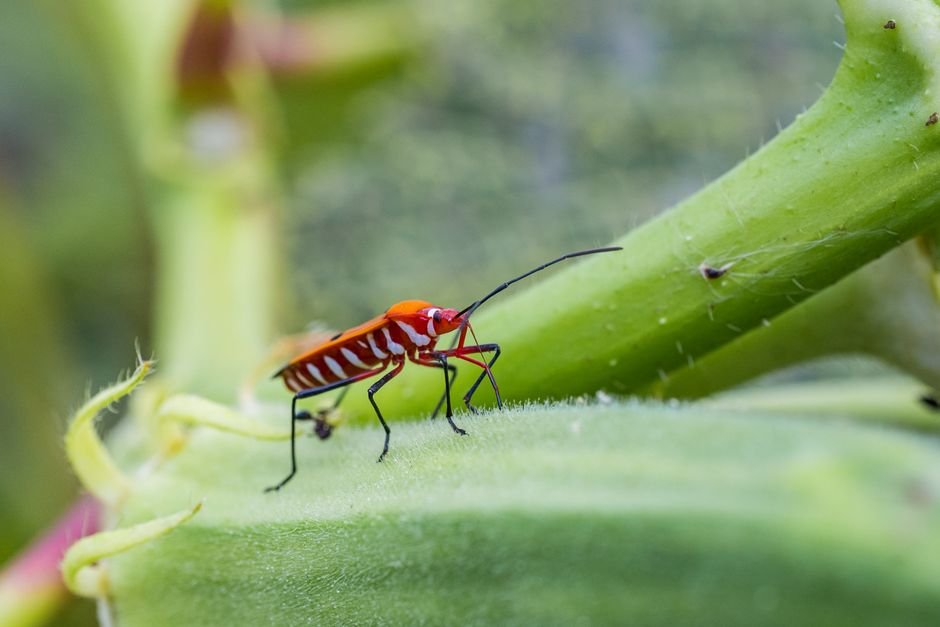
Photo by Pragyan Bezbaruah on Pexels
Your genotype is your complete set of genes. It's the underlying genetic code. For example, you might have genes for blue eyes.
Your phenotype is your observable characteristics – what you actually see. This includes physical traits like eye color, hair color, and height, but also less obvious traits like blood type or susceptibility to certain diseases. Your phenotype is a result of your genotype interacting with your environment. So, even if you have genes for being tall, poor nutrition might prevent you from reaching your full height potential.
Alleles and Dominance

Photo by Rain Photography on Pexels
For many genes, there are different versions called alleles. For instance, a gene for eye color might have an allele for blue eyes and another allele for brown eyes. Since you get two copies of each chromosome (one from each parent), you get two alleles for most genes.
Sometimes, one allele is dominant over another. This means that if you inherit one dominant allele and one recessive allele, only the trait from the dominant allele will show up in your phenotype. The recessive allele's trait will only appear if you inherit two copies of the recessive allele.
Let's say 'B' is the dominant allele for brown eyes and 'b' is the recessive allele for blue eyes.
* BB (genotype) = Brown eyes (phenotype)
* Bb (genotype) = Brown eyes (phenotype) - 'B' is dominant
* bb (genotype) = Blue eyes (phenotype)
3. Worked Example
Imagine a plant with a gene for flower color, where red flowers (R) are dominant over white flowers (r).
If we cross a plant that is heterozygous (meaning it has one dominant and one recessive allele, Rr) with a homozygous recessive plant (meaning it has two recessive alleles, rr), what will the offspring look like?
Here's how we can figure it out:
Parent 1: Rr (Red flower, since R is dominant)
Parent 2: rr (White flower)
Possible alleles from Parent 1: R or r
Possible alleles from Parent 2: r or r
Let's combine them:
* An 'R' from Parent 1 and an 'r' from Parent 2 gives Rr (Red flower)
* An 'R' from Parent 1 and an 'r' from Parent 2 gives Rr (Red flower)
* An 'r' from Parent 1 and an 'r' from Parent 2 gives rr (White flower)
* An 'r' from Parent 1 and an 'r' from Parent 2 gives rr (White flower)
So, of the offspring, 50% will have the genotype Rr (and be red flowers) and 50% will have the genotype rr (and be white flowers).
The phenotypic ratio is 1:1 red flowers to white flowers.
4. Key Takeaways
- DNA is the fundamental molecule carrying genetic instructions.
- A gene is a segment of DNA that codes for a specific trait.
- Chromosomes are structures made of DNA, organizing your genes.
- Your genotype is your genetic makeup; your phenotype is your observable traits.
- Alleles are different versions of a gene, like those for different eye colors.
- Dominant alleles express their trait even with one copy, while recessive alleles need two copies.
- Your environment can influence how your genotype is expressed as a phenotype.
Common Mistakes to Avoid:
- Don't confuse genotype (the genetic code) with phenotype (the observable trait).
- Remember that recessive traits only appear if two recessive alleles are present.
- Don't assume all traits are controlled by a single gene; many are complex.
- Don't forget that environmental factors can influence phenotype.
5. Now Try It
You have two pea plants. One is homozygous dominant for tallness (TT) and the other is homozygous recessive for short stature (tt). Cross these two plants to determine the genotype and phenotype of their first generation (F1) offspring. What would happen if you then crossed two of these F1 offspring? Describe the genotypes and phenotypes you'd expect in that second generation (F2).
Frequently asked about Introduction to Genetics
More from Genetics and evolution
Get the full Genetics and evolution curriculum
Clone the complete plan to your dashboard for unlimited AI-generated notes, practice quizzes, and a personalised revision schedule.
Create Free Account