CBSE: Biology — Reproduction and Genetics
From the CBSE Prep curriculum
TL;DR
Reproduction ensures the continuation of species through new individuals, while genetics explains how traits are passed from parents to offspring. Sexual reproduction involves two parents and genetic variation, whereas asexual reproduction involves one parent and produces identical offspring. Heredity and evolution are driven by genes, which are segments of DNA carrying instructions for specific traits.
1. The Mental Model
Think of reproduction as making copies (or unique versions!) of life, ensuring it doesn't just disappear. Genetics is like the instruction manual that gets passed down with those copies, explaining why offspring look and act similar to their parents, but also why they're not always identical.
2. The Core Material
You'll explore two big concepts here: Reproduction (how life makes more life) and Genetics (how traits get passed on).
Reproduction: Making More Life
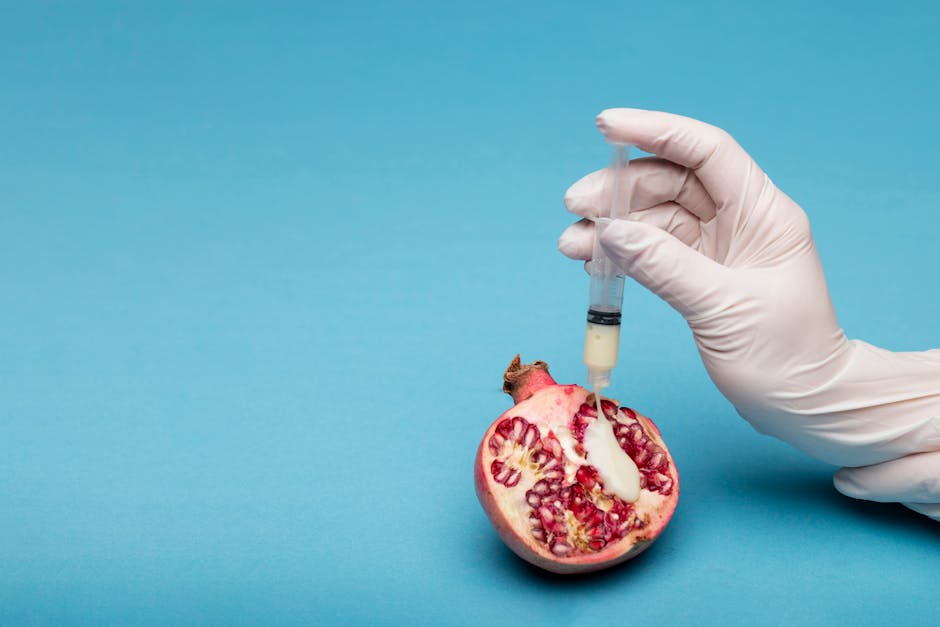
Photo by Deon Black on Pexels
Reproduction is a fundamental process for all living organisms to produce offspring, ensuring the continuity of their species. There are two main types:
Asexual Reproduction
This type involves a single parent producing offspring that are genetically identical to itself. It's like making perfect clones!
* Fission: A parent cell splits into two or more daughter cells.
* Binary Fission: (e.g., Amoeba, Paramecium, Bacteria) A single cell divides into two equal halves.
* Multiple Fission: (e.g., Plasmodium) A single cell divides into many daughter cells simultaneously.
* Budding: An outgrowth (bud) forms on the parent, detaches, and develops into a new individual (e.g., Hydra, Yeast).
* Spore Formation: Spores are tiny, specialized reproductive structures that can grow into new individuals (e.g., Fungi, Ferns).
* Fragmentation: A parent body breaks into pieces, and each piece grows into a new organism (e.g., Spirogyra, Planaria).
* Regeneration: The ability of an organism to regrow lost body parts or even an entire organism from a small fragment (e.g., Planaria, Starfish). While similar to fragmentation, regeneration is often about repairing damage.
* Vegetative Propagation: In plants, new plants grow from vegetative parts like roots, stems, or leaves (e.g., potatoes from tubers, roses from stem cuttings). This can be natural or artificial (like grafting).
Sexual Reproduction
This involves two parents (usually male and female) contributing gametes (sex cells) to form a zygote, which develops into a new individual. This process leads to genetic variation, which is crucial for evolution.
- In Plants:
- Flower Structure: Flowers are the reproductive organs. Key parts include sepals, petals, stamens (male part producing pollen), and carpel/pistil (female part containing ovules).
- Pollination: The transfer of pollen grains from the anther to the stigma.
- Self-pollination: Pollen transferred within the same flower or between flowers on the same plant.
- Cross-pollination: Pollen transferred between flowers of different plants of the same species.
- Fertilization: Fusion of male gamete (from pollen) with the female gamete (in the ovule) to form a zygote. The ovule develops into a seed, and the ovary into a fruit.
- In Humans:
- Male Reproductive System: Produces sperm (male gametes) and testosterone. Includes testes, epididymis, vas deferens, seminal vesicles, prostate gland, and urethra.
- Female Reproductive System: Produces eggs (female gametes) and hormones (estrogen, progesterone). Includes ovaries, fallopian tubes (oviducts), uterus, cervix, and vagina.
- Menstrual Cycle: A monthly cycle in females involving the maturation and release of an egg, and preparation of the uterus for pregnancy.
- Fertilization: Occurs when a sperm fertilizes an egg, usually in the fallopian tube. The resulting zygote implants in the uterus and develops.
- Pregnancy and Birth: Gestation period (around 9 months in humans) followed by childbirth.
- Reproductive Health: Includes contraception methods (e.g., condoms, oral pills, IUDs) to prevent unwanted pregnancies and awareness about sexually transmitted infections (STIs).
Here's a diagram showing the basic process flow of sexual reproduction in flowering plants:
graph TD
    A["Pollen Grains on Anther"] --> B["Transfer to Stigma (Pollination)"]
    B --> C{"Self-pollination OR Cross-pollination"}
    C --> D["Pollen Tube Germinates"]
    D --> E["Male Gametes Reach Ovule"]
    E --> F["Fusion of Gametes (Fertilization)"]
    F --> G["Zygote Forms"]
    G --> H["Ovule becomes Seed"]
    G --> I["Ovary becomes Fruit"]
Genetics: The Blueprint of Life
Genetics is the study of heredity and variation. It explains why offspring resemble their parents but aren't identical.
- Heredity: The transmission of characters/traits from parents to offspring.
- Variation: Differences among individuals of the same species. This is key for evolution.
- Genes: Functional units of heredity. They are specific segments of DNA that carry instructions for making particular proteins, which determine traits.
- Chromosomes: Thread-like structures located inside the nucleus of animal and plant cells. Each chromosome is made of protein and a single molecule of DNA. Genes are arranged on chromosomes.
- DNA (Deoxyribonucleic Acid): The genetic material in most living organisms. It forms a double helix structure.
- Alleles: Different forms of a gene (e.g., for flower color, one allele might be for red, another for white).
- Genotype: The genetic makeup of an organism (the specific combination of alleles it possesses).
- Phenotype: The observable characteristics of an organism, resulting from its genotype and environmental interactions (e.g., red flowers).
- Dominant Trait: A trait that expresses itself even when only one copy of its allele is present.
- Recessive Trait: A trait that only expresses itself when two copies of its allele are present (i.e., in the absence of a dominant allele).
- Mendel's Laws of Inheritance: Gregor Mendel, the "Father of Genetics," established fundamental laws:
- Law of Segregation: During gamete formation, the two alleles for a heritable character separate (segregate) from each other, so that each gamete carries only one allele for that character.
- Law of Independent Assortment: Alleles for different genes assort independently of each other during gamete formation, meaning the inheritance of one trait doesn't affect the inheritance of another.
3. Worked Example
Let's look at Mendel's classic pea plant experiment for a monohybrid cross (a cross involving a single trait).
Suppose we cross a pure tall pea plant (TT) with a pure dwarf pea plant (tt). Here, 'T' represents the dominant allele for tallness, and 't' represents the recessive allele for dwarfness.
Parent Generation (P):
Tall plant (TT) x Dwarf plant (tt)
Gametes:
The tall parent produces only 'T' gametes.
The dwarf parent produces only 't' gametes.
First Filial Generation (F1):
When these gametes combine, all offspring will have the genotype Tt.
Since 'T' (tall) is dominant over 't' (dwarf), all F1 plants will be tall.
Now, let's self-pollinate the F1 generation (cross two Tt plants):
F1 Generation:
Tall plant (Tt) x Tall plant (Tt)
Gametes from F1:
Each F1 parent produces two types of gametes: 'T' and 't' (in equal proportion).
Second Filial Generation (F2):
Using a Punnett Square:
| T | t | |
|---|---|---|
| T | TT | Tt |
| t | Tt | tt |
- Genotypes in F2:
- TT: 1 (Homozygous dominant)
- Tt: 2 (Heterozygous)
- tt: 1 (Homozygous recessive)
- Genotypic Ratio: 1:2:1
- Phenotypes in F2:
- Tall (TT and Tt): 3
- Dwarf (tt): 1
- Phenotypic Ratio: 3:1
This example clearly shows how dominant and recessive traits behave and how genetic ratios emerge from crosses.
4. Key Takeaways
- Asexual reproduction yields genetically identical offspring from one parent, while sexual reproduction involves two parents and creates genetic variation.
- In plants, flowers are key for sexual reproduction, involving pollination and fertilization to produce seeds and fruits.
- Human reproduction involves complex male and female systems, leading to fertilization and pregnancy, and requires understanding reproductive health.
- Genetics studies how traits (determined by genes on chromosomes) are inherited and why there's variation within species.
- Genes have different forms called alleles, which determine traits, with some being dominant and others recessive.
- Mendel's laws of segregation and independent assortment explain the basic patterns of how traits are passed down.
- Genetic variation from sexual reproduction is crucial for species adaptation and evolution.
Common Mistakes to Avoid:
- Don't confuse regeneration with fragmentation; regeneration is specifically about regrowing parts, fragmentation is about whole new organisms from pieces.
- Remember that self-pollination occurs on the same plant (or even same flower), while cross-pollination is between different plants.
- Don't mix up genotype (genetic code, like Tt) with phenotype (observable trait, like 'tall').
- Don't forget that recessive traits only show up if two recessive alleles are present (e.g., tt).
- Don't think all sexual reproduction leads to identical offspring; variation is a hallmark of it.
5. Now Try It
Imagine you have two pea plants. One is heterozygous for seed shape (round is dominant, wrinkled is recessive, so its genotype is Rr). The other plant is homozygous recessive for seed shape (rr). Cross these two plants and determine the expected genotypic and phenotypic ratios of their offspring. What percentage of the offspring would you expect to have wrinkled seeds?
Success looks like: You should be able to clearly show the parent genotypes, the gametes they produce, use a Punnett square to predict the F1 generation, and then state the genotypic ratio, phenotypic ratio, and the percentage of wrinkled-seeded offspring.
Frequently asked about CBSE: Biology — Reproduction and Genetics
Study this next
Get the full CBSE Prep curriculum
Clone the complete plan to your dashboard for unlimited AI-generated notes, practice quizzes, and a personalised revision schedule.
Save this course free