Introduction to Tissues and Cellular Organisation
From the bio curriculum
TL;DR
Living organisms are built in a hierarchical way, starting from cells that group together to form tissues. These tissues then work together in organs and organ systems, allowing complex functions to happen. Understanding this organization helps you grasp how bodies function and respond to their environment.
1. The Mental Model
Think of building blocks. Individual cells are the smallest functional units. When similar cells team up to do a specific job, they form a tissue, like bricks making a wall.
2. The Core Material
You've probably heard that the cell is the basic unit of life. That's true! But in multicellular organisms (like you!), cells don't just float around doing their own thing. They organize themselves into increasingly complex structures to perform specialized functions. This organization follows a clear hierarchy:
2.1 From Cells to Tissues
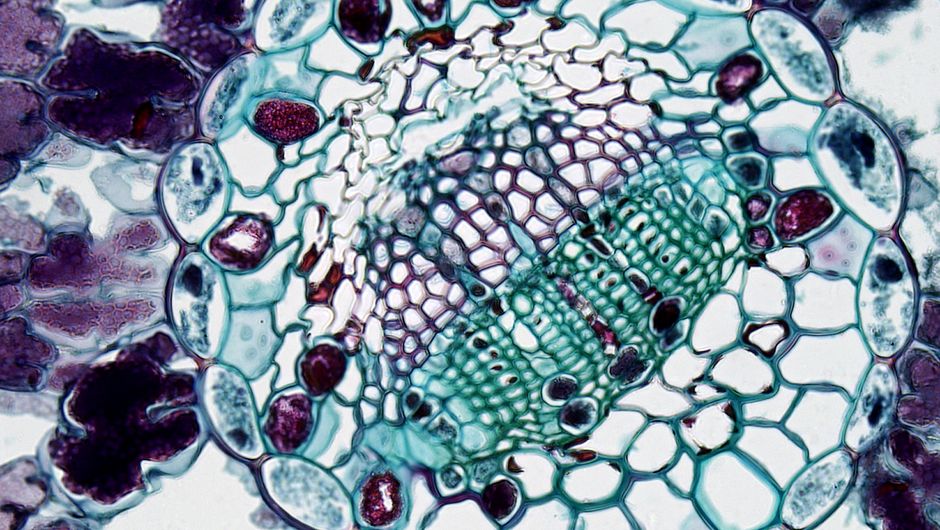
Photo by Fayette Reynolds M.S. on Pexels
A tissue is a group of similar cells that work together to perform a specific function. It's not just any group of cells; they have to be specialized and cooperate. For example, muscle cells are shaped and designed to contract, and when many of them are together, they form muscle tissue.
There are four main types of animal tissues:
* Epithelial Tissue: This tissue covers body surfaces, lines internal organs and cavities, and forms glands. Its main jobs are protection, secretion, and absorption. Think of your skin or the lining of your stomach.
* Connective Tissue: This is the most diverse type. It supports, binds, and protects other tissues and organs. Examples include bone, cartilage, fat, and blood. Yes, blood is considered a connective tissue because it connects different parts of your body and has a non-cellular matrix (plasma).
* Muscle Tissue: Responsible for movement. There are three types: skeletal (moves bones), smooth (in internal organs like the stomach and intestines), and cardiac (in the heart).
* Nervous Tissue: Carries electrical signals throughout the body to communicate information. Your brain, spinal cord, and nerves are made of this.
2.2 Organs and Organ Systems

Photo by https://kaboompics.com/ on Pexels
When different types of tissues work together to perform a more complex function, they form an organ. For instance, your stomach is an organ made of epithelial tissue (lining), muscle tissue (for churning food), connective tissue (holding it all together), and nervous tissue (controlling its actions).
Finally, a group of organs that cooperate to perform major functions forms an organ system. The digestive system, for example, includes the stomach, intestines, liver, and pancreas, all working together to break down food and absorb nutrients.
Here's how that hierarchy looks:
graph TD
    A["Cells (e.g., muscle cell)"] --> B["Tissues (e.g., muscle tissue)"];
    B --> C["Organs (e.g., stomach)"];
    C --> D["Organ Systems (e.g., digestive system)"];
    D --> E["Organism (e.g., human)"];
This tiered structure allows for division of labor and increased efficiency, enabling multicellular organisms to perform highly complex tasks.
3. Worked Example
Let's trace the path of oxygen in your body. It starts at a single point, but needs a system to move around.
- Cells: Your red blood cells are specialized cells. They're tiny, biconcave discs, and their main job is to carry oxygen.
- Tissue: Many red blood cells, along with other cell types (white blood cells, platelets) and plasma, form blood, which is a type of connective tissue.
- Organ: Blood travels through your heart (an organ made of cardiac muscle tissue, nervous tissue, epithelial tissue, and connective tissue). The heart's job is to pump this blood.
- Organ System: The heart is part of the circulatory system, which also includes blood vessels (arteries, veins, capillaries) that carry the blood to every part of your body.
- Organism: The entire circulatory system ensures that oxygen, carried by the blood tissue, pumped by the heart organ, reaches all the cells in your organism.
This example shows how specialized cells form tissues, which combine into organs, which then work within organ systems to maintain the life of the entire organism.
4. Key Takeaways
- Cells are the fundamental building blocks of all living organisms.
- Tissues are groups of similar, specialized cells working together for a specific function.
- The four primary types of animal tissues are epithelial, connective, muscle, and nervous.
- Organs are formed when different tissues cooperate to perform more complex jobs.
- Organ systems consist of multiple organs working together to carry out major life functions.
- This hierarchical organization allows for efficient division of labor and complex biological processes.
- Understanding this hierarchy is crucial for comprehending how organisms function as a whole.
Common mistakes to avoid:
- Don't confuse an organ (like the stomach) with a tissue (like muscle tissue); an organ is made of multiple tissue types.
- Remember that blood is a connective tissue, even though it's fluid.
- Don't think all cells in an organism are identical; specialization is key to tissue formation.
- Avoid memorizing terms without understanding their role in the overall hierarchy.
5. Now Try It
Think about another organ in your body, like your lung. Identify at least two different types of tissues you'd expect to find in the lung and describe their probable function within that organ. What organ system is the lung part of, and what's its main role in that system? You should be able to explain how the tissues contribute to the lung's function in about 15 minutes.
Frequently asked about Introduction to Tissues and Cellular Organisation
Study this next
Get the full bio curriculum
Clone the complete plan to your dashboard for unlimited AI-generated notes, practice quizzes, and a personalised revision schedule.
Save this course free