Introduction to Data Science and Python Fundamentals
From the https://www.youtube.com/watch?v=T8KwY8a47rU&list=RDT8KwY8a47rU&start_radio=1&t=97s curriculum
Introduction to Data Science and Python Fundamentals
TL;DR
Data science uses scientific methods, processes, algorithms, and systems to extract knowledge and insights from structured and unstructured data. Python is a popular, versatile programming language that's essential for data science due to its extensive libraries. This lesson introduces you to what data science is and gets you started with basic Python concepts.
1. The Mental Model
Think of data science as solving puzzles using data. You gather clues (data), organize them, and then use tools (like Python) to find patterns and make predictions. Python is your Swiss Army knife for handling these clues.
2. The Core Material
What is Data Science?

Photo by Asad Photo Maldives on Pexels
Data science is a field that combines statistics, computer science, and domain expertise to solve complex problems using data. It's about understanding data, extracting valuable insights from it, and communicating those insights. It helps make better decisions.
Here's a common flow of a data science project:
graph TD
    A["Problem Definition"] --> B["Data Collection"]
    B --> C["Data Cleaning & Preprocessing"]
    C --> D["Exploratory Data Analysis (EDA)"]
    D --> E["Model Building (Machine Learning)"]
    E --> F["Model Evaluation"]
    F --> G["Deployment & Monitoring"]
    G --> H["Insights & Communication"]
    H --> A;
Why Python for Data Science?
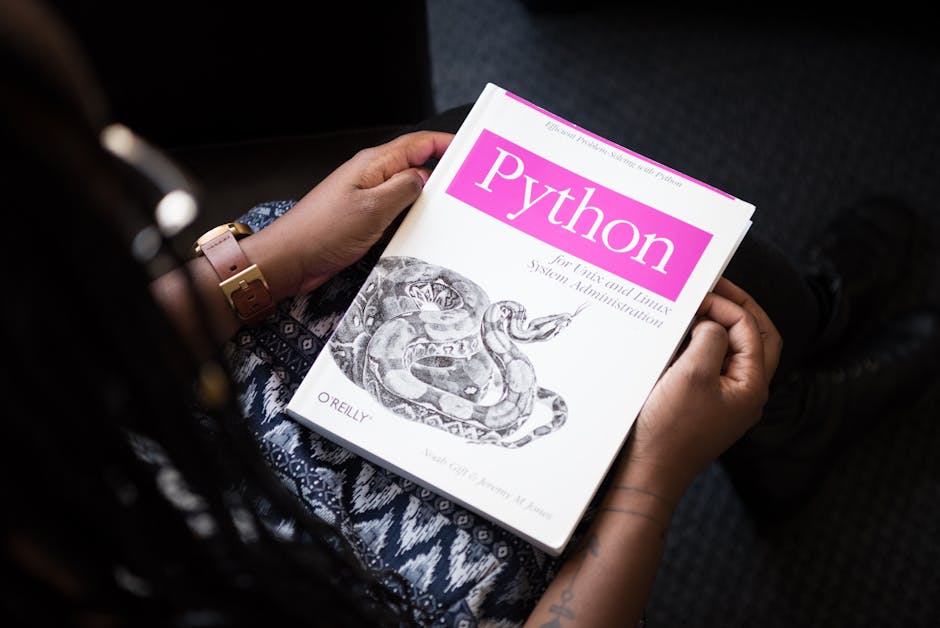
Photo by Christina Morillo on Pexels
Python is widely used in data science because it's easy to learn, has a huge community, and offers powerful libraries. These libraries provide pre-built tools for everything from data manipulation to machine learning.
Python Fundamentals: Variables and Data Types

Photo by Myburgh Roux on Pexels
In Python, variables are like containers for storing information. You don't need to declare their type explicitly; Python figures it out.
Common data types include:
* Integers (int): Whole numbers (e.g., 5, -10).
* Floats (float): Numbers with decimal points (e.g., 3.14, -0.5).
* Strings (str): Text, enclosed in single or double quotes (e.g., "hello", 'Data Science').
* Booleans (bool): True or False values (e.g., True, False).
# Assigning values to variables
age = 30           # integer
height = 1.75      # float
name = "Alice"     # string
is_student = True  # boolean

# You can print their types
print(type(age))
print(type(height))
print(type(name))
print(type(is_student))
Python Fundamentals: Basic Operations
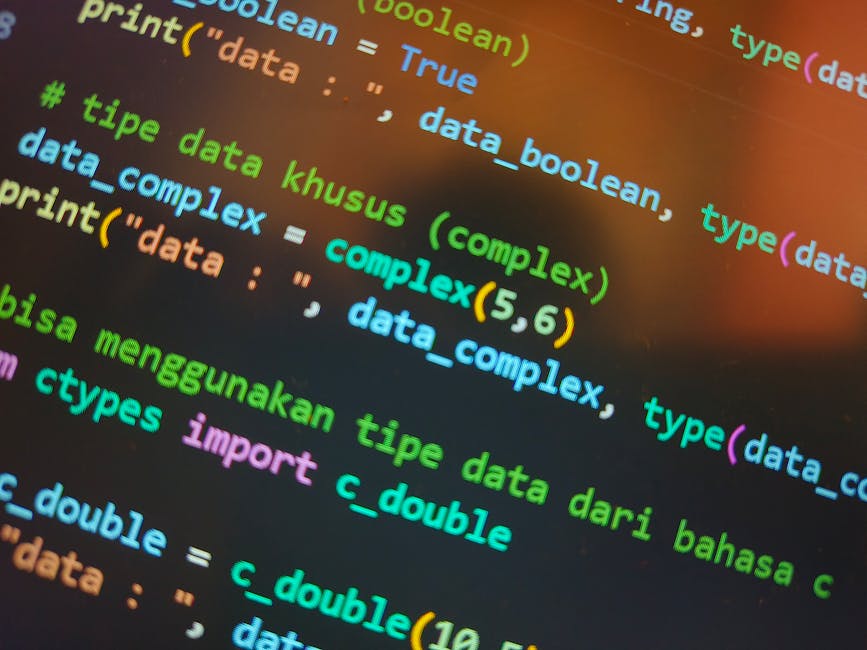
Photo by Syirwan Ainu on Pexels
You can perform mathematical operations on numbers and combine strings.
# Arithmetic operations
result_sum = 10 + 5
result_diff = 10 - 5
result_prod = 10 * 5
result_div = 10 / 3 # Division always returns a float
result_pow = 2 ** 3 # Exponentiation (2 to the power of 3)

print(f"Sum: {result_sum}")
print(f"Difference: {result_diff}")
print(f"Product: {result_prod}")
print(f"Division: {result_div}")
print(f"Power: {result_pow}")

# String concatenation
greeting = "Hello, " + name + "!"
print(greeting)
3. Worked Example
Let's say you want to calculate the total cost of an item with sales tax.
First, define your variables:
item_price = 125.50  # The price of the item
tax_rate = 0.08      # 8% sales tax
Now, calculate the tax amount and then the total cost:
tax_amount = item_price * tax_rate
total_cost = item_price + tax_amount

print(f"Item Price: ${item_price:.2f}")
print(f"Tax Rate: {tax_rate*100:.0f}%")
print(f"Tax Amount: ${tax_amount:.2f}")
print(f"Total Cost: ${total_cost:.2f}")
This will output:
Item Price: $125.50
Tax Rate: 8%
Tax Amount: $10.04
Total Cost: $135.54
Here, :.2f inside the f-string formats the number to two decimal places, which is good for currency.
4. Key Takeaways
- Data science is an interdisciplinary field focused on extracting insights from data.
- Python is a cornerstone of data science due to its simplicity and powerful libraries.
- Variables in Python store data, and their type (like
int,float,str,bool) is automatically handled. - You can perform basic arithmetic and string operations directly in Python.
- Understanding the basic data science workflow helps in structuring projects.
- F-strings are a modern and clean way to embed variables and format output in print statements.
Common Mistakes to Avoid:
- Forgetting to quote strings, which will lead Python to think you're referring to a variable.
- Mismatched data types in operations (e.g., trying to add a string and a number directly without conversion).
- Using keywords (like print, if, for) as variable names.
- Not understanding the difference between integer division (in some languages) and float division (/ in Python always gives a float).
5. Now Try It
Open a Python interpreter (like Jupyter Notebook, Google Colab, or just a Python shell). Create variables for your first_name, last_name, and current_year. Then, create a welcome_message string that combines these variables to say "Hello, [First Name] [Last Name]! Welcome to [Current Year]'s data science journey." Print this message.
Success looks like: Seeing your personalized welcome message printed to the console using the variables you defined.
Frequently asked about Introduction to Data Science and Python Fundamentals
Get the full https://www.youtube.com/watch?v=T8KwY8a47rU&list=RDT8KwY8a47rU&start_radio=1&t=97s curriculum
Clone the complete plan to your dashboard for unlimited AI-generated notes, practice quizzes, and a personalised revision schedule.
Create Free Account