Fundamentals of Light and Color
From the last psych curriculum
TL;DR
Light is electromagnetic radiation that our eyes can detect, and it's the foundation of all color perception. Color isn't an inherent property of objects but rather a result of how objects reflect and absorb different wavelengths of light. Our visual system then interprets these wavelengths to create the experience of color.
1. The Mental Model
Think of light as a wave, like ripples in water, but these waves carry energy. When these light waves hit something, some are absorbed and some bounce off. The ones that bounce off are what your eyes catch, and your brain turns that into color.
2. The Core Material
Light is a form of electromagnetic (EM) radiation, which travels in waves. The wavelength of light is the distance between two consecutive peaks of the wave. The entire spectrum of EM radiation includes radio waves, microwaves, infrared, visible light, ultraviolet, X-rays, and gamma rays. We're most concerned with visible light, which is a tiny portion of this spectrum.
The Visible Spectrum and Wavelengths
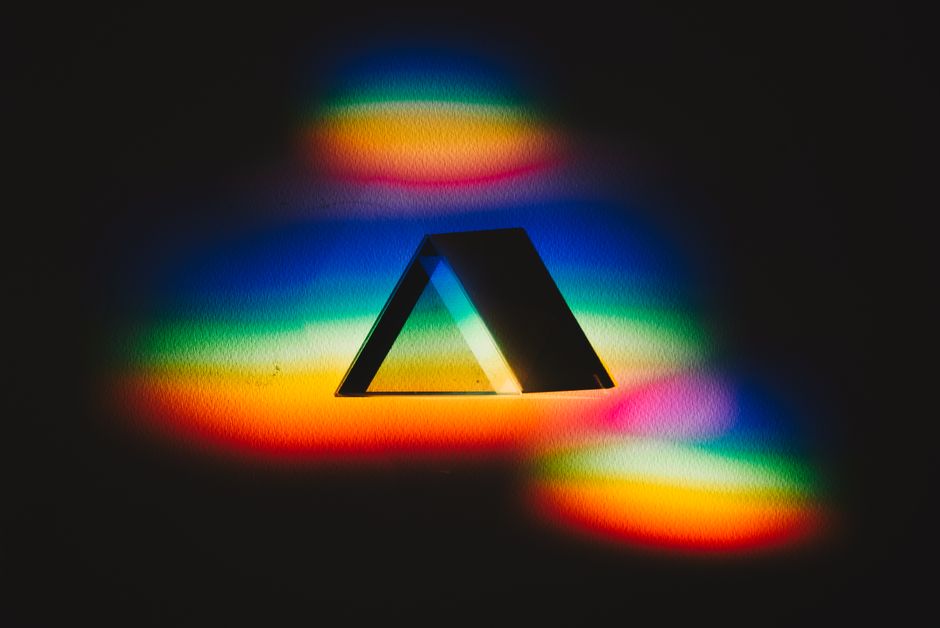
Photo by Evie Shaffer on Pexels
Different wavelengths within the visible spectrum correspond to different colors.
- Short wavelengths (around 400-500 nm) appear as blues and violets.
- Medium wavelengths (around 500-600 nm) appear as greens and yellows.
- Long wavelengths (around 600-700 nm) appear as oranges and reds.
Our eyes contain specialized cells called photoreceptors (rods and cones) that detect this light. Cones are responsible for color vision and are concentrated in the fovea (the central part of your retina). We have three types of cones, each sensitive to different ranges of wavelengths:
- S-cones (short-wavelength) are most sensitive to blue light.
- M-cones (medium-wavelength) are most sensitive to green light.
- L-cones (long-wavelength) are most sensitive to red light.
How We See Color

Photo by K on Pexels
When light hits an object, the object absorbs some wavelengths and reflects others. The reflected wavelengths are what reach your eyes. For example, a "red" apple absorbs most of the blue and green light and reflects red light. Your L-cones are strongly stimulated, M-cones weakly, and S-cones hardly at all, and your brain interprets this pattern of stimulation as "red."
The color you perceive also depends on the light source. If you shine only green light on a red apple, the apple will appear dark or black because it absorbs green light and there's no red light for it to reflect.
Here's how the process of seeing color generally works:
graph TD
    A["Light Source"] --> B["Object Surface"];
    B --"Absorbs some wavelengths"--> C["Object Surface"];
    C --"Reflects other wavelengths"--> D["Eye (Retina)"];
    D --"Activates S, M, L Cones"--> E["Optic Nerve"];
    E --> F["Brain (Visual Cortex)"];
    F --> G["Perception of Color"];
Additive vs. Subtractive Color Mixing

Photo by Vitaly Gariev on Pexels
There are two main ways colors mix:
-
Additive Color Mixing (Light): This is when you mix different colored lights. The more colors you add, the closer you get to white light. This is how screens (TVs, phones) work, using red, green, and blue (RGB) pixels.
- Red + Green = Yellow
- Green + Blue = Cyan
- Red + Blue = Magenta
- Red + Green + Blue = White
-
Subtractive Color Mixing (Pigments/Dyes): This is when you mix paints or inks. Each pigment absorbs certain wavelengths of light. When you mix them, more wavelengths are absorbed, meaning less light is reflected. The more colors you add, the closer you get to black. This is how printing works, using cyan, magenta, yellow, and black (CMYK).
- Cyan + Magenta = Blue
- Magenta + Yellow = Red
- Cyan + Yellow = Green
- Cyan + Magenta + Yellow = Black (ideally)
3. Worked Example
Imagine you're in a dark room, and you're looking at a blue ball.
-
You shine a pure red light on the blue ball.
- The red light hits the ball.
- A blue ball is blue because it absorbs red and green light and reflects blue light under white light conditions.
- Since there's only red light available, the ball will absorb all the red light.
- No light is reflected back to your eyes.
- You perceive the blue ball as black.
-
Now, you shine a pure green light on the blue ball.
- Again, the blue ball absorbs green light.
- No light is reflected back to your eyes.
- You perceive the blue ball as black.
-
Finally, you shine a pure blue light on the blue ball.
- The blue light hits the ball.
- The blue ball reflects blue light.
- Blue light is reflected back to your eyes.
- You perceive the blue ball as blue.
This example highlights that the perceived color isn't just about the object; it's crucially dependent on the wavelengths of light illuminating it.
4. Key Takeaways
- Visible light is a small segment of the electromagnetic spectrum, with different wavelengths corresponding to different colors.
- Objects appear a certain color because they absorb some wavelengths of light and reflect others.
- Our eyes have three types of cones (S, M, L) that are sensitive to different wavelength ranges, forming the basis of our color vision.
- The color an object appears depends on both its reflective properties and the wavelengths present in the light source.
- Additive color mixing involves combining lights (making white), while subtractive mixing involves combining pigments (making black).
- Color is a perception created by your brain, not an inherent property of light or objects themselves.
- Different species can see different parts of the EM spectrum or have different numbers of cone types.
5. Now Try It
Find three different colored objects (e.g., a red apple, a green leaf, a blue pen). Go into a room and observe them under normal white light. Then, try to find a light source that isn't pure white (e.g., a yellow-tinted lamp, a phone flashlight with a colored filter, or even indirect natural light near sunset). Observe how the perceived colors of your objects change or stay the same under this different light. What do you think is happening to the wavelengths being reflected and absorbed?
Success looks like: You can describe how at least one object's color changed and explain why that change occurred in terms of absorbed/reflected wavelengths and the light source's characteristics.
Frequently asked about Fundamentals of Light and Color
Study this next
Get the full last psych curriculum
Clone the complete plan to your dashboard for unlimited AI-generated notes, practice quizzes, and a personalised revision schedule.
Save this course free