Dispersion of Light and Prisms
From the physics class 12 curriculum
TL;DR
When white light passes through a prism, it separates into its constituent colors because each color travels at a slightly different speed, causing it to bend at a unique angle. This phenomenon, called dispersion, is due to the prism's refractive index varying with the wavelength of light. Understanding dispersion helps explain rainbows and how optical instruments work.
1. The Mental Model
Imagine white light isn't just one thing, but a mixture of all the colors of the rainbow, each traveling at a slightly different speed through a medium like glass. When this mixed-up light hits a prism, it's like a race where some colors are faster and some are slower, causing them to spread out and become visible individually.
2. The Core Material
What is Dispersion?
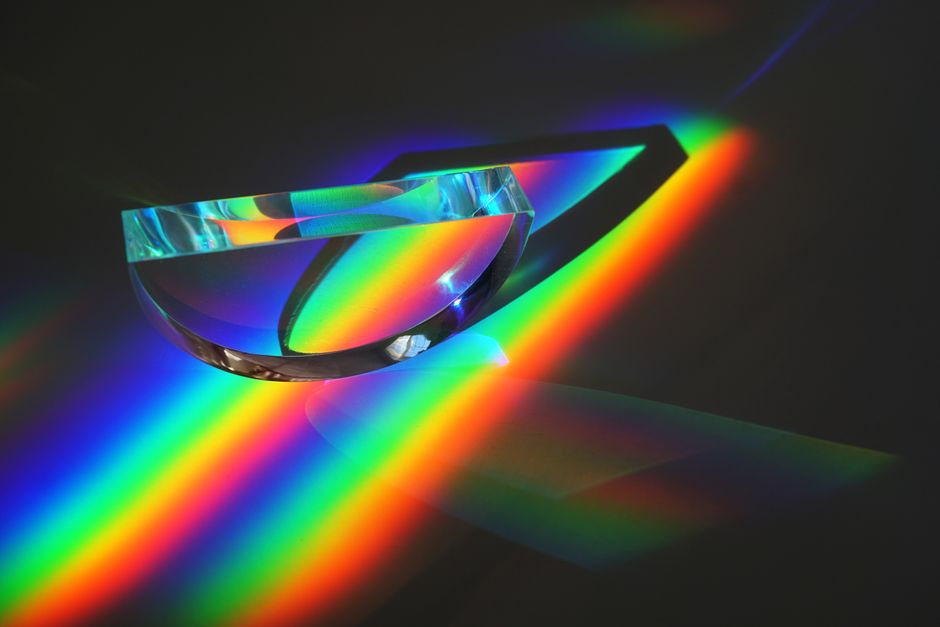
Photo by Nancy Zjaba on Pexels
Dispersion is the phenomenon where a wave's speed depends on its frequency (or wavelength). For light, this means different colors (which correspond to different wavelengths) travel at different speeds through a transparent medium. When white light, which is a combination of all visible colors, enters a prism, each color slows down and bends by a slightly different amount. This causes the white light to split into its spectral components (VIBGYOR).
The primary reason for dispersion in a prism is that the refractive index (n) of the prism material isn't constant; it varies with the wavelength (λ) of the light. Generally, the refractive index is higher for shorter wavelengths (like violet light) and lower for longer wavelengths (like red light).
How Does a Prism Cause Dispersion?
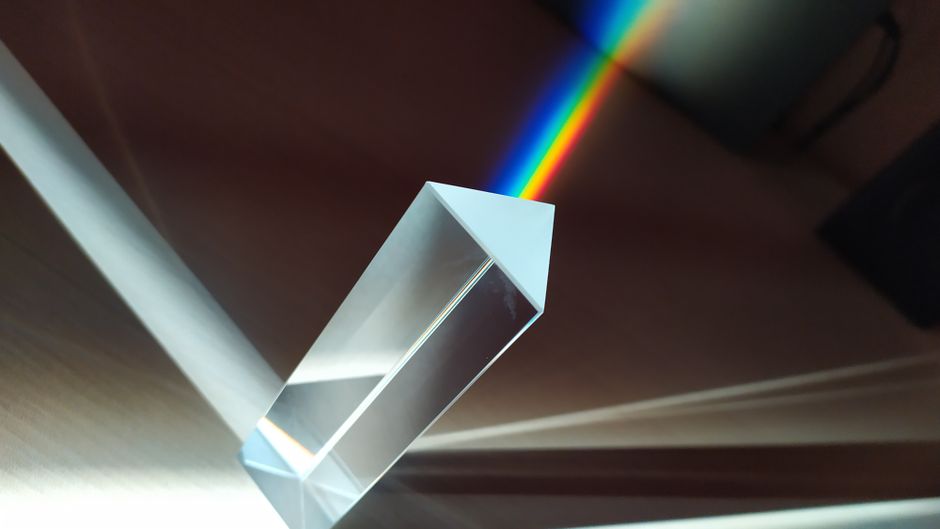
Photo by Design Bits on Pexels
When light passes from one medium (like air) into another (like glass in a prism), it refracts (bends). The amount it bends depends on the angle of incidence and the refractive indices of the two media. Since violet light has a higher refractive index in glass, it bends more than red light, which has a lower refractive index.
Consider light entering the first face of the prism:
1. White light strikes the prism.
2. Each color within the white light refracts. Violet light bends most, red light bends least.
3. The colors are now slightly separated.
When the light exits the second face of the prism:
1. Each color, already separated, refracts again.
2. The separation between the colors increases further.
3. You observe a spectrum of colors (VIBGYOR).
Important Terms:

Photo by Markus Winkler on Pexels
- Angle of Deviation (δ): The angle between the incident ray and the emergent ray. Since different colors deviate by different amounts, violet light has the maximum deviation, and red light has the minimum deviation.
- Angular Dispersion: The difference in the angles of deviation between two colors. For example, for violet and red light, it's
δ_v - δ_r. This value indicates how much the prism spreads out the spectrum. - Dispersive Power (ω): A measure of a prism's ability to disperse light. It's defined as the angular dispersion divided by the mean deviation (often taken as the deviation for yellow light,
δ_y).
ω = (δ_v - δ_r) / δ_y
Dispersive power depends only on the material of the prism and the incident light's wavelength range, not on the prism's angle.
graph TD
    A["White Light"] --> B["First Surface of Prism"]
    B --> C["Refraction & Partial Separation"]
    C --> D["Different Angles of Deviation"]
    D --> E["Second Surface of Prism"]
    E --> F["Further Refraction & Increased Separation"]
    F --> G["Spectrum of Colors (VIBGYOR)"]

    style A fill:#FFFFFF,stroke:#333,stroke-width:2px;
    style G fill:#FFD700,stroke:#333,stroke-width:2px;
3. Worked Example
Let's say you have a prism for which the angle of deviation for violet light is 42 degrees, the angle of deviation for red light is 38 degrees, and the angle of deviation for yellow light (mean light) is 40 degrees. We want to calculate the angular dispersion and the dispersive power of the prism.
-
Calculate Angular Dispersion:
Angular dispersion =δ_v - δ_r
Angular dispersion =42° - 38°
Angular dispersion =4° -
Calculate Dispersive Power (ω):
ω = (δ_v - δ_r) / δ_y
ω = 4° / 40°
ω = 0.1
So, the angular dispersion produced by this prism is 4 degrees, and its dispersive power is 0.1.
4. Key Takeaways
- White light is a combination of different colors, each with a unique wavelength.
- A prism separates white light into its constituent colors (spectrum) through dispersion.
- Dispersion occurs because the refractive index of the prism material varies with the wavelength of light.
- Violet light has a higher refractive index and deviates most, while red light has a lower refractive index and deviates least.
- Angular dispersion quantifies the spreading of the spectrum, defined as the difference in deviation angles for two extreme colors.
- Dispersive power is a material property that measures a prism's ability to disperse light relative to its mean deviation.
Common Mistakes to Avoid:
- Don't confuse reflection with refraction; dispersion involves bending of light as it passes through a medium.
- Don't think all colors travel at the same speed in a medium; that's only true in a vacuum.
- Remember that the deviation is measured from the original path of the light, not just how much it bends inside the prism.
- Don't assume dispersive power depends on the prism angle; it's a material property.
5. Now Try It
Imagine you have a second prism made of a different type of glass. For this prism, the refractive index for violet light is 1.68 and for red light is 1.62. If the deviation for violet light is 50° and for red light is 45°, calculate the angular dispersion and the dispersive power, assuming the mean deviation for yellow light is 47°.
What success looks like: You should be able to clearly state the angular dispersion in degrees and the dispersive power as a unitless number, similar to the example provided.
Frequently asked about Dispersion of Light and Prisms
Study this next
Get the full physics class 12 curriculum
Clone the complete plan to your dashboard for unlimited AI-generated notes, practice quizzes, and a personalised revision schedule.
Save this course free