Synergistic Effects of High Ratio Ingredients and Product Advantages
From the food science and technology curriculum
TL;DR
High ratio ingredients work together in food to create better textures and stability than they would alone. This synergy helps make products like cakes and icings smoother, more moist, and last longer. Understanding these interactions lets you design recipes for superior quality and consistent results.
1. The Mental Model
Think of it like a team where each player's unique skill makes the whole team stronger than if they played solo. In food, high ratio ingredients are these specialized players, and when combined correctly, they create properties in the final product that are much better than expected.
2. The Core Material
When we talk about "high ratio" in food science, we're usually referring to specific types of fats, sugars, and sometimes flours that are specially processed to allow for higher proportions of liquids (like water or milk) in a recipe. The "synergistic effects" come from how these ingredients interact at a molecular level, leading to enhanced product qualities.
Understanding High Ratio Ingredients
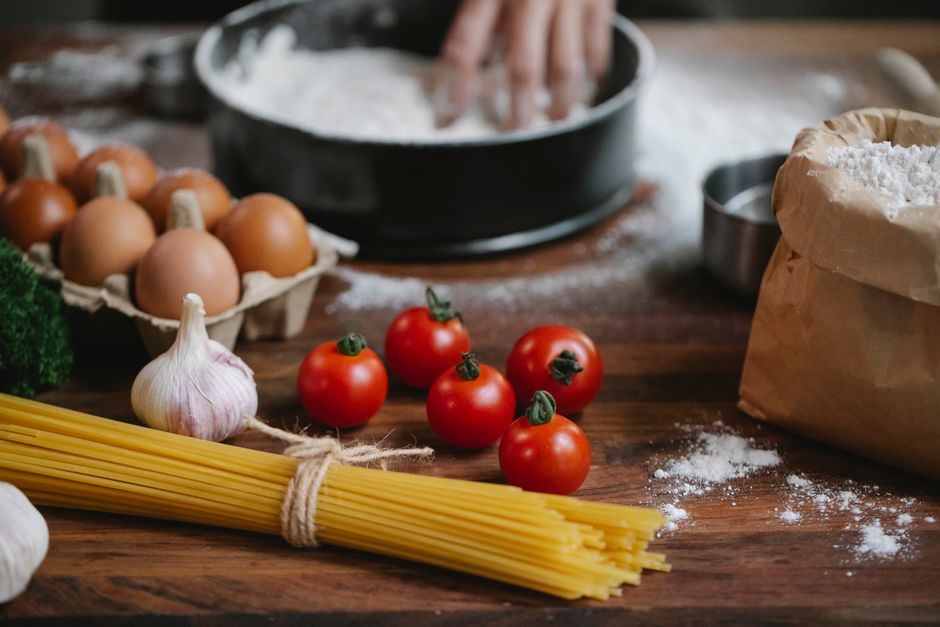
Photo by Klaus Nielsen on Pexels
- High Ratio Shortening/Fats: These are specially processed fats with a higher emulsifier content. Emulsifiers help oil and water mix and stay mixed, preventing separation. This means you can add more liquid (like milk or eggs) to a batter or icing without it breaking.
- High Ratio Sugar (often superfine or powdered): While regular granulated sugar works, finely ground sugars dissolve faster and distribute more evenly. This quick dissolution contributes to a finer crumb structure and prevents gritty textures.
- High Ratio Flour: Sometimes, specific flours with finely milled particles or particular protein characteristics are used to further enhance moisture absorption and structure development.
How Synergy Happens

Photo by Ann H on Pexels
The magic is in the emulsification and crystallization control.
- Emulsification: The emulsifiers in high ratio shortening create a very stable emulsion (a mixture of oil and water). This means your batter can hold more liquid, resulting in a more moist and tender product. This stable emulsion also traps air more effectively during mixing, leading to a lighter, finer texture.
- Sugar's Role: Finely ground sugar helps by rapidly dissolving into the water phase of the emulsion, competing with other ingredients for water and helping to control gluten development in flours. It also interferes with starch gelatinization, contributing to a tender crumb. When fats and sugars are creamed together, the sugar crystals cut into the fat, creating tiny air pockets. The more uniform the sugar, the more uniform these air pockets.
- Overall Structure: The combination of stable emulsification, controlled air incorporation, and moderated gluten/starch interactions leads to a product with a much more uniform, fine, and tender crumb structure. It also significantly improves moisture retention and extends shelf life.
Here's a simplified view of the cause-and-effect:
graph TD
    A["High Ratio Shortening (Emulsifiers)"] --> B["Stable Emulsion (Oil-in-Water)"]
    C["High Ratio Sugar (Fine Particles)"] --> D["Rapid Dissolution & Air Incorporation"]
    B --> E["Increased Liquid Holding Capacity"]
    D --> E
    E --> F["Fine, Uniform Crumb Structure"]
    E --> G["Enhanced Moisture Retention"]
    F --> H["Improved Product Tenderess & Smoothness"]
    G --> I["Extended Shelf Life"]
    H --> J["Superior Product Quality"]
    I --> J
Product Advantages

Photo by Matheus Bertelli on Pexels
The synergistic effects of these ingredients provide clear benefits:
- Improved Texture: Finer, more uniform crumb in cakes; smoother, less gritty icings.
- Increased Moisture: Products stay moist longer, leading to a better eating experience.
- Enhanced Stability: Batters are less likely to separate; icings are more stable at room temperature. Cakes are less prone to staling.
- Higher Yields: For some products like icings, the ability to incorporate more liquid can mean more volume.
- Better Workability: Batters and doughs are often easier to handle and process.
3. Worked Example
Let's consider a high-ratio cake recipe. A standard cake might use a 1:1 ratio of sugar to flour by weight. A high-ratio cake recipe, however, might have a sugar-to-flour ratio closer to 1.25:1 or even 1.4:1.
Imagine a conventional yellow cake recipe that uses 1 cup of all-purpose flour (approx. 125g) and 1 cup of granulated sugar (approx. 200g). It uses regular butter and whole eggs.
* Result: Good cake, but maybe a bit dense, and dries out within a couple of days.
Now, consider a high-ratio yellow cake using:
* 1 cup (125g) cake flour (lower protein, finer grind)
* 1.25 cups (250g) superfine sugar (dissolves faster)
* 150g high-ratio shortening (with added emulsifiers)
* 2 large eggs, plus 1/2 cup milk
The higher ratio of sugar to flour, enabled by the emulsifiers in the shortening, allows the batter to hold more liquid (from eggs and milk) and sugar without becoming soggy or separating. The superfine sugar dissolves quickly, preventing grittiness and promoting a fine crumb. The emulsifiers in the shortening create a very stable air-in-fat emulsion during creaming, which then gets distributed throughout the batter. This leads to a cake that is:
* Significantly more moist
* Has a much finer, velvety crumb
* Stays fresh and tender for several extra days
* Has a higher volume
4. Key Takeaways
- High ratio ingredients are specifically processed fats and sugars that facilitate stable emulsions.
- Emulsifiers in high ratio shortening allow for higher liquid-to-flour ratios in recipes.
- Fine sugar particles aid in rapid dissolution and air incorporation, improving texture.
- The synergistic effect creates a stable, well-aerated batter or icing structure.
- This leads to products with superior moisture, tenderness, and extended shelf life.
- High ratio ingredients make food products more consistent and easier to handle during production.
- Using these ingredients effectively is key to producing high-quality baked goods and confections.
Common mistakes you should avoid:
- Don't substitute regular shortening or butter directly for high ratio shortening in a high-ratio recipe; the emulsion will likely break.
- Don't use coarse granulated sugar in recipes designed for superfine or powdered sugar if fine texture is critical.
- Assuming you can just "add more liquid" to any recipe without using high ratio ingredients; it'll likely separate.
- Overmixing batters that contain high-ratio ingredients; while they're stable, over-aeration can still negatively affect texture.
5. Now Try It
Find a recipe for a standard buttercream frosting and a high-ratio buttercream frosting (sometimes called "American Buttercream" but specifically using high-ratio shortening). Compare the ingredient ratios, especially sugar to fat and liquid. Then, try to explain, in your own words, why the high-ratio version can incorporate more sugar and liquid while remaining smooth and stable, specifically referencing the role of emulsifiers and sugar fineness. What would happen if you tried to make the high-ratio recipe with regular butter and granulated sugar?
Frequently asked about Synergistic Effects of High Ratio Ingredients and Product Advantages
More from food science and technology
Get the full food science and technology curriculum
Clone the complete plan to your dashboard for unlimited AI-generated notes, practice quizzes, and a personalised revision schedule.
Save this course free