Fundamentals of Driver Licensing and Responsibility
From the driving curriculum
Fundamentals of Driver Licensing and Responsibility
TL;DR
Getting a driver's license means you agree to follow traffic laws and operate your vehicle safely. Your license is a privilege, not a right, and comes with serious responsibilities to yourself and others. Understanding these rules protects you and keeps everyone on the road safer.
1. The Mental Model
Think of your driver's license as a contract with your state or province. In exchange for the privilege to drive, you promise to follow their rules, drive safely, and be accountable for your actions behind the wheel.
2. The Core Material
Obtaining and keeping a driver's license involves several key components. You'll need to demonstrate knowledge of traffic laws, prove your driving skills, and maintain good standing with the Department of Motor Vehicles (DMV) or equivalent authority. This isn't just about passing tests; it's about continuously upholding standards.
2.1 License Types & Requirements
Photo by Pixabay on Pexels
Different licenses allow you to drive different types of vehicles. For most personal driving, you'll get a standard (Class D or G, depending on your region) license. To get it, you typically need to be a certain age, pass a written knowledge test, and then pass a practical driving (road) test. You'll also need to provide identification and proof of residency.
2.2 Traffic Laws & Safe Driving
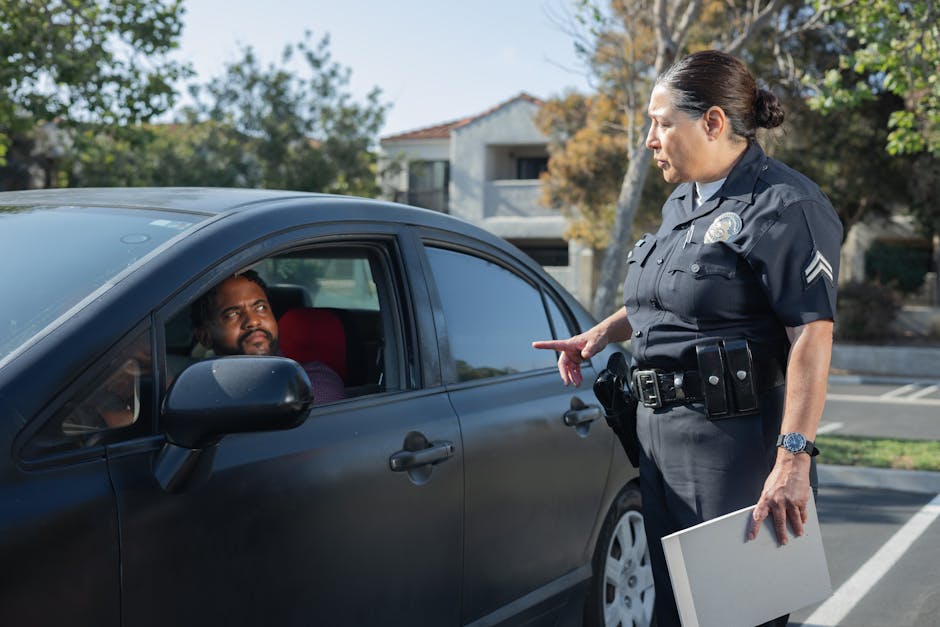
Photo by Kindel Media on Pexels
The rules of the road are designed to prevent crashes and ensure a smooth flow of traffic. These include speed limits, right-of-way rules, signaling, and safe following distances. Beyond just knowing the laws, you're responsible for always driving defensively, anticipating potential hazards, and adjusting your driving to conditions like weather or road construction.
graph TD
    A["Applicant (You)"] --> B{"Meet Age & Residency Requirements?"}
    B -- Yes --> C["Pass Written Knowledge Test"]
    C --> D{"Pass Vision Test?"}
    D -- Yes --> E["Complete Driver Education (if required)"]
    E --> F["Pass Practical Driving Test (Road Test)"]
    F -- Yes --> G["Obtain Provisional/Full License"]
    G --> H["Maintain Good Driving Record"]
    H --> I{"Adhere to Traffic Laws?"}
    I -- No --> J["Face Penalties (Fines, Points, Suspension)"]
    I -- Yes --> H
    F -- No --> F
    D -- No --> K["Corrective Lenses Required"]
    K --> D
    B -- No --> L["Wait Until Eligible"]
    L --> A
2.3 Legal & Financial Responsibilities

Photo by Towfiqu barbhuiya on Pexels
As a driver, you're legally and financially responsible for your actions. If you cause a crash, you could be liable for damages and injuries. This is why auto insurance is mandatory in most places; it helps cover these costs. You're also responsible for maintaining your vehicle in a safe operating condition (e.g., working lights, good tires) and ensuring it's registered.
2.4 Consequences of Violations
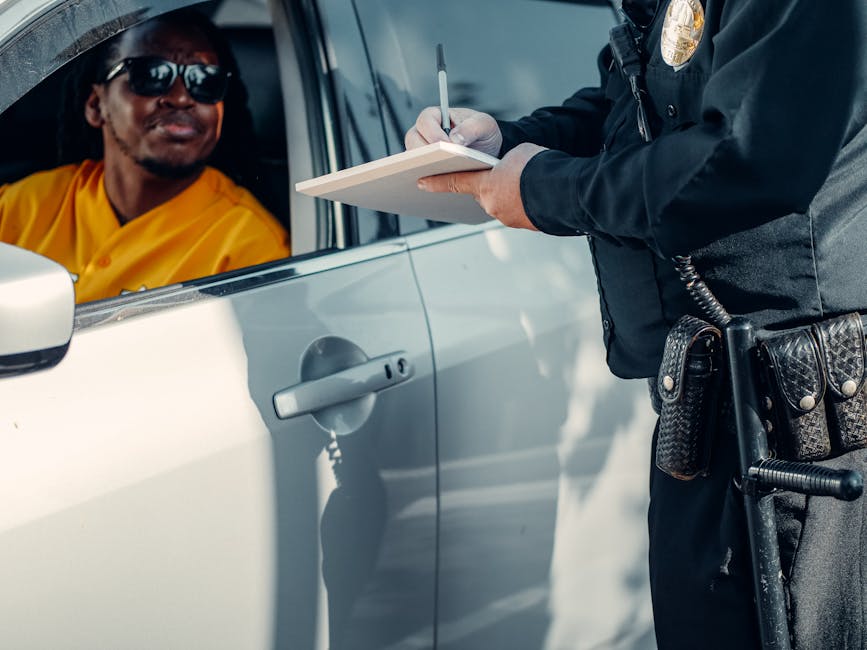
Photo by Kindel Media on Pexels
Breaking traffic laws can lead to various penalties, including fines, points on your driving record, increased insurance premiums, and even license suspension or revocation. Repeated offenses or serious violations (like driving under the influence) can have severe legal repercussions, including jail time.
3. Worked Example
Imagine you're driving to a friend's house. The speed limit is 45 mph. You're running a bit late, so you decide to go 55 mph. Suddenly, a child runs into the street chasing a ball. Because you were speeding, your reaction time and stopping distance are significantly reduced compared to if you were going the legal limit. Even if you manage to avoid hitting the child, you've put yourself and others at extreme risk. If you had been caught speeding by an officer, you'd likely receive a ticket, points on your license, and a fine. If you had hit the child, even accidentally, the legal and emotional consequences would be catastrophic, highlighting the direct link between violating traffic laws and severe outcomes.
4. Key Takeaways
- Your driver's license is a privilege granted by the state, not an inherent right.
- You must pass knowledge and practical tests to demonstrate competence before driving.
- Following traffic laws and driving defensively are your core responsibilities to ensure safety.
- You are legally and financially accountable for your actions while operating a vehicle.
- Ignoring traffic laws can lead to fines, points, license suspension, and serious accidents.
- Mandatory auto insurance helps cover potential damages in case of an at-fault accident.
Common Mistakes to Avoid:
- Don't assume you can drive safely just because you've passed the initial tests; continuous vigilance is key.
- Never drive under the influence of alcohol or drugs, even if you feel "fine."
- Don't ignore vehicle maintenance; a poorly maintained car is a hazard.
- Don't underestimate the impact of speeding or distracted driving on your ability to react to hazards.
5. Now Try It
Review your state's official driver's handbook (usually available online from your DMV). Focus on the sections covering traffic signs, right-of-way rules, and common violations. Make a list of three rules you weren't fully confident about before, and clearly state what each rule means. Success looks like you feeling more knowledgeable and confident about the specifics of your local traffic laws.
Frequently asked about Fundamentals of Driver Licensing and Responsibility
Study this next
Get the full driving curriculum
Clone the complete plan to your dashboard for unlimited AI-generated notes, practice quizzes, and a personalised revision schedule.
Create Free Account