Sharing the Road and Special Driving Conditions
From the driver's knowledge test alberta curriculum
Sharing the Road and Special Driving Conditions
TL;DR
Driving safely means understanding how to share the road with different users and adapting to challenging conditions. You'll need to know specific rules for pedestrians, cyclists, and large vehicles, and adjust your driving for weather, night, and emergency situations. Always prioritize safety and maintain extra space and visibility.
1. The Mental Model
Think of driving as a constant negotiation with your environment and other road users. Your goal is to predict what others might do and what conditions demand, always leaving yourself an out to react safely. It's about being proactive, not just reactive.
2. The Core Material
Sharing with Pedestrians and Cyclists
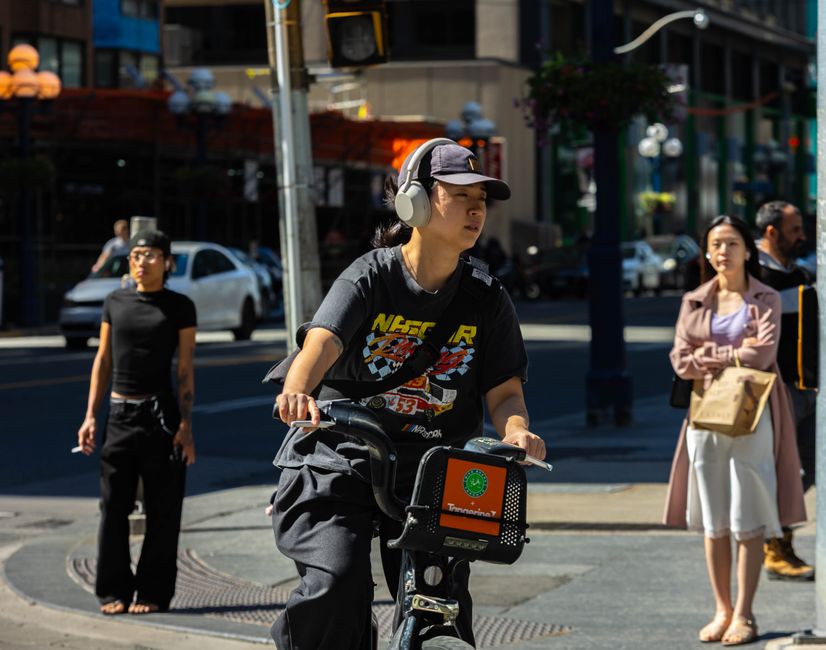
Photo by Olanma Etigwe-uwa on Pexels
Pedestrians and cyclists are vulnerable road users. They don't have the protection of a vehicle, so it's your responsibility to be extra careful around them.
- Pedestrians: Always yield to pedestrians at crosswalks (marked or unmarked) and intersections. If a pedestrian is waiting at a crosswalk, you must stop. Don't block crosswalks when stopping. Be extra cautious around schools, parks, and bus stops.
- Cyclists: Treat cyclists like vehicles. They have the right to use the road. Give them at least 1 meter (3 feet) of space when passing. Don't "door" them (open your car door into their path). Check your blind spots carefully before turning or changing lanes, as cyclists can be hard to see. If a cyclist is signalling a turn, respect their signal.
Sharing with Motorcycles
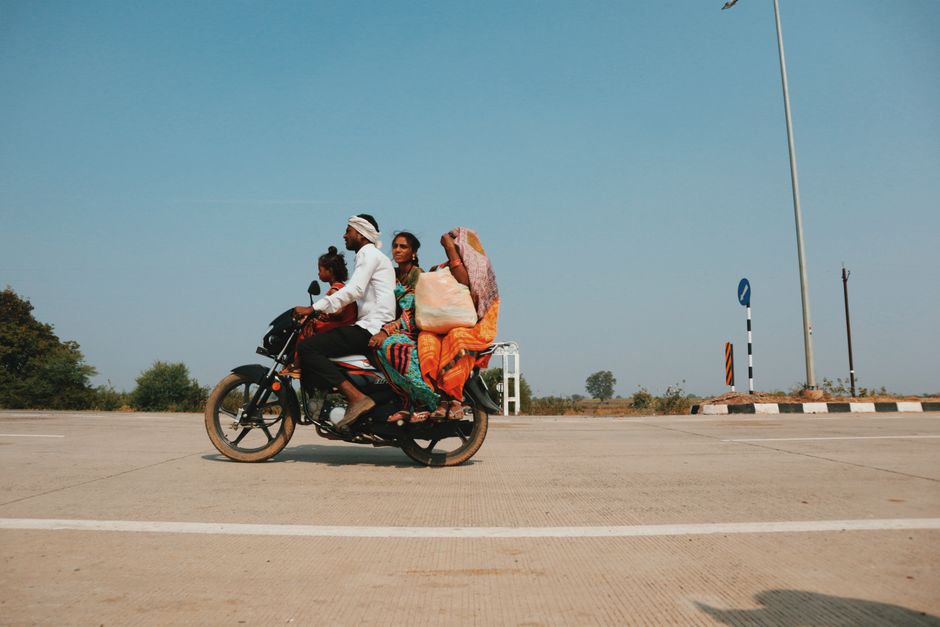
Photo by Shivansh Sharma on Pexels
Motorcycles are small and can be hard to see. They also stop and accelerate differently than cars.
- Visibility: Always check your blind spots. Motorcycles can disappear in them easily.
- Space: Give them plenty of space, especially when changing lanes or turning. Never share a lane with a motorcycle; they need the full lane.
- Following Distance: Maintain a larger following distance behind motorcycles as they can stop quicker than cars.
Sharing with Large Vehicles (Trucks, Buses)
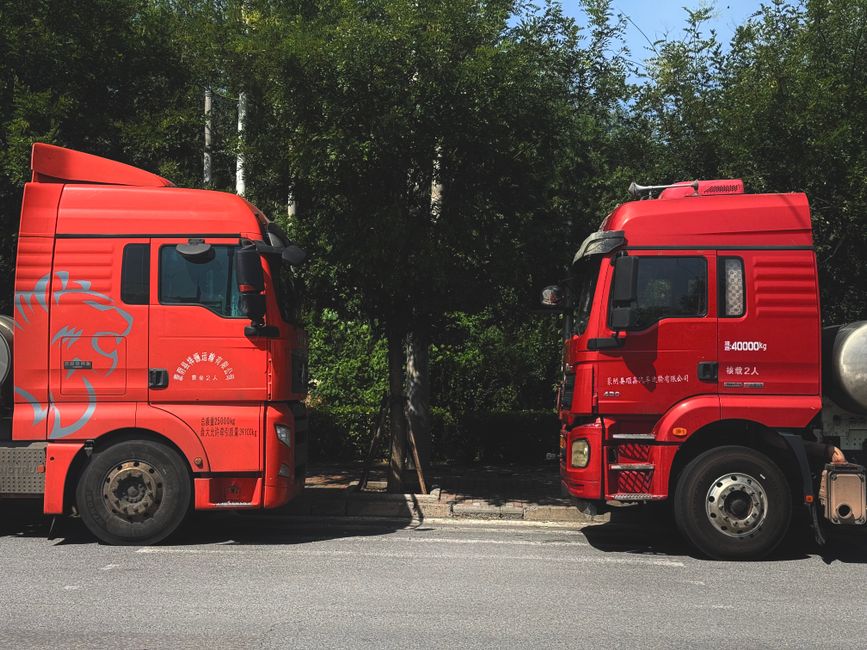
Photo by Shuaizhi Tian on Pexels
Large vehicles have significant blind spots, take longer to stop, and need more room to turn.
- Blind Spots (No-Zones): Avoid driving in a large vehicle's blind spots. If you can't see their mirrors, they probably can't see you. These are typically directly in front, directly behind, and alongside the cab and trailer.
- Stopping Distance: Never cut off a large vehicle. They need a much longer distance to stop.
- Wide Turns: Trucks and buses often need to swing wide to make a turn. Don't squeeze between them and the curb or shoulder; they need that space.
- Air Turbulence: When passing a large vehicle, be prepared for air turbulence that can push your car.
Special Driving Conditions
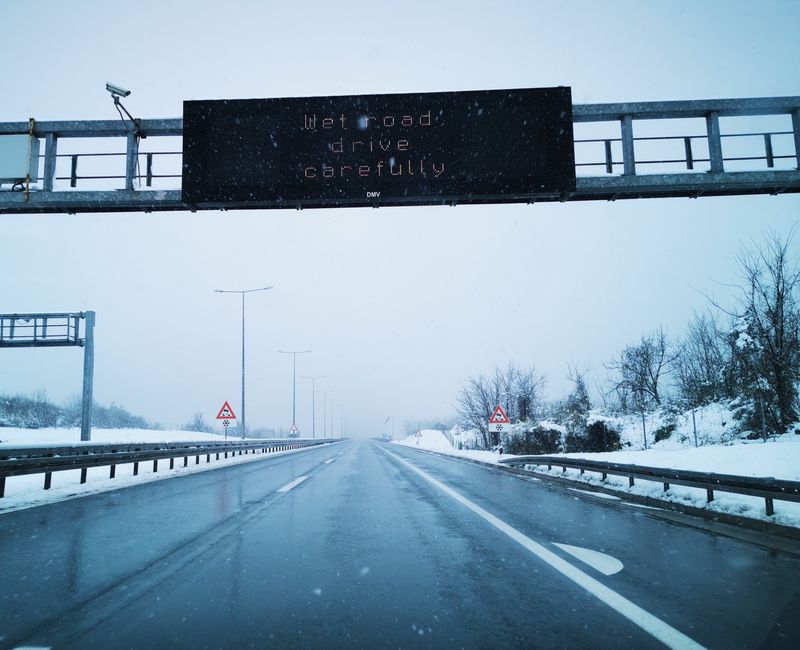
Photo by Dalibor Lejev on Pexels
Night Driving
Driving at night significantly reduces visibility.
- Headlights: Use low-beam headlights when following another vehicle (within 150m or 500ft) or when meeting an oncoming vehicle. Use high beams only when there's no oncoming traffic and no vehicles ahead of you. Dim your high beams for pedestrians and cyclists too.
- Speed: Reduce your speed. Your stopping distance at night should be within the range of your headlights.
- Fatigue: Be aware of fatigue. If you're tired, pull over and rest.
Driving in Rain, Fog, Snow, and Ice
These conditions drastically reduce traction and visibility.
- Slow Down: The most important rule. Reduce your speed significantly.
- Increase Following Distance: Double or triple your normal following distance.
- Headlights: Use low-beam headlights (and fog lights if you have them) to improve visibility for yourself and others. High beams will reflect off rain, fog, or snow and make it harder to see.
- Smooth Movements: Avoid sudden braking, accelerating, or steering.
- Hydroplaning (Rain): If you hit a puddle at speed, your tires can lose contact with the road. Ease off the gas, don't brake hard, and steer straight until you regain traction.
- Black Ice (Ice): This is nearly invisible ice that forms on the road, often on bridges or shaded areas. Assume roads might be icy if the temperature is near freezing.
Emergency Vehicles
When you see or hear an emergency vehicle with flashing lights or sirens:
graph TD
    A["Emergency Vehicle approaching (lights/sirens)"] --> B{Are you blocking its path?};
    B -- Yes --> C["Safely pull to the closest edge of the road"];
    B -- No --> D["Maintain speed and position"];
    C --> E["Stop until it passes"];
    D --> F["Be prepared to yield if path changes"];
    E --> G["Resume driving when safe"];
    G --> H["Do NOT follow closer than 150m"];
- Yield: Pull over to the closest edge of the road (right or left, depending on which is safer) and stop until the emergency vehicle has passed.
- Intersections: If you're in an intersection, drive through it before pulling over.
- Following: Never follow an emergency vehicle closer than 150 meters (500 feet).
3. Worked Example
Imagine you're driving on a two-lane road at dusk. Ahead, you see a truck on your right, and a cyclist just pulled onto the shoulder further up, riding in the same direction. The weather report also mentioned possible fog later.
- Approaching the truck: You'll ensure you're not in its "no-zones." You'd pass it quickly and safely, avoiding staying alongside its cab. You'd also anticipate air turbulence as you pass.
- Approaching the cyclist: As you get closer to the cyclist, you'd slow down, prepare to signal a lane change if safe, and move to the left lane to give them at least 1 meter (3 feet) of space. If you can't change lanes, you'd slow right down and pass them very carefully within your lane, ensuring that minimum space.
- Potential fog: If fog starts to roll in, you immediately reduce your speed significantly. You'd turn on your low-beam headlights (and fog lights if available) and increase your following distance from any vehicles ahead, maybe to 4-5 seconds instead of the usual 2-3 seconds. You'd avoid using your high beams.
4. Key Takeaways
- Always give vulnerable road users like pedestrians and cyclists ample space (at least 1 meter for cyclists).
- Be aware of large vehicles' extensive blind spots (no-zones) and their need for extra turning and stopping room.
- Reduce your speed and increase following distance in all adverse weather conditions and at night.
- Use low-beam headlights in rain, fog, snow, or when following/meeting other vehicles at night.
- Always pull over and stop safely for emergency vehicles, and don't follow them too closely.
- Adjusting your driving for conditions is paramount; your stopping distance needs to match your visibility.
- Motorcycles are harder to see; always check blind spots and give them a full lane.
Common Mistakes to Avoid:
- Not checking blind spots for motorcycles and cyclists, leading to collisions.
- Tailgating large vehicles or cutting them off, increasing collision risk due to their long stopping distances.
- Using high beams in fog or heavy rain, which actually reduces your visibility.
- Failing to pull over promptly and safely for emergency vehicles.
- Driving the speed limit in adverse conditions, assuming the road surface will have normal traction.
5. Now Try It
For the next 15 minutes you're a passenger in a car or walking. Observe how drivers interact with pedestrians, cyclists, and large vehicles. Pay attention to how they adjust their driving for current conditions (e.g., time of day, weather). Note down three specific instances where a driver demonstrated good road sharing/condition adaptation, and three instances where they could have done better.
What success looks like: You'll have specific examples of good and bad driving behaviors related to sharing the road and adapting to conditions, showing you can identify these critical safety practices in real-world scenarios.
Frequently asked about Sharing the Road and Special Driving Conditions
More from driver's knowledge test alberta
Get the full driver's knowledge test alberta curriculum
Clone the complete plan to your dashboard for unlimited AI-generated notes, practice quizzes, and a personalised revision schedule.
Create Free Account